

POSSIBLE ISSUES ASSOCIATED WITH HAVING A STOMA
Last updated: October 2026
Features of a healthy stoma
When inspecting a stoma the presence of the following indicates a healthy stoma:
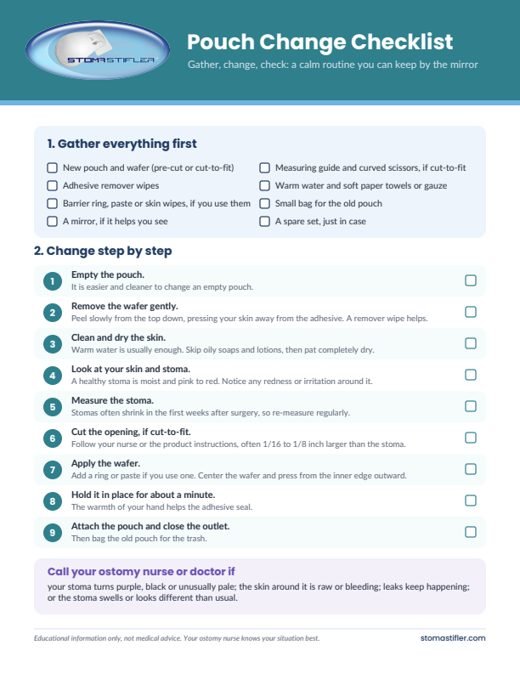
- Stoma should be above the skin level.
- Red and moist stoma (pallor may suggest anaemia, dark hue may represent ischaemia).
- No separation between the mucocutaneous edge and the skin.
- No evidence of erythema, rash, ulceration or inflammation in the surrounding skin.
Some problems associated with stomas
Psychological aspects
Having a stoma is a major event and patients can become very anxious and depressed. Adequate counselling is vital and this may need to include mental health specialists. Thus, good preparation with visual aids, e.g. pictures and written information, is crucial. Introducing potential patients to those who have already undergone the procedure is a valuable method.
Quality of life can deteriorate for patients following stoma procedure. The first few weeks post-stoma are the most vital.3 Patients may also have difficulty managing their stoma around their life, e.g. going out shopping and needing to change the stoma bag without adequate facilities. This can add to a low mood. Supportive family and friends are essential and may help in situations like this
Stoma bags will also have an impact on body image and intimate relationships may suffer.(3,4) It is good practice, therefore, to enquire about work and psychosocial aspects with patients.
During the first few weeks following the formation of a colostomy or ileostomy, patients may experience sudden urges to defecate. This is known as the ‘phantom rectum’ and can be very distressing for patients. Reassurance and support are helpful.
Changes in faeces
There may be changes to the amount and consistency of faeces.1 With ileostomies, faeces are produced about 4 hours after a main meal, whereas, with a colostomy, faeces are produced the following morning. Ileostomies are associated with increased output. Often patients have to change their diet to control wind and malodour, e.g. that caused by fizzy drinks and fish respectively. Flatus filters are also available.
Leakage of the contents of the stoma bag can occur and can make patients very distressed. Recurrent leakage can lead to skin inflammation from contact.
Stomas and skin problems
The skin at the site of the stoma can become erythematous and fissured or can develop an allergic reaction to the materials used in stoma equipment.
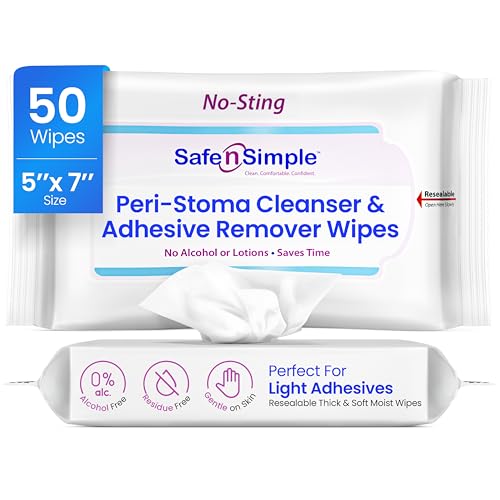
Various seals are available which cover and protect the opening. Similarly, hypoallergenic products are available for use in patients with stomas, e.g. lotions and cleansing wipes.
Stomas and dehydration
Ileostomies usually have a very high output and thus there is a risk of dehydration. Patients need to have a good intake of fluid and take an extra 1 litre above the usual. (However, advise the patient to avoid fizzy drinks and beer as these may cause flatulence.)
Bleeding from the stoma
It is common for there to be some bleeding from the stoma site following bag changes.5 This simply requires reassurance.
Bleeding needs to be distinguished from luminal bleeding which may represent underlying disease, e.g. flare-up of inflammatory bowel disease.
A more rare cause of bleeding is portal hypertension in patients with liver disease. They may have dilatation of cutaneous veins around the stoma site.
Stoma exit-related problems
This includes prolapse, narrowing or blockage of the stoma. Stenosis presents with ribbon-like stools and excessive high-pitched wind. These conditions require surgical correction.
The mucocutaneous junction may become detached, partially or fully. Simple good wound care should lead to reattachment.
Patients can also develop parastomal hernias, usually years later. Hernias can be managed conservatively to begin with, followed by surgery if resolution is not achieved.
Stomas in special circumstances
Stomas and travelling
Wind can become worse for patients when they travel in aircraft. The change in pressure within the cabin can lead to large amounts of wind being passed. This can be exacerbated by drinking fizzy drinks and beer.
Stomas and sports
Most patients will eventually self-manage their stomas. They can usually alter any output-related problems by changing their diet. However, sometimes medication will be needed to relieve problems. These include:
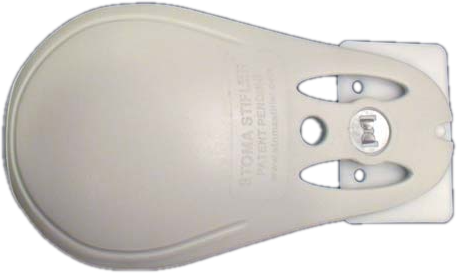
Stoma Stifler™, The Sound Suppressor + Stoma Guard Most Ostomates Wish They’d Found Sooner
- For relief of diarrhea, e.g. loperamide, opiates, codeine phosphate.
- For relief of constipation, e.g. magnesium hydroxide, ispaghula husk (not for patients with ileostomies as it increases salt and water loss).
Documented References
1. Hyland J; The basics of ostomies. Gastroenterol Nurs. 2002 Nov-Dec;25(6):241-4; quiz 244-5. [abstract]
2. Ostomy Wound Management; Part 1: Assessment and Management of Stomal Complications: A Framework for Clinical Decision Making
3. Brown H, Randle J; Living with a stoma: a review of the literature. J Clin Nurs. 2005 Jan;14(1):74-81. [abstract]
4. Simmons KL, Smith JA, Bobb KA, et al; Adjustment to colostomy: stoma acceptance, stoma care self-efficacy and interpersonal relationships. J Adv Nurs. 2007 Dec;60(6):627-35. [abstract]
5. Ostomy Wound Management; Part 2: Assessment and Management of Stomal
Helpful products on Amazon
Skin and barrier supplies that ostomates and stoma nurses lean on most for daily wear. The links go to tagged Amazon searches so you can compare options.

The literature on post-ostomy QoL emphasizes time, support, and management quality:
- Ostomy nurse support drives QoL outcomes. A 2018 review confirms that the involvement of an ostomy nurse and proper preoperative preparation significantly improve quality of life, acceptance, and complication rates. According to PubMed (DOI 10.3238/arztebl.2018.0182).
- Complications are mostly conservative. A 2019 review documents that most ostomy-related challenges, from skin issues to bag adherence to lifestyle adaptation, respond to technique and product adjustment before requiring intervention. According to PubMed (DOI 10.1055/s-0038-1676995).
- Type-specific differences matter. A 2025 meta-analysis demonstrated meaningful differences in daily-life patterns between ileostomy and colostomy patients, with implications for lifestyle adaptation strategies. According to PubMed (DOI 10.3389/fmed.2025.1610213).
- Step-up management. A 2023 mapping review confirms a step-up approach from conservative ostomy care through to surgical revision when needed, relevant whenever a lifestyle pattern stops working. According to PubMed (DOI 10.1186/s13017-023-00516-5).
Affiliate disclosure: This article contains Amazon affiliate links. As an Amazon Associate we earn from qualifying purchases, at no extra cost to you. Recommendations are based on what stoma nurses and the ostomy community consistently mention; the links go to tagged Amazon searches so you can compare options rather than being pushed toward a single product. Read our full disclosure here.
Once you know what to do next, your whole body settles. My Ostomy Blueprint brings the answers that fit you into one plan, written from your own story.
Start My BlueprintHelpful complementary supplies
A few complementary items most ostomates keep on hand. These pair with your Stoma Stifler for an easier daily routine.



Research that backs up this guidance
- Murken DR, Bleier JIS. (2019). Ostomy-Related Complications. Clinics in Colon and Rectal Surgery, 32(3):176-182. [DOI]Comprehensive review of common stoma issues – peristomal skin complications, retraction, stomal stenosis, prolapse, bleeding, dehydration from high output, and parastomal hernia. Covers prevention and recommended management strategies for every issue an ostomate typically faces.
- Bozkul G, et al. (2024). Nursing interventions for the self-efficacy of ostomy patients: A systematic review. Journal of Tissue Viability, 33(2):165-173. [DOI]Systematic review of 15 studies found that structured education, telephone follow-up, and peer-support interventions measurably increased self-efficacy, decreased stoma complications, improved adaptation, and raised quality of life. The takeaway: knowledge directly translates to fewer complications.
More from the Ostomy Library
- Your first 30 days with an ostomy: A week-by-week guide to your first month home with a new stoma.
- Ostomy reversal: Who can have a reversal, what surgery and recovery involve, and how to prepare.
- Ileostomy diet: Hydration, fiber, blockage-risk foods and a food tolerance tracker.
Browse all Ostomy Basics guides or the full Ostomy Library.
Further reading on The Wellthie One
- How to calm anxiety naturally: Simple ways to settle a stressed nervous system.
- A 5-minute gratitude journal: A small daily practice for stressful seasons.
Frequently Asked Questions
Is what I'm experiencing normal after ostomy surgery?
Most concerns ostomates have – bag noise, gas, occasional leaks, skin irritation, body-image adjustment – are normal in the first 6-12 months. The frequency and intensity drop significantly as your body adapts and your routine settles. Reach out to your ostomy nurse if anything feels worsening rather than improving.
Life after ostomy surgery follows a fairly consistent trajectory: steep learning curve in months 1-3, gradual confidence-building through year 1, and integration thereafter. The readers who report feeling ‘back to normal’ by year 1 typically connected with the ostomy community early, accepted the 6-12 month adaptation timeline, and worked with an ostomy nurse. The folks who report chronic struggle usually expected a faster recovery and gave up on adaptation when it didn’t happen in 6-12 weeks.
When should I call my ostomy nurse or doctor?
Call promptly for: peristomal skin that's painful, bleeding, or breaking down; stoma color changes (dusky, purple, pale); no output for 4-6 hours with cramping (possible blockage); high output that won't slow despite reducing fiber and adding electrolytes; or a hernia bulge that becomes painful or won't reduce. Most other concerns can wait for your next scheduled appointment.
Does the Stoma Stifler help with this?
The Stoma Stifler is a stoma guard and noise suppressor in one. Its dense foam cup muffles stoma sounds and shields the stoma from bumps and pressure, without restricting output. It works with your existing pouching system and doesn't interfere with skin care or wafer adhesion. Pairing it with the basics – good skin routine, hydration, and any complementary supplies above – covers most daily-comfort challenges.