

The ileostomy diet handout you got at the hospital was probably one page, full of “avoid” lists, and nearly useless three weeks after you got home. This guide is the real version — the food rules ileostomates live by, the foods that go from “never” to “fine” as your gut adapts, the hydration math that keeps you out of the ER, and the noise-management diet rules nobody tells you. Written for the way you eat, not the way the bland recovery brochure described.
The two non-negotiable rules
Before any food choice, two rules matter more than any specific food list:
1. Hydrate aggressively with electrolytes, not just plain water. The colon used to absorb most of your daily fluid back into the bloodstream. Without it, plain water passes through fast and you can be dehydrated even while drinking a lot. Sodium is the missing piece — adequate sodium is what lets your body retain the water you drink. Most ileostomates undertreat sodium for months before connecting it to fatigue.

2. Chew everything to applesauce consistency before swallowing. The mechanical work the small intestine used to share with the colon now falls entirely on your jaw and teeth. Poor chewing is the #1 cause of partial blockages in the first year. There is no medication that compensates — the only fix is slowing down at the table.
Phase 1: The first 6 weeks (post-discharge eating)
The first 6 weeks are about predictability, not nutrition optimization. Your gut is still adapting and your output volume is still figuring out its baseline. The food list is intentionally narrow.
- Safe foods: White rice, plain pasta, well-cooked chicken, eggs, white bread, ripe bananas, smooth peanut butter, broiled fish, plain yogurt, applesauce
- Avoid entirely: Nuts, popcorn, raw vegetables, raw fruit with skin, dried fruit, corn, mushrooms, celery, coconut, seeds
- Pattern: 5–6 small meals per day. No skipping. Eat sitting down. Chew to applesauce.
Find My Ileostomy Diet Path
Phase 2: Weeks 6 to 6 months (the rebuild)
This is when food becomes interesting again. Add one new food at a time, in a small amount, and watch your output for 24 hours. Most “trigger” foods that ileostomates discover here are trigger foods for everyone — you just notice them faster because your output gives feedback within hours instead of days.
- Reintroduce first: Well-cooked carrots, zucchini, peeled potatoes, plain pasta with butter, oatmeal, sweet potato, scrambled eggs with veggies
- Reintroduce with caution: Spinach (chop fine), broccoli (well-cooked), citrus fruits, beans (small amounts, mashed)
- Still avoid: Nuts, popcorn, raw celery, raw mushrooms, corn on the cob, dried fruit, coconut
Soluble fiber becomes your friend in this phase. It thickens output (less wet noise, less leakage risk, less frequent bag emptying) and it slows transit time so nutrients absorb better.

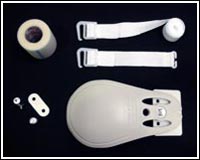
Stoma Stifler™ — Engineered for Liquid-Output Sound
The hydration math (do not skip this section)
Most ileostomates need 2 to 3 liters of fluid daily, with adequate sodium. Plain water alone is not enough. The most common ileostomate emergency-room visit is for dehydration that started weeks earlier as creeping fatigue.
The literature on ileostomy nutrition is clear on the hydration risk and surprisingly thin on specific food recommendations:
- High-output stoma management. A 2022 dietary management review confirms ileostomy patients are at significantly higher risk of dehydration, electrolyte disturbances, and malnutrition without proper oral rehydration solutions, hypotonic fluid restriction, and targeted dietary modifications. According to PubMed (DOI 10.7748/ns.2022.e11941).
- Evidence gap for IBD ileostomy. A 2024 systematic review of interventions for patients with IBD and permanent ileostomy found the evidence base is ‘almost non-existent’ — only 6 RCTs total, most published over 20 years ago. According to PubMed (DOI 10.1093/crocol/otae056). This means most diet recommendations are guided by clinical observation, not RCT data.
- General ostomy nutrition framework. A 2018 review of intestinal ostomies places dietary management in the broader context of stoma care, emphasizing the importance of preoperative education and post-op support from a stoma nurse for long-term success. According to PubMed (DOI 10.3238/arztebl.2018.0182).
- Hydration management protocols. Oral rehydration solutions outperform plain water for ileostomy hydration; hypotonic fluid restriction can paradoxically reduce overall output volume in high-output stomas. According to PubMed (DOI 10.7748/ns.2022.e11941).
Daily target: 2–3 L of fluid, of which at least 1 L should contain electrolytes (sodium + potassium + magnesium).
Signs you are under-hydrated: dark yellow urine, dry mouth between meals, afternoon fatigue, dizziness on standing, headaches that improve after drinking salty broth.
Signs you are nailing it: pale-yellow urine, output stays steady throughout the day, energy is consistent, no leg cramps at night.
The “S-O-S” sip rule
Many ileostomy clinics recommend a simple template: every time you eat or empty the bag, take a few sips of an electrolyte drink. Six bag-emptyings + three meals per day = nine reminders to hydrate. You will hit your target without thinking about it.
B12 and the absorption issue
The terminal ileum (the very end of the small intestine, sometimes removed during surgery) is where vitamin B12 is absorbed. Ileostomates who had part of the terminal ileum removed are at high risk of B12 deficiency that develops slowly — over months to years.
Ask your doctor: for a B12 blood test at your 3-month, 6-month, and annual checkups. If you are low, a sublingual or injectable B12 bypasses the absorption problem.

Probiotic timing (and why it matters more for ileostomies)
Without a colon, the gut bacteria population is reduced and reshuffled. A daily probiotic for 8–12 weeks helps re-establish the populations that produce certain B vitamins, reduce gas, and normalize motility. Saccharomyces boulardii has the strongest ostomy-specific evidence.
The noise-management diet rules
Diet does not silence the bag itself, but it dramatically reduces the source noise. The foods most associated with ileostomy bag noise:
- Carbonated drinks — produce pop-style bursts within 30 minutes
- Beer and champagne — same mechanism
- Cabbage, broccoli, brussels sprouts raw — high gas production
- Beans in large amounts — fermentation gas
- Sugar substitutes (sorbitol, mannitol, xylitol) in sugar-free gum and mints
For deeper detail on stoma noise: the complete noise guide covers the full protocol.
The “go-to” meal strategy for social events
Most ileostomates eventually identify 1–3 “go-to” meals that reliably produce minimal output and noise for 2–3 hours afterward. Use these before high-stakes social events: meetings, dates, weddings, long flights.
The plain reading of the ileostomy diet literature is that the evidence base is thinner than most websites suggest — the strongest data is on hydration, not on specific food avoidances. What the experienced ileostomate community knows that the trials don’t cover well: chewing thoroughly matters more than rigid food lists, soaking and slow-cooking solve more ‘problem foods’ than blanket avoidance, and oral rehydration solutions are a daily tool, not an emergency one. Six months of careful tracking + the willingness to retry foods after the initial healing period gets most readers to a near-normal eating life. The readers who stay stuck on a limited diet are usually the ones who stopped retrying at week 8.
Common patterns that work as “go-to” meals:
- Plain chicken breast + white rice + a small side of well-cooked carrots
- Two scrambled eggs + a slice of toast + half an avocado
- A small portion of pasta with olive oil + grilled fish
The pattern: lean protein + simple carb + one well-cooked vegetable. Low fat, low fiber, no triggers. Eat 90 minutes before you need to be predictable.
What about blockages?
Blockages are scary but uncommon after the first 6 months. The pattern: nausea, cramping, no output for several hours, possibly vomiting. If this happens:
- Stop eating solid food immediately
- Sip warm tea or warm broth
- Try a warm bath or shower — relaxes abdominal muscles
- Gentle massage around the stoma in a clockwise direction
- If no output within 4–6 hours, or if vomiting starts, go to the ER
Prevent blockages with the chew-to-applesauce rule and by re-introducing high-risk foods (nuts, popcorn, mushrooms) only in small amounts after month 6.
Frequently asked questions
Can I drink alcohol with an ileostomy?
Yes, in moderation. Wine is generally tolerated best. Beer and champagne produce more gas. Spirits can be dehydrating — sip water alongside. One drink with dinner is fine for most ileostomates; three drinks usually shows up as next-day high output.
Will I ever eat normally again?
Most ileostomates expand back to 80–90% of pre-surgery eating by 12 months. The remaining “no” list is typically 3–5 specific foods, not a long restrictive list. The first 6 months feel restrictive; the second 6 months feel like learning your specific limits; year two onward feels normal with occasional adjustments.
What about coffee?
Most ileostomates tolerate coffee fine. Two patterns: (1) coffee on empty stomach speeds output dramatically — eat first; (2) more than 2 cups daily can interfere with hydration — balance with extra water.
Do I need a special “ileostomy diet” cookbook?
No. The principles above are simple enough that you do not need specialized recipes. Most ileostomates eat versions of family meals with small modifications — smaller portion, well-cooked vegetables instead of raw, careful chewing.
What if my output suddenly changes?
Sudden changes — especially output that becomes purely liquid for more than 8 hours or stops entirely for 12+ hours — warrant a same-day call to your stoma nurse. These can signal partial blockage or infection.
Educational content. Not individualized medical advice. Specific dietary concerns — especially if you have additional medical conditions like Crohn’s, diabetes, or kidney disease — should go to a dietitian familiar with ostomies.
Research that backs up this guidance
- Murken DR, Bleier JIS. (2019). Ostomy-Related Complications. Clinics in Colon and Rectal Surgery, 32(3):176-182. [DOI]Comprehensive review of common stoma issues – peristomal skin complications, retraction, stomal stenosis, prolapse, bleeding, dehydration from high output, and parastomal hernia. Covers prevention and recommended management strategies for every issue an ostomate typically faces.