

Q: I have had my colostomy for nine months. Everything is going fine, but it has been making a lot of noise lately. It can be embarrassing. What can I do?
A: I am so happy to hear that everything is going well with your new colostomy. Just like anyone else, you still experience gas build up in your gastrointestinal tract, which needs to be released. Since your stoma does not have a sphincter, you do not have complete control of when gas is released. For the first few months after ostomy surgery, generally people do experience more gas and more frequent output than later in their healing process.
Last updated: October 2026
Remember, releasing gas is a normal part of a healthy body, but there are a few
things you can do to assist in quieting your stoma!
1. Reduce intake of foods and beverages that cause excessive gas
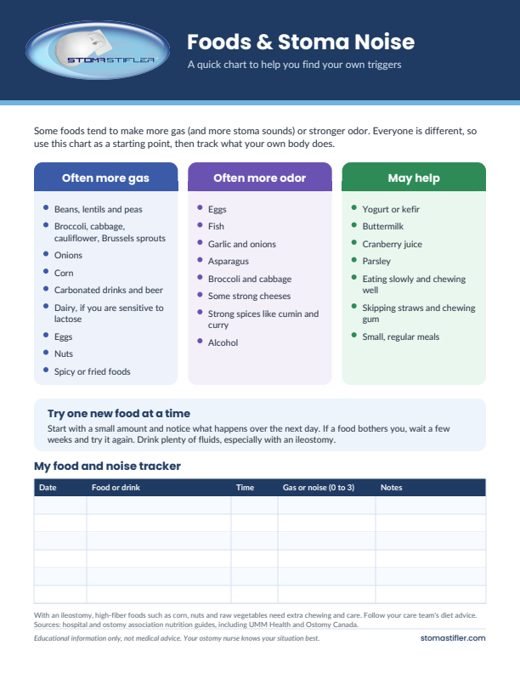
Of course, there are foods and beverages we consume that may be contributing to the stoma noise. By no means do you have to completely avoid these items, but if you are expecting to have a busy day, you may consider taking one of the anti-gas medications discussed below, or waiting until you are home to nosh on your favorite gassy snack. Foods like beans, broccoli, brussels sprouts and cabbage cause more gas. If you love your gassy foods, try cooking them to reduce their gas producing effects. Presoaking beans before cooking them in a new pot of water can also be useful.
An easy way to remember some gas causing behaviors is to ask yourself, “Am I swallowing a lot of air while doing this?” Some examples of air swallowing activities include gum chewing, drinking through a straw, smoking, and drinking carbonated beverages of any type. If you need your soda, consider pouring yourself a glass and allowing it to sit for a few minutes to reduce carbonation.
2. Ease gas naturally first
Start with gentle, natural helpers. A warm cup of organic peppermint tea or fennel tea after meals is a time-tested way to ease gas and bloating, and chewing a few fennel seeds after eating is an old habit for the same reason. Ginger tea helps many people too. Activated charcoal can absorb gas for some people; take it a couple of hours apart from any medications. If you still want an over-the-counter option, simethicone (the active ingredient in Gas-X) breaks up gas bubbles that have already formed, and Beano supplies enzymes that help digest gas-forming foods when taken before the meal.
Stoma Noise Decoder
3. Products to help quiet the noise coming from your stoma
I personally have found that wearing a tighter layer of clothing or a shapewear undergarment (like Spanx) can muffle the sound of a noisy stoma. If I feel a buildup of gas, I also press my hand firmly over my stoma to physically muffle the sound.
This has been very effective for me. There are a few products on the market that are specifically designed for quieting a noisy stoma. One is called a Stoma Stifler (www.stomastifler.com). The Stoma Stifler describes itself as a “noise suppression and stoma guard” product. This product ships worldwide and is made out of a renewable source! It is sold for $178 on their website.
Audit the air you are swallowing
Most stoma noise is not gas your gut manufactured, it is air you swallowed and will hear about an hour later, which is good news, because swallowed air is the easiest lever to pull. For the next two days, watch the four biggest culprits: drinking through straws, chewing gum (especially “sugar-free” gum sweetened with sorbitol), gulping carbonated drinks, and eating quickly while talking. Put your fork down between bites, chew with your mouth closed, and give yourself thirty seconds to settle before the first bite, because anxious, fast eating can triple the amount of air you take in. Many ostomates find the low, rolling rumble that embarrasses them most drops by roughly half within forty-eight hours of changing nothing but these habits.
Eat for a quieter stoma, timing beats restriction
You do not have to give up the foods you love to keep your stoma quiet; more often you simply time them. Beans, broccoli, cabbage, brussels sprouts, onions, and beer are the classic gas-formers, but cooking cruciferous vegetables thoroughly and presoaking beans in fresh water before cooking both cut their gas-producing effect noticeably. When you have something important coming up, a meeting, a date, a long flight, eat your known triggers earlier in the day so the gas has resolved by the quiet moment, or skip them just for that day. Even fizzy drinks become friendlier if you pour them into a glass and let them sit for a few minutes so some of the carbonation escapes before it reaches you.
Why timing matters for gas relief
Gas relief works best when you match it to the moment. Peppermint or fennel tea is gentlest after a meal, as gas starts to build. Ginger tea or a few fennel seeds with a meal help digestion along from the start. Activated-charcoal pouches dropped inside the bag take a different approach, reducing the volume of gas that produces sudden pop-style bursts while also absorbing odor. Over-the-counter products follow the same timing logic: simethicone (Gas-X) breaks up bubbles that have already formed, so it works when you feel a buildup, while Beano supplies enzymes and has to be taken before a gassy meal. None of these silences bag mechanics on its own, but used at the right time and layered together, they take meaningful pressure off the system.
Thicken your output with soluble fiber
Thin, watery output gurgles; thicker output is quieter. A small daily dose of soluble fiber, psyllium, or brands like Metamucil, Citrucel, or Benefiber, bulks output enough to noticeably cut the gurgling that drives so much stoma noise. Start with half a teaspoon stirred into a full glass of water once a day, and build up to a teaspoon over the course of a week so your gut adjusts gently. Skip the gummy fiber chews; the sugar alcohols in many of them produce more gas, not less. If you have an ileostomy, this single change can be transformative: watery output often firms to an applesauce texture within three to five days, and that texture shift quiets the sound and lowers your leak risk at the same time.
Fix the mechanics of the bag itself
A pouch that lies flat against your body makes far less noise than one ballooning with trapped air, so a few mechanical habits pay off quickly. Empty the bag when it reaches about a third full, letting it fill further raises the internal pressure that turns ordinary gas into an audible release. When you change to a fresh bag, peel the filter sticker all the way off so gas can vent quietly instead of forcing its way out, and resist over-tightening the closure, which creates the pinhole pressure points behind most whistles. A snug undershirt, a compression tank, or shapewear worn between the pouch and your outer clothes muffles both output sound and the bag-on-fabric rustle the brain often mistakes for gut noise. Choose quiet fabrics, too: soft cotton beats crinkly synthetics every time.
Where the Stoma Stifler fits in
Diet and habit changes quiet the source of the sound, but they rarely take you all the way to silent, a working stoma will always release some gas. What remains is gas escaping through the stoma itself, and that needs a physical cover that absorbs and disperses it rather than letting it pop audibly through. That is exactly the job the Stoma Stifler was built for: a molded cup-and-band system that spreads gas release across a wider surface so an audible escape becomes a soundless one. Most people reach for it after the food log and the fiber, when they have done the controllable work and simply want public life, meetings, meals, intimacy, sleep, to feel normal again. If you want to see how the whole approach fits together, our complete guide to stopping stoma noise walks through the full framework step by step.
A two-week quiet-stoma plan
If you would rather follow a structured plan than juggle tips at random, here is the sequence most ostomates respond to. For days one through three, drop straws and gum, eat slowly with your mouth closed, and empty the bag earlier than usual, these alone cut swallowed air, the single biggest source of next-hour noise. On days four through seven, add half a teaspoon of psyllium daily and build toward a full teaspoon, giving your output time to firm up. From days eight through ten, add the Stoma Stifler for the residual pressure-release sounds that diet changes cannot reach. Finally, on days eleven through fourteen, keep a brief notes-app log after each meal to surface your top three trigger foods, then either time them earlier in the day or trade them out. By the end of the two weeks, most ostomates report a dramatic drop in audible events, not perfect silence, but quiet enough that a noisy stoma stops dictating where they sit, what they eat, and whether they speak up in a meeting.
When stoma noise is worth a call
Almost all stoma noise is a diet, habit, or appliance matter you can manage from home, but a few patterns deserve a call to your stoma nurse rather than another tweak. Reach out if the character of your sound changes suddenly and stays changed, if noise comes paired with output stopping for twelve hours or more or turning to pure water for eight, if you feel pain alongside the noise (especially with an ileostomy, where it can signal a partial blockage), or if a change in stoma color shows up with the new sound. Absent those signals, the steps above are where to start, and they resolve the great majority of everyday stoma noise within a few weeks.
I hope these suggestions give you a few new options to try to quiet a noisy stoma!
Helpful products on Amazon
What ostomates and stoma nurses commonly recommend for reducing noise from a stoma. The links go to tagged Amazon searches so you can compare options.
The clinical context for sound management:
- Quality of life is at stake, and nurse support helps. A 2018 review found ostomy surgery can impair quality of life, and that involving an ostomy nurse increases acceptance, reduces complications, and improves quality of life. According to PubMed (DOI 10.3238/arztebl.2018.0182).
- Your stoma type shapes your baseline. A 2025 systematic review comparing ileostomy and colostomy found meaningfully different complication profiles, with ileostomy showing fewer overall complications. According to PubMed (DOI 10.3389/fmed.2025.1610213). Output consistency differs by stoma type as well, which is part of why your noise pattern is partly set by which stoma you have.
- Most stoma issues respond to conservative care. A 2019 review documents that the majority of stoma complications are managed without surgery, through pouching technique, dietary adjustment, and skin care. According to PubMed (DOI 10.1055/s-0038-1676995). The same levers that manage those issues are the ones that quiet noise.
- Know what is worth a nurse check. A 2023 mapping review catalogs structural stoma complications, retraction, stenosis, prolapse, parastomal hernia, and notes most are managed conservatively while some need surgical revision. According to PubMed (DOI 10.1186/s13017-023-00516-5). If your sound pattern changes suddenly and stays changed, have a stoma nurse rule these out.
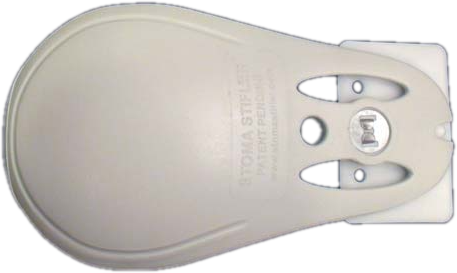
Stoma Stifler™, The Sound Suppressor + Stoma Guard Most Ostomates Wish They’d Found Sooner


Managing stoma noise is mostly about stacking small interventions rather than finding one perfect solution. The reader pattern is consistent: a sound-dampening product plus a few diet adjustments plus better bag positioning produces dramatic improvement; any one of those alone produces modest improvement. The biggest mental shift readers report: realizing that stoma noise is engineerable, not just endurable. Once that shift happens, most readers report significant improvement within 4-8 weeks.

Affiliate disclosure: This article contains Amazon affiliate links. As an Amazon Associate we earn from qualifying purchases, at no extra cost to you. Recommendations are based on what stoma nurses and the ostomy community consistently mention; the links go to tagged Amazon searches so you can compare options rather than being pushed toward a single product. Read our full disclosure here.
More from the Ostomy Library
- How to stop stoma noise: The complete guide to quieting stoma noise.
- Why is my stoma so loud?: The 7 most common reasons a stoma is loud.
- Stoma noise decoded: Which stoma sounds are normal and which need attention.
Browse all Stoma Noise and Odor guides or the full Ostomy Library.
Frequently Asked Questions
Is what I'm experiencing normal after ostomy surgery?
Most concerns ostomates have, bag noise, gas, occasional leaks, skin irritation, body-image adjustment, are normal in the first 6-12 months. The frequency and intensity drop significantly as your body adapts and your routine settles. Reach out to your ostomy nurse if anything feels worsening rather than improving.
When should I call my ostomy nurse or doctor?
Call promptly for: peristomal skin that's painful, bleeding, or breaking down; stoma color changes (dusky, purple, pale); no output for 4-6 hours with cramping (possible blockage); high output that won't slow despite reducing fiber and adding electrolytes; or a hernia bulge that becomes painful or won't reduce. Most other concerns can wait for your next scheduled appointment.
Does the Stoma Stifler help with this?
The Stoma Stifler is a stoma guard and noise suppressor in one. Its dense foam cup muffles stoma sounds and shields the stoma from bumps and pressure, without restricting output. It works with your existing pouching system and doesn't interfere with skin care or wafer adhesion. Pairing it with the basics, good skin routine, hydration, and any complementary supplies above, covers most daily-comfort challenges.