
Pain around your stoma has a way of taking over your whole day. Getting out of a chair, bending to tie a shoe, a long afternoon on your feet, even rolling over in bed can bring the ache back, and after a while you start to brace yourself before you move. If you feel worn down by it, or uneasy that something might be wrong, you are far from alone. Pain, burning and soreness around the stoma are among the most common things people living with an ostomy describe.
The encouraging part is that most stoma pain has a cause you can find, and most causes have gentle, practical steps that ease them. Sore skin under the wafer (the sticky skin barrier that holds your pouch in place), a wafer that rubs, the pull of a full pouch, healing nerves after surgery and cramping from inside each feel a little different, and each calls for something different.
This guide walks through how to tell them apart, the natural steps that help with each one, and the few signs that mean you should call for help right away.
Where is your stoma pain coming from?
At a glance
| Most common source | Sore skin under the wafer, often from output, adhesive or an opening that rubs |
|---|---|
| Pain when upright | Often the pull of a full pouch or a parastomal hernia |
| Tingling or twinges | Often healing nerves, common in the first months after surgery |
| Natural relief | Warm water cleaning, a cooled chamomile or calendula tea compress, gentle removal and support |
| Under the wafer | No oils, balms or creams, because they keep the wafer from sticking |
| Call right away | Stoma turns dark red, purple, black or pale, severe pain, or no output with cramps and swelling |
Why pain around your stoma wears you down
Pain that keeps coming back changes how you move. You start sitting down slowly, avoiding the low shelf, skipping the walk you used to enjoy, and wondering at every twinge whether something has gone wrong. That constant watchfulness is tiring in its own right, and it is one of the reasons stoma pain can feel bigger than it looks.
You are not imagining it, and you are not alone. In a large survey of more than 5,000 people living with an ostomy, most had experienced problems with the skin around the stoma, and many felt pain, itching or burning even when the skin looked normal. Pain after bowel surgery is also common, especially in the first months. Knowing that does not make the ache disappear, but it can take away some of the fear that you are the only one.
The next step is to get curious about your pain instead of only bracing against it. Where it sits, when it shows up and what it feels like are clues, and those clues usually point to a cause you can do something about.
What causes pain around a stoma?
Most stoma pain comes from one of five places. Some people have more than one at the same time, which is why it helps to look at each.
Sore skin under the wafer
This is the most common source. When output touches the skin, it can burn and sting within hours. Pulling the wafer off quickly, scrubbing the skin, or using soaps and wipes that leave a film can add to it. You can learn to read the signs in the guide to sore skin around the stoma.
A wafer that rubs or presses
An opening cut too tight can rub against the stoma as you move. Your stoma also changes size, especially in the first weeks after surgery as the swelling goes down, so an opening that fit last month may not fit now. A convex wafer (one with a gently curved surface) or a belt fastened too tightly can press harder than it should.
The pull of the pouch, or a hernia
A pouch that fills up drags on the area all day long. A parastomal hernia (a bulge where part of the bowel pushes through the muscle beside the stoma) can bring a heavy, dragging ache that builds while you are standing and fades when you lie down. Many people notice the bulge when they cough or stand up.
Healing nerves and scar tissue
Surgery cuts through skin, muscle and small nerves. As those nerves heal, they can send tingling, numbness, pulling or sudden electric twinges, and scar tissue can feel tight. These feelings are common in the first months and usually fade as healing continues.
Cramping from inside
Gas, certain foods and a slow or blocked bowel can cause cramps that build and ease in waves. Mild cramps after a large meal are common. Cramping with no output and swelling is different, and the section on warning signs below explains why.
Which source fits you, and which steps come first, is personal. Your Blueprint's Skin Plan gives steps for the kind of skin trouble you describe, and When to Call for Help sets out green, amber and red signs so the next step is clear. See your top 3 priorities
How can you tell what kind of stoma pain you have?
Three questions sort most stoma pain: where it sits, when it shows up and what it feels like. The tool at the top of this page walks through them one at a time, and the notes below give you the same clues in plain words.
- Burning, stinging or itching that peaks at changes usually means the skin. Look at the skin when the wafer comes off: redness that hugs the stoma points to output, redness in the exact shape of a product points to that product.
- Rubbing at the stoma edge usually means the opening is too tight or the wafer moves as you bend.
- A heavy, dragging ache that grows while you are upright and eases when you lie down usually means pull, from a full pouch or a hernia.
- Tingling, numbness or sharp twinges that come and go usually means healing nerves, especially in the first months.
- Cramps that build and ease in waves usually come from inside the bowel.
A simple pain log makes the pattern clearer. For a week, jot down when the pain came, what you were doing and what it felt like. Many people find the answer jumps out after a few days. A photo of your skin at each change helps too, and you can show it to your ostomy nurse if you want a second set of eyes.
From 14 years of conversations with ostomates
Ostomates often say the same thing about pain: the turning point came when they stopped trying to push through it and started paying attention to it. Pain that sits on the skin and pain that sits deeper almost never have the same cause, and the steps that help one rarely help the other. Matching the step to the source is what finally brings relief.
Gentle, natural relief for sore skin around the stoma
When the pain sits on the skin, the goal is to remove what is irritating it and give the skin a calm, dry surface to heal under the next wafer. Most of these steps cost almost nothing.
- Remove the wafer slowly. Use an adhesive remover wipe and press the skin down as you peel the wafer back, rather than pulling the skin up with it.
- Clean with warm water only. Skip soaps, lotion wipes and anything with fragrance or oil on the skin around the stoma.
- Soothe the skin with a tea compress. Brew a cup of chamomile or calendula tea, let it cool completely, soak a soft cloth and rest it on the skin for a few minutes.
- Dry completely. Pat the skin dry, then give it a minute or two of air before the new wafer goes on.
- Re-measure and cut a snug opening. About 1/8 inch (2 to 3 mm) larger than the stoma leaves no skin exposed and keeps the edge from rubbing.
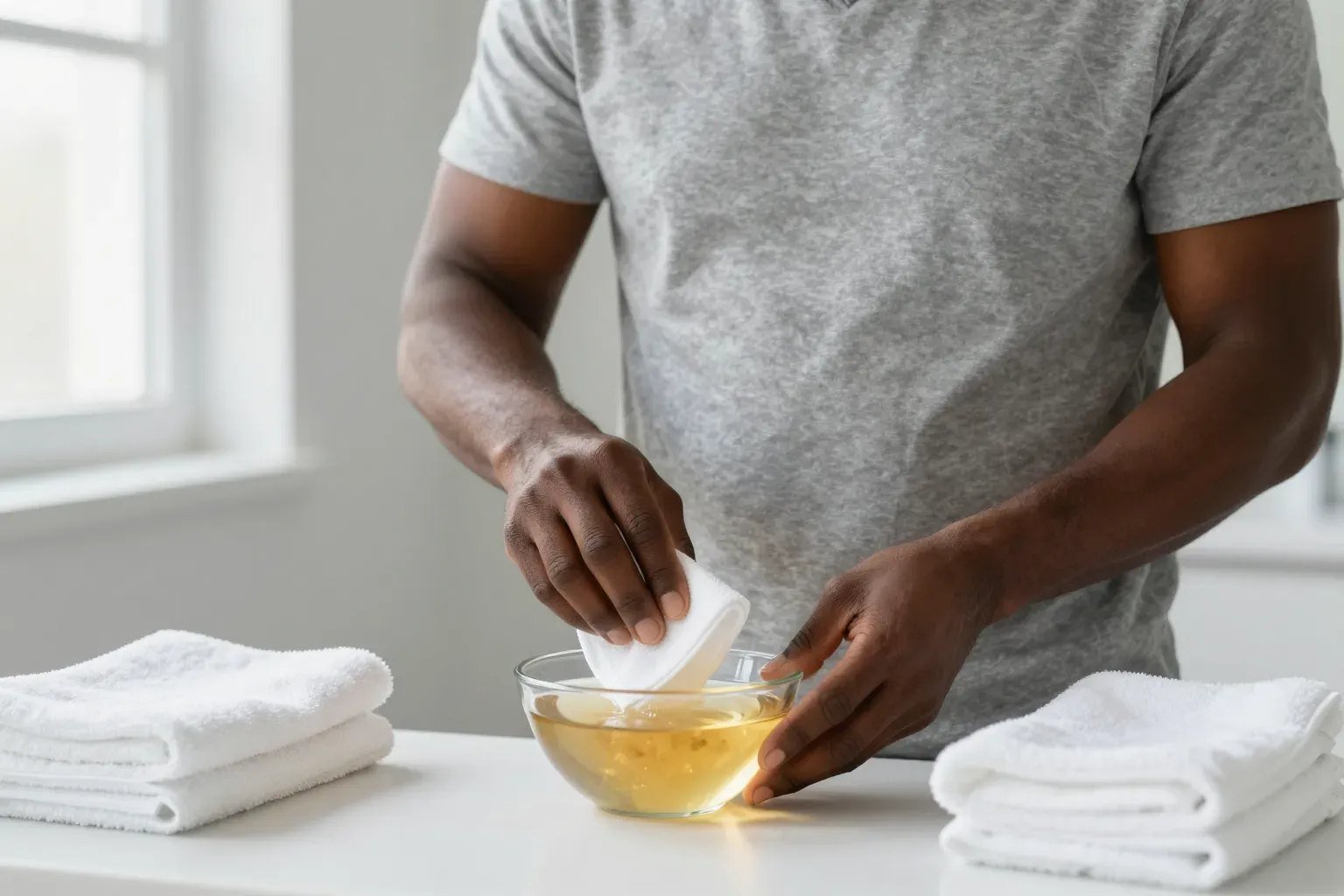
Oils, balms and creams, including calendula ones, are lovely for skin elsewhere, but under the wafer they keep it from sticking and can lead to leaks and more soreness. A tea compress gives you the calming plant benefits without leaving anything behind once the skin is dry. In one study of people with colostomies, a chamomile compress used twice a day helped sore skin around the stoma heal faster, and pain and itching eased sooner.
One ostomate shared through UOAA that they lived with daily leaks and painful skin irritation for years, assuming that was simply part of life with a stoma. A visit with a specialized ostomy nurse turned up different products that fit their stoma far better, and their comfort and confidence improved dramatically.
That story carries a lesson many people learn too late: more adhesive, powder and paste do not make a better seal. If you keep adding products to stop pain or leaks, it may be time to look at the fit itself. The guide to a gentle daily routine for the skin around the stoma walks through each step at your own pace.
 A peek inside
This is what a Skin Plan looks like: steps for the kind of skin trouble you describe, built from your own answers.
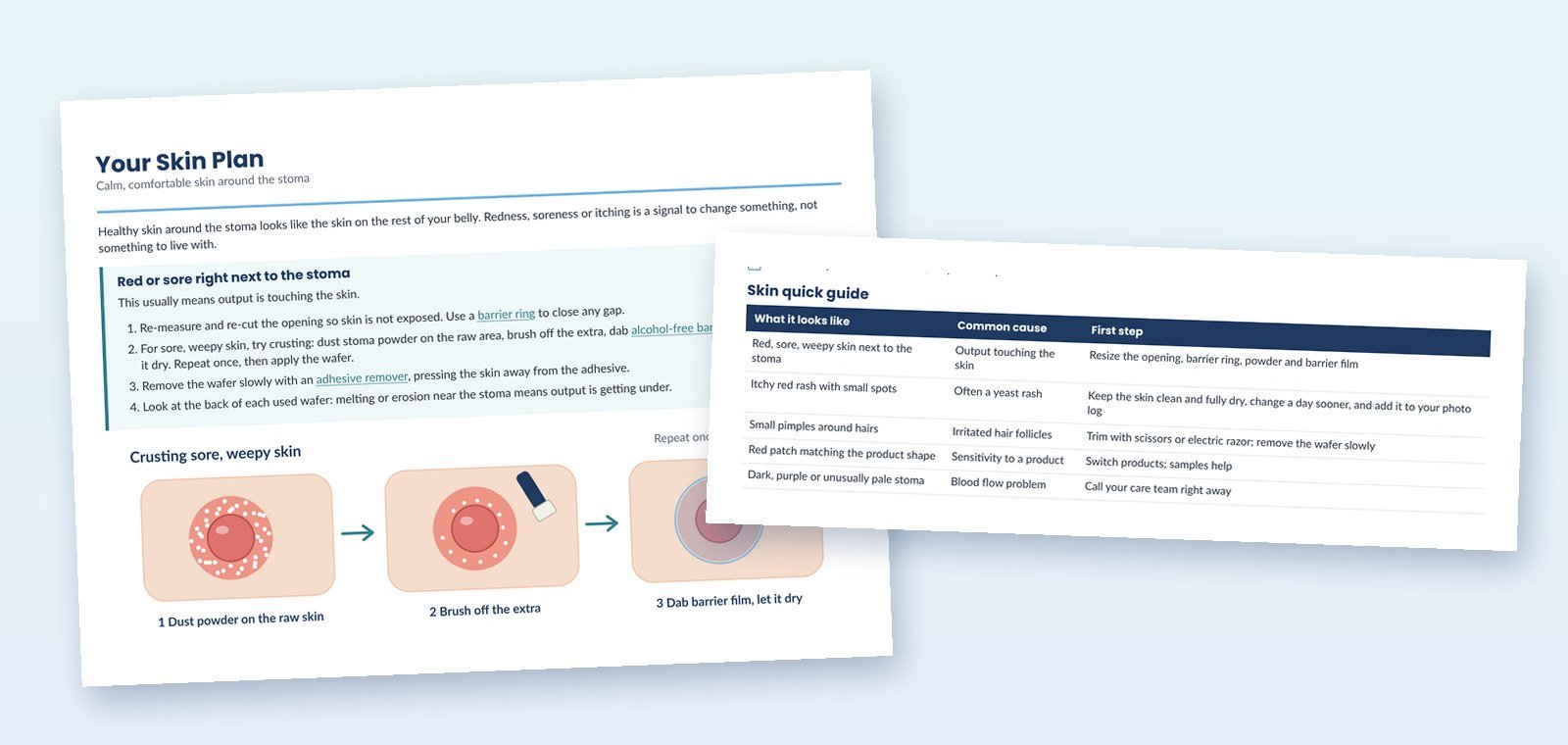
- Steps for the exact kind of skin trouble you describe
- Drawn crusting steps for sore, weepy skin
- A skin quick guide to keep close
Answer a few questions and see your Confidence Score and top 3 priorities before you decide anything. Sore or itchy skin is already ticked for you. See more sample pages
What helps when the pain is deeper than the skin?
When the ache sits underneath, around the stoma rather than on the surface, the steps change. The goal becomes taking weight and strain off the area and giving healing tissue time to settle.
Take the weight off
Empty your pouch at about one third full, so it never drags. Many people find a soft support belt or high-waist support garment makes a real difference, because it holds the pouch close and spreads the pull across a wider area. It should feel snug and supportive, never tight. In one survey of people with a bowel stoma, support garments came up again and again as a way to manage hernias, hold the pouch secure and feel more comfortable, while ill-fitting garments were the main complaint.
When the pull of the pouch is part of the pain, a breathable belt with an inner pocket holds everything snug so the weight is not hanging from the wafer all day. For skin that hurts at every change, adhesive remover wipes let the wafer lift away without tugging the tender skin underneath. And a box of organic chamomile tea gives you the cooled compress for the skin and a calming evening cup at the same time.
YConnect Ostomy Belt and Pouch Cover
 View on Amazon
A breathable belt with an inner pocket that holds the pouch snug on active days.
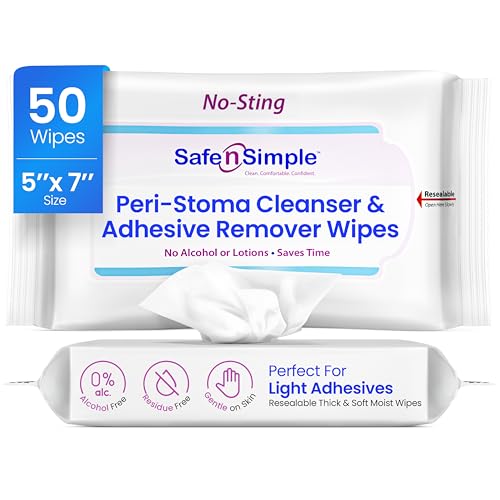
Safe n' Simple Adhesive Remover Wipes
 View on Amazon
Loosens the wafer so it lifts off gently, without pulling the skin. Safe n' Simple is an independent, family-run maker in Michigan.
WZY Organic Chamomile Tea
 View on Amazon
Caffeine-free chamomile flowers, calming in the evening and gentle on the stomach.
Already wear an ostomy belt? The Stoma Stifler connects to it with the optional belt-clip kit included with every Stoma Stifler.
As an Amazon Associate, Stoma Stifler earns from qualifying purchases. Disclosure
Brace gently when you move
Resting a flat hand over the stoma when you cough, sneeze, laugh or stand up from a chair supports the muscles around it and can take the edge off a sharp twinge. Rolling onto your side before you sit up in bed does the same.
Use warmth around the wafer, not on it
A warm, not hot, compress on the belly beside the wafer for 10 to 15 minutes can relax tight muscles and soothe a nerve ache. Keep heat off the wafer itself, since warmth can loosen the seal.
Keep moving, gently
Short, easy walks every day help healing tissue soften and keep the muscles around the stoma working. Build up slowly, and if lifting or exercise brings the pain back, the guide to exercise after ostomy surgery shows how people return to activity step by step. If you think a hernia may be part of the picture, the guide to preventing a parastomal hernia explains the risk factors and what helps.
How do you rest comfortably when your stoma hurts?
Nights are often when pain feels loudest, partly because there is nothing to distract you. A few small changes can make lying down far more comfortable.
- Lie on your back with a pillow under your knees, which relaxes the belly muscles around the stoma.
- If you sleep on your side, hug a pillow against your belly so the pouch is supported and does not hang.
- Empty the pouch right before bed, so it starts the night light and flat.
- Sip a warm cup of chamomile tea in the evening, which many people find calming before sleep.
If leaks at night add to the soreness, the guide to ostomy bag leaks and what helps walks through the causes in order. Fewer leaks almost always means calmer skin and less pain.

Will the pain around your stoma go away?
For most people, yes, or at least it becomes far easier to live with. Skin pain usually settles within a few changes once the cause is removed. Nerve twinges and scar tightness tend to fade over the first months as healing continues, though some people notice a little numbness or sensitivity for longer. Pain from pull and pressure often eases once the pouch is emptied earlier and the area has the right support.
Healing is rarely a straight line. A good week can be followed by a sore day, especially after more activity than usual. That does not mean you are going backward. Keep your pain log going, and you will usually see the overall trend moving in the right direction.
From 14 years of conversations with ostomates
Many people say they waited months before mentioning their pain to anyone, assuming it was simply part of having a stoma. Pain is a signal worth listening to. When the steps above do not bring relief, a fitting with an ostomy nurse often turns up a product or a small change that makes the difference.
When should stoma pain be checked right away?
Most stoma pain can be eased at home. A few signs mean you should call your care team or go to the emergency room right away:
- Your stoma turns dark red, purple, black or unusually pale.
- Sudden, severe pain around the stoma.
- No output for several hours along with cramping, swelling, nausea or vomiting, which can mean a blockage. The guide to ostomy blockage explains what to do.
- A bulge that becomes firm, tender and painful and does not go back when you lie down.
- Fever, or redness and warmth that spreads across the skin around the stoma.
For pain that is not urgent but keeps coming back, such as burning skin that does not settle, small raised bumps at the edge of the stoma that bleed easily, or an ache that is not improving after a few weeks of the steps above, an ostomy nurse can help you find the cause and the right products.
What eased the pain around your stoma?
If you have lived with pain around your stoma and found what helped, share it by email at info@stomastifler.com. Stories are shared only without your name, to help the next person who is bracing every time they move.
Research that backs up this guidance
Research matches what people living with an ostomy describe: problems with the skin around the stoma are common, and pain, itching and burning are often present even when the skin looks normal. Pain around the stoma tends to grow as skin irritation becomes more severe, and pain after bowel surgery affects many people, especially those with a permanent stoma.
Research also points toward what helps. A chamomile compress helped sore skin around the stoma heal faster and eased pain and itching sooner than a steroid ointment. Parastomal hernias are a known source of discomfort and pain, and people use support garments to manage hernias, hold the pouch secure and feel more comfortable.
| What the research found | Source |
|---|---|
| In a survey of 5,187 people living with an ostomy, 88% had experienced skin problems around the stoma, and 75% had symptoms such as pain, itching or burning even when the skin was not discolored. | Fellows et al., British Journal of Nursing, 2021PubMed ID 34514829 |
| Among 109 adults with skin irritation around the stoma, about one in three had pain, and the pain grew stronger as the skin irritation became more severe. | Santana et al., Pain Management Nursing, 2025PubMed ID 40436706 |
| In people with colostomies and sore skin around the stoma, a chamomile compress used twice a day healed the skin faster than a hydrocortisone ointment, and pain and itching eased sooner. | Charousaei et al., Ostomy Wound Management, 2011PubMed ID 21617262 |
| Parastomal hernia is one of the most common complications after stoma surgery and often lowers quality of life through discomfort, pain, leaks and skin irritation. | Aquina et al., Digestive Surgery, 2014PubMed ID 25531238 |
| Written answers from 598 people with a bowel stoma described support garments being used to prevent or manage a hernia, keep the pouch secure and handle appliance problems, with ill-fitting garments the main complaint. | Hubbard et al., BMJ Open Gastroenterology, 2019PubMed ID 31275585 |
| Among 11,600 people treated for colorectal cancer, 41.5% reported chronic pain, and having a permanent stoma was one of the factors linked to more pain. | Elfeki et al., Colorectal Disease, 2025PubMed ID 39868625 |
What this means for you: What this means for you: pain around your stoma is common, it is real, and most of it has a cause you can find. Calm skin, a snug fit, less pull on the area and time for healing nerves bring relief for most people.
This article covers what most people share. My Ostomy Blueprint is one plan written from your answers, and it goes further:
- Skin Plan steps for the kind of trouble you describe
- When to Call for Help, with green, amber and red signs
- Lifting guidance and support wear for active days
Plus everything else you ask for help with, from food and hydration to sleep and travel, in one place.
Build My BlueprintFrequently asked questions
Is it normal to have pain around the stoma?
Some soreness and twinges are common, especially in the first months after surgery while the skin, muscles and nerves heal. Ongoing pain is not something you simply have to accept, though. Most stoma pain comes from sore skin under the wafer, an opening that rubs, the pull of the pouch, healing nerves or cramping, and each has gentle steps that help. Sudden, severe pain or a color change in the stoma needs a call right away.
Why does the area around your stoma hurt when you stand up?
Pain that builds when you are upright and eases when you lie down often comes from weight and pull on the area. A pouch that fills up drags on the wafer, and a parastomal hernia can bring a heavy, dragging ache. Emptying the pouch at about one third full and wearing a soft support belt or high-waist garment often helps. If you notice a bulge when you stand or cough, have your ostomy nurse check it.
Can you put calendula or chamomile on the skin around your stoma?
Yes, as a cooled tea compress during a wafer change, with the skin dried completely before the new wafer goes on. Avoid calendula oils, balms and creams under the wafer, because anything oily keeps the wafer from sticking and can cause leaks and more soreness. In one study, a chamomile compress used twice a day helped sore skin around the stoma heal faster and eased pain and itching sooner.
How long does nerve pain around a stoma last after surgery?
Tingling, numbness, pulling around the scar and sudden twinges are common in the first months after surgery and usually fade gradually as the nerves heal. Some people notice a little numbness or sensitivity for longer. Gentle daily walks, a warm compress beside the wafer and supportive sleeping positions can ease the discomfort while healing continues. Pain that grows stronger instead of fading deserves a check with your ostomy nurse.
Last updated November 2026. Written from 14 years of conversations with people living with an ostomy and the people who care for them. General education only; it does not replace your surgeon, ostomy nurse or dietitian.