
Leaks are the single most demoralizing part of life with an ostomy. They happen at the worst times, in the worst places, and they make you question everything you thought you had figured out. Here is the good news: leaks are not random. They have causes, and once you identify yours, the fix is usually specific and effective. This guide walks through the 7 most common causes, and the tool below tells you which one is most likely yours.
Leak Location Quick Decoder
Tap each question below. We'll pinpoint your most likely leak cause and the targeted fix.
1
Where does the leak appear first?
2
When does it usually happen?
3
How fast does the seal fail?
Your leak cause appears here, tap a question above
Tap a button above to start narrowing down the cause.
Leak Detective Tool
Why Is My Ostomy Bag Leaking?
Three questions, then the tool pinpoints the most likely cause of YOUR leaks and what to do about it. Most leaks are one of 7 things, and the fix changes for each.
Step 1: When do leaks usually happen?
Overnight or first thing in morning
During exercise or activity
After meals (output overflow)
Random, no clear pattern
Within hours of a wafer change
Step 2: Where does the leak typically start?
Edge of the wafer (around the seal)
Under the wafer (stoma side)
Connection between wafer and pouch (2-piece)
From the filter vent
Pouch tail / closure
Step 3: What does your skin look like under the wafer?
Healthy, no irritation
Red, raw, or itchy
Uneven contours or scarring
Weeping moisture / can't get dry
The 7 most common causes of ostomy bag leaks
1. Skin not fully dry at application

The single most common cause, and the easiest to fix. Wafer adhesive needs dry skin to bond. Even residual moisture from showering, or oily film from soap, weakens the bond from the first second. After showering, gently pat (do not rub) the area dry, then air-dry for 5-10 minutes before applying. A cool-setting hair dryer held a foot away accelerates the process safely.
2. Wrong wafer size or shape
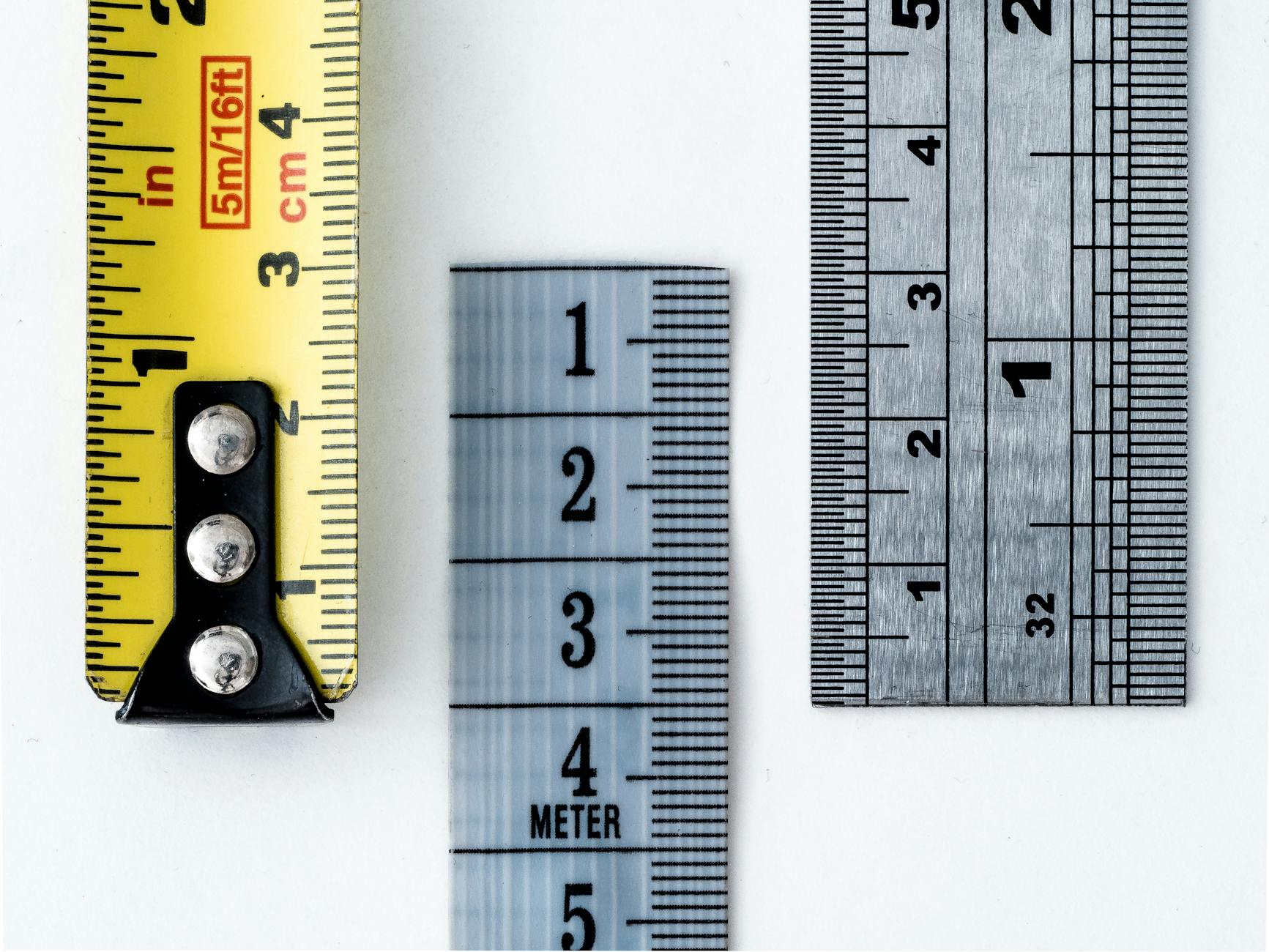
Your stoma changes size during the first 6-8 weeks after surgery as swelling resolves. Measure it after every wafer change during this period. The wafer opening should be within 1/8 inch of your stoma circumference, large enough to not press on the stoma, small enough to not expose surrounding skin. Cut-to-fit wafers work better than precut for irregular stomas. If your stoma sits in a skin fold, dip, or near a hernia, a convex wafer (one that curves outward) plus a barrier ring usually resolves leaks that flat wafers cannot.
3. Pouch overfill
A pouch should never exceed about 1/3 full before being emptied. Beyond that, the weight pulls the wafer downward, breaking the seal at the top edge first. For overnight, this is critical: empty right before bed and consider a larger-capacity high-output pouch designed for sleeping.
4. Skin irritation or breakdown under the wafer
Irritated, raw, or weeping skin cannot hold an adhesive. The leak you see is the symptom; the broken skin is the actual problem. Use the "crust technique" on irritated patches: stoma powder, blotted off, then skin sealant (no-sting), then powder again, then sealant. This creates a dry surface the wafer can bond to. While healing, change the wafer slightly more often. See our detailed stoma skin routine guide for the full protocol.
5. Activity, sweat, and pouch swing

Body movement flexes the wafer; sweat softens the adhesive; a swinging pouch creates drag. A stoma belt or fitted compression undergarment stabilizes the appliance during exercise. Both work with the Stoma Stifler: it slips under a compression undergarment, and the belt clip included in every kit attaches it to a belt. Extended-wear wafers (sweat-resistant adhesive) plus a barrier ring resolves most active-leakers. Empty the pouch BEFORE workouts so weight does not contribute. See our first 12 weeks of post-ostomy exercise guide for activity-specific recommendations.
6. Two-piece coupling issues
On two-piece systems, the wafer flange to pouch connection is its own failure point. Make sure you hear or feel the click all the way around when snapping the pouch on. Inspect the flange ring before each pouch change for cracks or warping. If the coupling consistently fails, try a different brand or consider switching to a one-piece system which eliminates this point of failure entirely.
7. Filter saturation
A wet filter stops venting gas; pressure builds inside the pouch and either pushes the seal apart or leaks moisture out through the filter itself. Use the filter cover sticker that comes with most pouches whenever you shower, sweat heavily, or are in humid environments. If your output reaches the filter regularly, you may need to empty more often or eat thickening foods (banana, white rice, applesauce, smooth peanut butter).
Quick fixes that solve the majority of leaks
Evidence Stack
Three studies clarify why leaks happen and how they connect to broader skin issues:
What we learned
Most ostomy bag leaks trace back to a few fixable causes, fit, sizing, skin condition, and seal, and peristomal skin problems both cause and result from leaks. Most are managed conservatively.
What it means for you
Match the fix to the cause: re-measure the stoma, add a barrier ring or paste, and keep the skin clean and dry. Repeated leaks despite these steps are worth a WOC nurse visit.
- Peristomal skin is the most common early complication. A 2018 review reports skin irritation, erosion, and ulceration combined incidence of 25-34%, with leaks as a primary driver. According to PubMed (DOI 10.3238/arztebl.2018.0182).
- Complications cluster. A 2019 review documents peristomal skin issues, retraction, and stomal necrosis as the most common early ostomy complications, all of which contribute to leak risk. According to PubMed (DOI 10.1055/s-0038-1676995).
- Most complications respond to conservative management. A 2023 mapping review confirms most stoma complications including leak-related skin issues are managed conservatively with proper pouching technique before requiring intervention. According to PubMed (DOI 10.1186/s13017-023-00516-5).
- Barrier ring (Safe n’ Simple moldable rings or equivalent): adds an extra second seal at the stoma base. Resolves a huge percentage of contour, sizing, and skin-irritation leaks.
- Stoma paste: caulks small gaps around irregular stoma shapes. Use sparingly; a thin bead, not a thick line.
- Skin sealant + powder "crust": layered application that creates a dry, smooth bonding surface on irritated skin.
- Convex wafer: pushes the stoma slightly forward, eliminating the seal gap that flat wafers leave around recessed or flush stomas.
- Different brand of wafer adhesive: skin chemistry varies. What works for your neighbor may not work for you. Free manufacturer samples programs (Coloplast Care, Hollister Secure Start, ConvaTec me+) make brand-testing easy.
When to call an ostomy nurse
If you have worked through the causes above and still cannot solve frequent leaks, call a Wound Ostomy Continence Nurse (WOC Nurse). All three major manufacturers offer free 1:1 phone consults with WOC Nurses regardless of which brand you use:
- Hollister Secure Start: 1-888-808-7456
- Coloplast Care: 1-866-226-6362
- ConvaTec me+: 1-800-422-8811
You can also get a visit covered by Medicare and most insurance with a referral from your surgeon or primary care doctor. WOC Nurses can see things in person (stoma protrusion, skin contour, scarring) that no phone consult can catch.
The emergency leak kit (keep with you always)
- 1 spare wafer + 1 spare pouch in your size
- 1 pack of disposable wipes (no fragrance)
- 1 small ziplock bag (for soiled items)
- 1 single-use roll of adhesive remover wipes
- 1 small wallet-sized stoma template
- 1 single-serve packet of stoma powder + barrier rings
- Optional but recommended: spare underwear in a sealed ziplock
Keep this in your purse, glove compartment, desk drawer at work, gym bag, and travel carry-on. A leak that happens with a kit at hand is an inconvenience. A leak without one is a crisis.
When leaks are solved but noise still bothers you
Stoma Stifler
A sound-dampening guard worn over your appliance. Solves the noise problem after you have the leak problem under control.
See the Stoma Stifler →More from the Ostomy Library
- High-output ostomy: What counts as high output, how to stay hydrated and when to call your doctor.
- Skin around the stoma: A simple daily routine for healthy peristomal skin.
- Exercise after ostomy surgery: A 12-week plan to return to exercise safely.
Browse all Care and Complications guides or the full Ostomy Library.
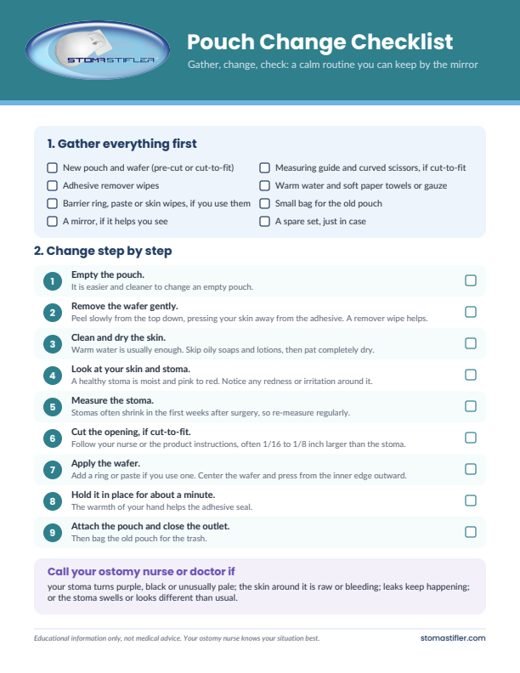
Printable: Pouch Change ChecklistSupplies to gather, nine calm steps, and the signs that mean it is time to call your ostomy nurse.Print My ChecklistSee all printables
Frequently asked questions
How often should I change my wafer to prevent leaks?
Most extended-wear wafers last 3-7 days for most people. Standard wafers usually 1-3 days. The right cadence is the longest you can go before you see leak signs OR skin irritation at change time. If your skin is healthy and your wafer holds, you can leave it longer; if skin is irritating, change sooner.
Why do my leaks always happen at night?
Overnight leaks usually involve a combination: pouch fills past 1/3 capacity, body position compresses the appliance, and a partially saturated wafer fails under the weight. Empty before bed, use a high-output pouch sized for overnight, and try sleeping on the side opposite your stoma when possible.
Will a hernia cause my ostomy bag to leak?
Yes, a parastomal hernia changes the skin contour around your stoma, often making a flat wafer fit poorly. A convex wafer and a barrier ring usually solve the seal issue. If the hernia is significant, talk to your surgeon about hernia repair. See our parastomal hernia prevention guide for ongoing management.
Can I shower with my ostomy bag on?
Yes. Most wafers are designed to be water-resistant. Apply the filter cover sticker before showering, use a mild fragrance-free soap, rinse thoroughly, and pat dry. If you change your wafer after showering, wait at least 5-10 minutes for skin to fully dry first.
What is the best barrier ring for leak prevention?
Moldable barrier rings, such as Safe n’ Simple’s, are a simple independent option. They mold to your stoma shape, fill skin contours, and add a second adhesive layer at the stoma base. Most ostomates who switch to using a barrier ring report dramatic leak reduction. Get free samples through any of the manufacturer programs.
According to PubMed
Research that backs up this guidance
- Murken DR, Bleier JIS. (2019). Ostomy-Related Complications. Clinics in Colon and Rectal Surgery, 32(3):176-182. [DOI]Comprehensive review of common stoma issues - peristomal skin complications, retraction, stomal stenosis, prolapse, bleeding, dehydration from high output, and parastomal hernia. Covers prevention and recommended management strategies for every issue an ostomate typically faces.