A wedding invitation often brings a quiet wish: to feel beautiful or handsome in something you chose, and fully present for the vows, the toasts and the dancing without thinking about your pouch all night. Knowing what to wear with an ostomy is simpler than it feels: a waistline above or below your stoma, a supportive layer underneath, an empty pouch before the big moments and a small kit close by.
If you have been standing at the closet with that wish, you’re not alone. How clothes will fit and whether anyone will notice the pouch are among the most common concerns people living with an ostomy describe, and dressing up for an occasion often helps them feel like themselves again.
This guide covers dresses, suits and what goes underneath, then food, photos, dancing and hugs, so your attention stays on the people you came to celebrate.
What will you wear to feel like yourself?
Answer a few questions about your outfit, your stoma and the day ahead. You will see the approach that suits you best, with steps to feel ready and tips for the choices you made.
What are you planning to wear?
Where does your stoma sit compared with your natural waist?
What does the day look like?
What concerns you most about the day?
At a glance
| The feeling | Wanting to feel beautiful or handsome and fully present, not thinking about the pouch all night |
|---|---|
| The outfit rule | A waistline that sits clearly above or below your stoma, never a tight band across it |
| Styles that work | Wrap dresses, A-line skirts, patterns, darker colors, a jacket left open, suspenders |
| Underneath | Supportive high-waisted underwear or a soft wrap, and a smaller pouch if your nurse agrees |
| On the day | Familiar food, easy on fizzy drinks and alcohol, empty before photos and the ceremony |
| Close by | A small kit in your bag or with a trusted person, and the restroom found on arrival |
| What matters most | Being present for the vows, the toasts and the first dance |
Why does dressing up for a wedding stir up so much?
A wedding brings photos, fitted clothes, long hours, quiet vows, a crowded dance floor and more hugs than you can count. With an ostomy, each of those can raise a small question before you have even chosen an outfit.
A quick word on terms. Your stoma is the small, moist, pink or red opening on your belly where stool or urine, called output, leaves the body. A pouch (the bag) collects it, held to your skin by a wafer, the sticky skin barrier. Most clothing questions come down to where that pouch sits and what rests on top of it.
Many people living with an ostomy describe the same private list before an outing: how their clothes will fit, whether someone will notice the pouch, whether a partner will still find them attractive. Some stay away from social gatherings at first because they feel self-conscious. For many, one of the first steps back toward feeling like themselves is getting dressed up for an occasion again.
Wanting to look wonderful is wanting your body to feel like yours on a day you will remember, and that wish is worth planning for.
Which dresses work best with an ostomy?
The most useful thing to know is where a waistline sits against your stoma. Stand at a mirror in your underwear and notice whether a waistband would naturally fall above it, below it or right across it. That decides most of your choices, and you have options.
- Waists that clear the stoma. A higher waist that goes over the pouch, or a dropped waist that sits beneath it, both work. What to avoid is a tight seam or band pressing right across the stoma, because output needs room to move into the pouch.
- Wrap dresses. The tie sits where you choose, and you can loosen it after the meal.
- A-line and fit-and-flare shapes. Fitted above, then falling away from the body, so the pouch has room.
- Patterns and darker colors. Florals, small prints, navy, deep green or burgundy help any outline blend into the fabric.
- Fabric with some weight. Crepe, heavier jersey, gentle ruching and lined dresses drape over a pouch, while thin, clingy fabrics tend to show what is beneath.
Skirts and tops follow the same idea. An A-line skirt with a waist that clears your stoma, worn with a blouse that falls loosely over the waistband, looks polished, and two pieces make emptying in a restroom stall simpler. For a wider look at your everyday wardrobe, the outfit audit for dressing with an ostomy goes item by item.

What should you wear with a suit or trousers?
Suits are friendlier to an ostomy than many people expect, as long as the waistband and belt are planned around the stoma.
Let the jacket do the work
A tailored jacket left open, or fastened only at the top button, falls in a clean line over the belly and softens any outline beneath the shirt.
Suspenders instead of a tight belt
A belt pulled tight across the stoma presses on it and squeezes the pouch, leaving output less room to drain into it. Suspenders, also called braces, hold trousers up from the shoulders and leave the waist clear. If your stoma sits well above or below the belt line, a belt worn loosely can still be fine.
Trousers that fit over the pouch, not across it
High-rise trousers that come up over a low stoma, or a lower rise that sits beneath a high one, keep the waistband off the stoma itself. Pleated fronts and a little extra room at the waist give the pouch space when you sit down for the meal.
Whatever you wear, sit down in it at home. Waistbands shift when you sit, and the dinner table is where a band that felt fine standing can start to press.
What goes underneath makes the outfit work
What you wear beneath often matters more than the outfit itself. A layer that holds the pouch flat and close keeps it from swinging when you move and smooths the line under fitted fabric.
- Supportive high-waisted underwear. A soft pair that comes up over the pouch holds it gently in place under both dresses and trousers.
- A soft ostomy wrap. A wrap with an inner pocket holds the pouch close to the body, which many people like under a fitted dress or through a long day.
- A pouch cover or darker underwear under pale or thin fabric, so the pouch does not show through.
Support garments are personal. Some people find they bring confidence, while others find them warm or uncomfortable. Fit matters, so try yours well before the day.
A smaller pouch for the event
Some people switch to a smaller pouch for a special occasion. Whether that suits you depends on your type of ostomy and how much output you usually have, so ask your ostomy nurse (often called a WOC nurse, for wound, ostomy and continence) before you try it. A smaller pouch fills sooner, so plan to empty more often.
A seal you can trust
If leaks have been happening lately, book a fit check with your ostomy nurse a few weeks before the event. Stomas and bellies change shape over time, and a fresh fitting often settles a leak that extra tape never will. This guide to an ostomy bag leak covers the common causes. Then do your full pouch change the day before or early that morning, unhurried.
How do you plan food and drinks at the celebration?
Wedding food is part of the joy. A little planning simply keeps your stoma calmer during the moments you care about most.
- Eat a small, familiar meal a few hours before the ceremony. Skipping food to keep the pouch empty can backfire, since some stomas get noisier when you have not eaten for a while.
- Choose familiar foods at the reception. Save new dishes for another day and enjoy what you know sits well, in modest portions.
- Go easy on fizzy drinks and beer. Carbonated drinks and beer are common causes of extra gas. Sip slowly, and keep the toast to a small glass.
- Chew well at the buffet. With an ileostomy especially, take care with foods that can cause a blockage, such as nuts, popcorn, mushrooms, raw vegetables and fruit skins.
With an ileostomy, you lose fluid more easily, and a warm day, dancing and alcohol all add to that, so alternate any alcohol with water or another drink your care team suggests. Watch for signs of dehydration: dark urine, dizziness, dry mouth, passing much less urine than usual, or cramping. If they appear, rest and drink, and call your care team if they do not ease. With a urostomy, the pouch fills steadily with urine, so plan to empty more often after drinks.
If you have a colostomy and gas is your main concern, these ideas for easing colostomy gas before a big day go well with these steps.
When should you empty your pouch on the big day?
Emptying at the right moments keeps the pouch flat under your outfit. Most people empty when the pouch is about a third to half full, and on a big day it helps to add a few planned stops:
- Right before you leave home
- Before the photos, so the pouch lies flat under your clothes
- Before the ceremony begins
- After the meal, before the speeches and dancing start
- Before the drive or ride home
Know where the restroom is
When you arrive, find the restroom first, then find your seat. A single-occupancy restroom, if the venue has one, gives you more room and a little privacy. At the ceremony, an aisle seat lets you step out calmly if you need to. And if you excuse yourself, you do not owe anyone an explanation. Everyone uses the restroom at a wedding.
Photos you will be glad to have
With the pouch freshly emptied and a supportive layer underneath, photos are the moment to stop thinking about it and simply stand with the people you love.
Several ostomy advocates have described how attending events, wearing swimsuits and sharing photographs of themselves helped them become more accepting of their bodies.
What should you carry in your kit for the day?
A small kit is the quiet confidence behind the whole day. It fits in a clutch, a small bag or a jacket pocket, or a trusted person can carry it.
- A spare pouch and a pre-cut wafer, so there is no cutting to do in a restroom
- A barrier ring, if you use one
- Adhesive remover wipes and a few soft wipes
- A sealable, opaque disposal bag
- Spare underwear, and for a long day, a spare shirt or a light layer
If your bag is too small, ask a partner, friend or family member to hold the kit. Keep it out of a hot car for long stretches, since heat can damage some ostomy supplies.
One member of an online ostomy community shared that in four years of living with an ostomy, they had never needed to change their whole pouch while out in public. Another always carried a change of clothes and spare supplies, and had almost never needed them. For many, the real gift of a kit is the peace of mind.
If the wedding means travel
Pack about twice the supplies you think you will need, keep them in the bag that stays with you rather than in checked luggage, and plan where you will do a change at your hotel. For more, see this guide to traveling with an ostomy.
What if your stoma makes a sound during the vows?
Quiet moments are where many people feel most exposed. Gas can pass through a stoma without warning, and unlike ordinary gas, it is not something you can hold back. Not every stoma grows quieter with time, so the aim is comfort, not silence.
The food timing above helps, and so does a soft layer over the pouch, such as a wrap, a jacket or a guard that softens stoma sounds. If a sound starts, rest a hand gently over the pouch without pressing down.
Most people around you are far less focused on your stoma than you might imagine, and if they hear anything, they usually assume it is an ordinary stomach rumble. You do not owe anyone an explanation. The same ideas that help in quiet meetings with an ostomy work during the vows.
In one lighthearted online conversation, people shared how they talk to their stomas when they start making noise. Some have given their stomas names, and some simply laugh along with friends and family.
Can you dance and hug with an ostomy?
Yes. Once your surgeon has cleared you for normal activity, dancing and hugging are part of the celebration for you too. The stoma has no pain nerves, so a bump may not hurt the way you expect, but it is still delicate tissue, and many people simply feel calmer with something protecting it.
- Empty before the dancing starts, so the pouch is light and flat.
- Protect the stoma in a crowd. A firm guard takes the bump out of hugs, elbows on a busy dance floor and the seat belt on the drive home.
- Keep water close, and step outside for a breather whenever you want one.
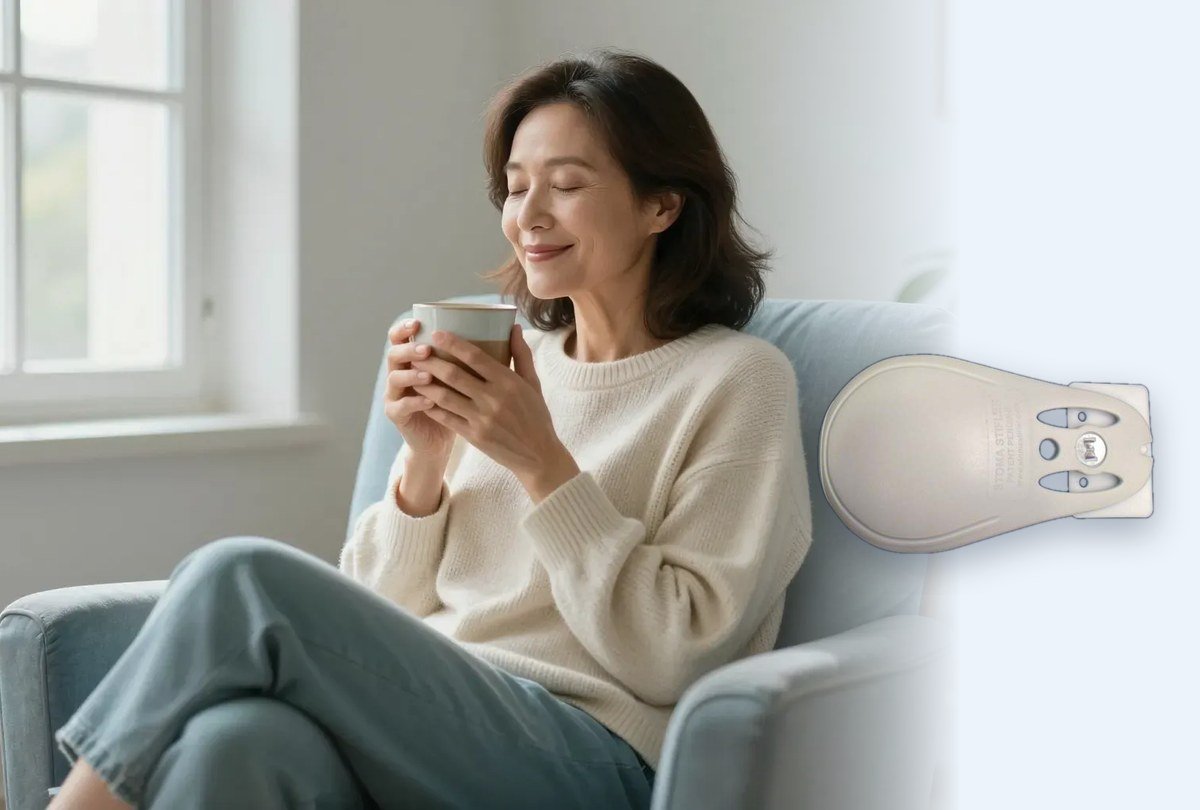
For the hugs and the dancing, a few things can make the night easier, depending on what concerns you most. The FSUHHIAD wrap holds the pouch close in an inner pocket and is sold for sport, swimming and closeness, so it feels secure under a fitted dress and in a long embrace. The YConnect belt is breathable, with an inner pocket that holds the pouch snug on active days, a good match for an evening on the dance floor. For hugs, crowded rooms and quiet vows, the Stoma Stifler is a firm, quiet guard sized to your pouch, worn under an elasticized undergarment or attached to your own undergarments, ostomy belt or hernia belt with the optional kit pieces. It protects the stoma from bumps and hugs and softens stoma sounds.
FSUHHIAD Ostomy Wrap and Pouch Cover
 View on Amazon
A soft wrap with an inner pocket that holds the pouch close, sold for sport, swimming and closeness.
YConnect Ostomy Belt and Pouch Cover
 View on Amazon
A breathable belt with an inner pocket that holds the pouch snug on active days.
Stoma Stifler
 See the Stoma Stifler
A firm, quiet stoma guard that fits all one-piece and two-piece pouch systems, so there is nothing to measure. Protects the stoma from bumps, seat belts and hugs, and softens stoma sounds. Wear it under an elasticized undergarment, or attach it to your own undergarments, ostomy belt or hernia belt with the optional kit pieces.
Already wear an ostomy belt? The Stoma Stifler connects to it with the optional belt-clip kit included with every Stoma Stifler.
As an Amazon Associate, Stoma Stifler earns from qualifying purchases. Disclosure
Being present for the moments that matter
All of this planning has one purpose: to let you stop thinking about it, and put your attention on the vows, the laughter at your table and the toast you have been waiting to hear.
If this is your first big celebration since surgery, build up to it. A short coffee out, then a dinner with friends, then a longer afternoon away teaches you what your body and your pouch need over several hours.
One person shared that they began with short outings and gradually worked up to spending three or four hours away from home.
From 14 years of conversations with ostomates
In 14 years of conversations with ostomates, one thing comes up again and again: the kit you carry is rarely needed, but knowing it is there is what lets you stop checking and start enjoying yourself.
One woman received her ostomy in her mid-forties and went on to live a full, active life for more than four decades: traveling, working part time as a nurse into her sixties, becoming a grandmother and hosting many parties. Her joy in life seemed to grow alongside her ostomy, not shrink because of it.
Somewhere in the evening, you may notice that you have not thought about your pouch for an hour. That is a quiet milestone: the ostomy has become one part of the day rather than the center of it.

Walk into the celebration feeling like yourself
When you have an event coming up, My Ostomy Blueprint builds toward it from your own story, with the celebration at the top of your outing ladder and a what-to-wear page made for your body and your outfit.
Start My BlueprintShare what helped you feel like yourself at a celebration
Have you dressed up for a wedding or a big celebration since your surgery? What you wore, what you packed or the moment you forgot about your pouch could help someone standing at their closet right now. Email info@stomastifler.com with your story. It will be shared only without your name, to help the next person.
Research that backs up this guidance
Research matches what people living with an ostomy describe. Clothing limits, difficulty hiding the pouch and needing to know where the nearest toilet is all weigh on how satisfied people feel with their stoma, and clothing adjustments can stay on the list for years, usually solved by trial and error.
The encouraging side is just as clear. People who did not need to change how they dressed reported better quality of life, many found that support garments brought reassurance, confidence and a more social, active life, and survivors in one study grew confident as ostomates while adjusting their clothing, food and travel. Fit matters: ill-fitting garments were a common complaint.
| What the research found | Source |
|---|---|
| Among 64 people with a permanent colostomy after rectal cancer surgery, satisfaction with their stoma was linked with everyday concerns, including clothing limitations, difficulty hiding the pouch, needing to know where the nearest toilet is and embarrassment. | Koneru et al., ANZ Journal of Surgery, 2024PubMed ID 38761003 |
| In a survey of 285 people living with a stoma in regional Australia, not having to change how they dressed after surgery was one of the factors independently linked with better quality of life. | Ketterer et al., Nursing Research, 2021PubMed ID 33883499 |
| Long-term colorectal cancer survivors with an ostomy described clothing restrictions and adaptations as a concern that persisted more than five years after surgery, with solutions usually found by trial and error. | Sun et al., Journal of Wound, Ostomy and Continence Nursing, 2013PubMed ID 23222968 |
| In a survey of people with a bowel stoma, 598 who wrote about support garments described using them to manage hernia concerns, hide the stoma and pouch and handle pouch problems, while ill-fitting garments brought negative experiences. | Hubbard et al., BMJ Open Gastroenterology, 2019PubMed ID 31275585 |
| Among people with a urostomy who wrote about support garments, many described reassurance, confidence and feeling able to be more sociable and active, while others reported discomfort or felt unsure of their value. | Taylor et al., British Journal of Nursing, 2019PubMed ID 31835944 |
| Interviews with 11 colorectal cancer survivors living with a stoma found that many came to feel confident as ostomates, helped by support from others and practical adjustments to clothing, food, activity and travel. | Afiyanti et al., Cancer Nursing, 2025PubMed ID 38112431 |
What this means for you: What this means for you: wanting to feel like yourself in your clothes matters. Planning the outfit around your stoma line, choosing a supportive layer that fits you well and knowing where the restroom is are the steps the research points to.
Frequently asked questions
What is the best thing to wear to a wedding with an ostomy?
The best outfit has a waistline that sits clearly above or below your stoma, never a tight band across it. Wrap dresses, A-line skirts, a tailored jacket left open and trousers with suspenders all work well. Patterns and darker colors help any outline blend in, and supportive high-waisted underwear or a soft wrap holds the pouch flat and close.
Can you wear a belt with an ostomy?
You can, as long as it does not press across your stoma. A belt pulled tight over the stoma can rub it and squeeze the pouch, leaving output less room to drain. If your stoma sits right at your belt line, suspenders hold trousers up from the shoulders and leave the waist clear. If it sits well above or below, a belt worn loosely is usually fine.
Can you drink alcohol at a wedding with an ostomy?
Many people living with an ostomy enjoy a drink at a celebration. Beer and fizzy drinks are common causes of extra gas, so go easy on them and sip slowly. With an ileostomy, you lose fluid more easily, so alternate each drink with water or another drink your care team suggests. If you take medicines, ask your care team whether alcohol is safe with them.
What should you pack in an ostomy kit for a wedding?
Pack a spare pouch, a pre-cut wafer, a barrier ring if you use one, adhesive remover wipes, a few soft wipes, a sealable disposal bag and spare underwear. It fits in a clutch, or a trusted person can carry it. Many people rarely need their kit, but knowing it is there lets them relax.
Last updated October 2026. Written from 14 years of conversations with people living with an ostomy and the people who care for them. General education only; it does not replace your surgeon, ostomy nurse or dietitian.