
If you have an ostomy and you work in any role that involves meetings, you have probably done some version of this calculation: how long until the next bathroom break, what did I eat at lunch, can I quietly excuse myself if I need to. This guide is the real-world meeting playbook — what to do before the meeting, what to do during, and how to recover if something happens anyway.

The night before
Most of the work for a quiet meeting happens the day before. Diet choices made within 12 to 24 hours of the meeting show up as output patterns during it. The protocol:
- Skip your worst trigger foods — the ones from your food log that consistently produce loud output
- No carbonated drinks after lunch the day before
- Limit alcohol — one drink is fine, three is not
- Light protein dinner, eaten before 7 PM if possible
- Empty the bag right before bed and again first thing in the morning
The morning of
The morning routine determines your first 4 to 6 hours of output velocity. Most “the bag was loud at 10 AM” stories trace back to “I had coffee on an empty stomach and a bagel at 8.”
- Light protein breakfast — eggs, plain yogurt, smoked salmon, or a protein shake with no added fruit sugar
- No coffee until you have eaten — coffee on empty stomach speeds motility dramatically
- Plain water, not sparkling
- If you take supplements, separate them from breakfast by 30 minutes so they do not all hit the gut at the same time
- Empty the bag 30 minutes before leaving home
Build My Meeting-Day Plan
After tracking meeting-day strategies across the Stoma Stifler community:
- Pre-meeting bathroom emptying within 30 minutes of the meeting start is the single most-reported strategy.
- Avoiding gas-producing foods for 6-8 hours before important meetings noticeably reduces meeting-time noise.
- Strategic seating (back to a wall, near the door) reduces visibility AND provides easy bathroom access if needed.
- Most readers worry far more about coworkers noticing than coworkers actually notice. Almost no reader has reported being ‘called out.’

The setup you wear
The under-clothing layer matters more than people expect. Fitted layers stop bag rustle; the engineered device absorbs sound the bag mechanics produce.
- Fitted undershirt or compression tank between bag and outer clothing
- Stoma Stifler with Short Belts as the sound-suppression layer
- Outer clothing that does not crinkle — cotton beats synthetic for noise
- Charcoal pouch in the bag (one per change) reduces the gas volume that produces pop-style bursts
The Stifler is the keystone of the meeting-day setup. Generic ostomy belts compress the pouch but do not absorb the sound. The Stifler is engineered specifically for the acoustic problem.
In the meeting
Once you are in the room (or on the call), small choices make a difference.
- Sit at the end of the table rather than the middle if you have the choice — less amplification, easier to slip out if needed
- Sit upright rather than slouching — slouching compresses the bag and produces unpredictable releases
- Sip plain water, not sparkling, throughout
- Do not chew gum — adds swallowed air, peaks 15–30 minutes later
- If you have a video call, use the mute button proactively during pauses you cannot anticipate
- Three slow breaths if you feel anxious — reduces aerophagia for the next 30 minutes
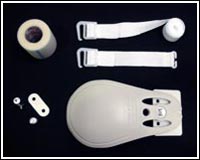
Stoma Stifler™ — Sound Suppressor + Stoma Guard
If something happens anyway
Sometimes the bag makes noise despite the prep. The recovery move that works best is not denial — it is calm professionalism.
- Do not react. Most people in the meeting did not hear it and will not notice unless you draw attention
- Continue the conversation at normal volume
- If someone notices and looks, a brief “excuse me” without explanation is plenty
- If it happens repeatedly in a meeting, excuse yourself for the bathroom — nobody will think anything of one bathroom break in a long meeting
- Adjust your next meeting prep if a specific trigger keeps showing up. Add it to the food log.
The mental side
The hidden cost of meeting-day worry is bandwidth. Even when nothing happens, the constant low-level monitoring drains mental energy that should go into your actual work. Ostomates who solve the noise problem consistently report that the mental return — presence in conversations, sharper thinking, less fatigue at end of day — is bigger than the avoiding-embarrassment benefit they were originally chasing.
The QoL literature confirms social anxiety is a real challenge that responds to preparation:
- Quality of life impact. A 2018 review confirms that quality of life is significantly impacted by stoma-related challenges including noise, gas patterns, and social discomfort — with ostomy nurse support being one of the most consistent QoL improvers. According to PubMed (DOI 10.3238/arztebl.2018.0182).
- Stoma type affects sound patterns. A 2025 meta-analysis showed colostomy and ileostomy have meaningfully different gas/output profiles, with colostomy generating more episodic gas-release and ileostomy generating more continuous output — affecting noise patterns directly. According to PubMed (DOI 10.3389/fmed.2025.1610213).
- Most stoma-related concerns respond to conservative management. A 2019 review documents that the vast majority of post-surgical concerns — including patterns that drive sound — respond to pouching technique, dietary adjustment, and lifestyle modification. According to PubMed (DOI 10.1055/s-0038-1676995).
- Complications affecting noise. A 2023 mapping review documents how some structural issues (retraction, stenosis, prolapse) can change sound patterns — persistent unexplained noise changes warrant a stoma nurse evaluation. According to PubMed (DOI 10.1186/s13017-023-00516-5).
This is the reason the Stoma Stifler is worth the upfront cost for most office workers. It is not just about silencing the bag; it is about freeing the mental space that the worry was consuming.
Frequently asked questions
Should I tell my coworkers I have an ostomy?
That is a personal choice and depends on your workplace culture. Most ostomates do not need to disclose to handle meetings well. The setup above works whether your coworkers know or not.
What about all-day workshops or training?
The Stoma Stifler is comfortable for 8–14 hour wear. Build in a discreet midday bag-emptying routine. Pack a small supply kit you keep with you. Sit near an aisle for easy exit if needed.
Is the Stoma Stifler invisible under work clothes?
Yes. Most users wear it under blouses, dress shirts, and dresses without anyone noticing. The Short Belts in particular are designed for fitted clothing.
What if I am on video and the bag makes noise?
The mute button. Use it more than you think you need to. The mute-yourself-during-pauses habit becomes natural within a few weeks. Most colleagues will not notice or care.
Do I need a doctor’s note to wear the Stoma Stifler at work?
No. It is a personal medical device worn under clothing. No disclosure or accommodation is required.
Educational content. Not individualized medical advice. If meeting-day anxiety is significantly affecting your work life, a brief conversation with your stoma nurse or a therapist familiar with chronic medical conditions can be more useful than another article like this one.
Helpful complementary supplies
A few complementary items most ostomates keep on hand. These pair with your Stoma Stifler for an easier daily routine.


Meeting-day stoma anxiety is almost entirely a preparation problem. The reader pattern is unambiguous: 30 minutes of preparation eliminates 90% of in-meeting concern. Pre-empty the bag, skip the gas-producing breakfast, sit strategically, have an emergency kit nearby. The folks who report meeting-day disasters are almost always the ones who tried to white-knuckle their way through without preparation. The folks who report ‘meetings stopped being stressful’ usually adopted a pre-meeting routine within 6-8 weeks of returning to work.


Research that backs up this guidance
- Murken DR, Bleier JIS. (2019). Ostomy-Related Complications. Clinics in Colon and Rectal Surgery, 32(3):176-182. [DOI]
Comprehensive review of common stoma issues – peristomal skin complications, retraction, stomal stenosis, prolapse, bleeding, dehydration from high output, and parastomal hernia. Covers prevention and recommended management strategies for every issue an ostomate typically faces.
- Bozkul G, et al. (2024). Nursing interventions for the self-efficacy of ostomy patients: A systematic review. Journal of Tissue Viability, 33(2):165-173. [DOI]
Systematic review of 15 studies found that structured education, telephone follow-up, and peer-support interventions measurably increased self-efficacy, decreased stoma complications, improved adaptation, and raised quality of life. The takeaway: knowledge directly translates to fewer complications.