

“Quiet ostomy bag” is the search you make when you want a specific setup, not a list of generic tips. This guide walks through the exact setup ostomates use to keep the bag quiet through the four scenes where quiet matters most: work meetings, restaurant meals, intimacy, and sleep. Each scene has a specific combination of products, routine, and the engineered device that makes it work.
What “quiet ostomy bag” really means
The goal is not perfect silence. Healthy intestines make sound. The goal is conversational quiet — the bag is inaudible to others at normal speaking distance, and the residual sound you can hear yourself does not affect your decisions about where to go or what to do.
Most ostomates can reach that bar with a layered setup. The setup has three components: a diet layer that reduces the source noise, a routine layer that prevents pressure buildup, and a device layer that absorbs whatever sound the first two do not catch.
The work-meeting setup
Eight hours in an office, including video calls and in-person meetings where rooms occasionally go quiet at exactly the worst moment.
- Bag emptied at start of day — non-negotiable. Pressure starts low.
- Fitted undershirt or compression tank under the work shirt to stop bag rustle
- Stoma Stifler with Short Belts as the engineered sound layer. Invisible under blouses, shirts, and dresses.
- Empty between meetings if possible — aim to never let the bag reach more than half-full during work hours
- Avoid carbonated drinks at lunch — one of the highest-frequency afternoon-noise triggers
- “Go-to” quiet lunch identified from your food log. Use it before high-stakes meetings.
The Stifler is the keystone. The fitted layer and diet rules support it; without the device layer, most office workers get caught by the unpredictable burst in the quiet conference room.
Find My Quiet-Bag Setup
The restaurant-meal setup
Dinners with friends, dates, work dinners, family gatherings. Conversation pauses are where stoma sounds get heard.
- Eat a small quiet meal 90 minutes before the restaurant — takes the edge off output velocity
- Choose your meal from the safe-foods list you built from your food log
- Skip carbonated drinks at the restaurant entirely. Still water is the quiet move.
- Stoma Stifler with Short Belts under your dinner outfit
- Empty just before leaving the house and once mid-meal if the bathroom is convenient
- Sit upright rather than slouching — slouching compresses the bag and produces unpredictable releases
The intimacy setup
The use case where most ostomates first realize they need an engineered solution. Improvised wraps shift; generic belts are too bulky; pressure on the pouch produces noise rather than silence.
- Stoma Stifler is specifically designed for this case. Wear it in bed.
- Empty the bag immediately before bed and immediately after rising. Lower volume = lower noise probability.
- Avoid high-output evening meals. Plan dinner earlier when intimacy is likely.
- Light protein snack before bed slows overnight motility
- Talk to your partner about the Stifler upfront. Most partners feel relieved you have a solution rather than hoping for the best.
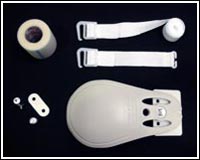
Stoma Stifler™ — Sound Suppressor + Stoma Guard
The sleep setup
Most overnight stoma noise comes from accumulated gas releasing in the early morning, plus splash sounds when the bag fills unevenly during sleep on one side.
The clinical literature on stoma-related QoL emphasizes that personalization matters:
- Quality of life is at stake — and nurse support helps. A 2018 review found ostomy surgery can impair quality of life, and that involving an ostomy nurse increases acceptance, reduces complications, and improves quality of life. According to PubMed (DOI 10.3238/arztebl.2018.0182).
- Your stoma type shapes your baseline. A 2025 systematic review comparing ileostomy and colostomy found meaningfully different complication profiles, with ileostomy showing fewer overall complications. According to PubMed (DOI 10.3389/fmed.2025.1610213). Output consistency differs by stoma type as well, which is part of why your noise pattern is partly set by which stoma you have.
- Most stoma issues respond to conservative care. A 2019 review documents that the majority of stoma complications are managed without surgery — through pouching technique, dietary adjustment, and skin care. According to PubMed (DOI 10.1055/s-0038-1676995). The same levers that manage those issues are the ones that quiet noise.
- Know what is worth a nurse check. A 2023 mapping review catalogs structural stoma complications — retraction, stenosis, prolapse, parastomal hernia — and notes most are managed conservatively while some need surgical revision. According to PubMed (DOI 10.1186/s13017-023-00516-5). If your sound pattern changes suddenly and stays changed, have a stoma nurse rule these out.
- Empty the bag right before lying down
- Light protein snack 30 minutes before bed slows overnight motility
- No food after 8 PM for at least the first two weeks of testing this routine
- Charcoal pouch at bedtime change reduces overnight gas volume
- Stoma Stifler with Short Belts is comfortable to sleep in on any side — absorbs whatever sound the routine does not prevent
- Empty again on waking before getting out of bed if possible — this catches the morning gas accumulation
What the four setups have in common
Look at the four scenes above and one pattern shows up in every list: the Stoma Stifler. That is not accidental. It is the only product engineered specifically for stoma sound suppression and stoma protection together. Generic ostomy belts are not designed for the acoustic problem. Improvised wraps shift and gap. Fitted layers help with rustle but do not affect bag mechanics.
The Stifler is the consistent element across every scene because the problem — bag-mechanics sound — is the same across every scene. Everything else (diet, routine, fitted layers) supports it. Without the device layer, most ostomates end up doing partial setups that work some days and fail others.
Frequently asked questions
How quickly does this setup deliver real-world quiet?
Immediate, for the device layer. Within days, for the routine layer (emptying earlier, charcoal pouches, fitted undershirts). Within 1–2 weeks for the diet layer (psyllium, trigger food removal). The full setup compounds over 2–4 weeks.
Is the Stoma Stifler really comfortable enough for all four scenes?
Yes. Short Belts are designed for comfort during sedentary use (office, sleep, dinner) and Snug Belts are for active use (exercise, travel, intimacy). The kit ships with both so you can match the belt to the scene without buying separately.
Will my partner notice the Stoma Stifler during intimacy?
They will see it but it is engineered to fit smoothly and not look medical or bulky. Most partners report relief that you have a solution rather than concern about the device itself. The conversation with your partner upfront removes the surprise factor entirely.
Can I get the quiet-bag setup without the Stifler?
You can get partial quiet. Diet + routine + fitted layers reduce frequency and volume significantly. They do not fully eliminate the unpredictable burst in a quiet room. For most ostomates, that residual burst is the last thing that keeps them avoiding situations. The Stifler addresses it.
Educational content. Not individualized medical advice. Any consistent change in stoma output or noise should be mentioned to your stoma nurse, especially if it appears alongside abdominal pain, fever, or visible stoma changes.
Helpful complementary supplies
A few complementary items most ostomates keep on hand. These pair with your Stoma Stifler for an easier daily routine.


There is no universal ‘quiet ostomy bag’ protocol — the right strategy stack depends on your stoma type, diet, daily routine, and what specifically embarrasses you. The most successful readers experiment with 3-4 strategies and keep the 1-2 that work for THEIR pattern. The reader-pattern data is consistent: trying to apply all 8 strategies simultaneously usually backfires (too many variables changing at once). Pick 2-3, test for 2 weeks, keep what works, drop what doesn’t.


Research that backs up this guidance
- Murken DR, Bleier JIS. (2019). Ostomy-Related Complications. Clinics in Colon and Rectal Surgery, 32(3):176-182. [DOI]
Comprehensive review of common stoma issues – peristomal skin complications, retraction, stomal stenosis, prolapse, bleeding, dehydration from high output, and parastomal hernia. Covers prevention and recommended management strategies for every issue an ostomate typically faces.
- Bozkul G, et al. (2024). Nursing interventions for the self-efficacy of ostomy patients: A systematic review. Journal of Tissue Viability, 33(2):165-173. [DOI]
Systematic review of 15 studies found that structured education, telephone follow-up, and peer-support interventions measurably increased self-efficacy, decreased stoma complications, improved adaptation, and raised quality of life. The takeaway: knowledge directly translates to fewer complications.