

“Why is my stoma so loud?” is the question that brings most ostomates here. The good news is that loud stoma noise is almost always one of seven specific causes — and each one has a targeted fix that works in days, not months. This guide walks through all seven, the fix for each, and how to know which one is yours.
Stoma Noise Decoder
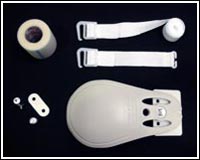
Stoma Stifler™ — Sound Suppressor + Stoma Guard
The 7 most common causes of loud stoma noise
1. Fast post-meal output velocity
The most common cause. Output moves into the bag quickly after eating, filling it unevenly and producing wet gurgles or splash sounds. Ileostomies are more prone to this than colostomies because the small intestine delivers more liquid output. Loudest within 30–60 minutes of eating.
After tracking loud-stoma experiences across the Stoma Stifler community:
- ‘Loud’ is subjective — what feels deafening in a quiet meeting feels normal in a noisy cafe. Context matters.
- Readers consistently underestimate how much air they swallow through eating habits (chewing fast, drinking through straws, gum).
- Loop ileostomies tend to be louder than colostomies due to more continuous fluid + gas mixture passing through.
- A sudden CHANGE in stoma loudness pattern often signals diet or stoma issue worth a nurse visit, not just a noisy day.
Fix: Smaller, more frequent meals. Five or six small meals daily rather than three large ones. Sit for 10 minutes after eating. Add a teaspoon of psyllium husk to one meal per day to thicken output. Empty the bag at one-third full to keep internal pressure low.
2. Pinhole pressure release (whistles)
High-pitched whistles and squeaks come from a small opening in the bag filter or closure releasing gas under pressure. They are loudest when sitting forward or when the bag is half-full.
Fix: Peel the filter sticker fully off when applying a fresh bag. Do not over-tighten the closure (that creates pinhole pressure points). Empty the bag at one-third full to prevent buildup.
3. Aerophagia plus gas-producing foods
The “loud burst in a quiet room” pattern. Swallowed air combines with gas from beans, beer, carbonated drinks, cabbage, broccoli, and cruciferous vegetables to produce sudden single-bubble pops at random.
Fix: Slow down eating — chew with your mouth closed, put the fork down between bites, do not talk while chewing. Cut carbonated drinks for two weeks as a clean isolated test. Identify your top trigger foods with a five-day food log. Activated charcoal pouches inside the bag reduce the gas volume that produces these bursts.

Find My Loud Stoma Cause
4. Intestinal motility variability
Some ostomates have output rhythms that change day to day for no obvious reason. The bag fills predictably some days and produces unexpected bursts others. This is normal gut variability amplified through the bag.
The clinical literature contextualizes loud-stoma concerns:
- Quality of life is at stake — and nurse support helps. A 2018 review found ostomy surgery can impair quality of life, and that involving an ostomy nurse increases acceptance, reduces complications, and improves quality of life. According to PubMed (DOI 10.3238/arztebl.2018.0182).
- Your stoma type shapes your baseline. A 2025 systematic review comparing ileostomy and colostomy found meaningfully different complication profiles, with ileostomy showing fewer overall complications. According to PubMed (DOI 10.3389/fmed.2025.1610213). Output consistency differs by stoma type as well, which is part of why your noise pattern is partly set by which stoma you have.
- Most stoma issues respond to conservative care. A 2019 review documents that the majority of stoma complications are managed without surgery — through pouching technique, dietary adjustment, and skin care. According to PubMed (DOI 10.1055/s-0038-1676995). The same levers that manage those issues are the ones that quiet noise.
- Know what is worth a nurse check. A 2023 mapping review catalogs structural stoma complications — retraction, stenosis, prolapse, parastomal hernia — and notes most are managed conservatively while some need surgical revision. According to PubMed (DOI 10.1186/s13017-023-00516-5). If your sound pattern changes suddenly and stays changed, have a stoma nurse rule these out.
Fix: A daily probiotic (50 billion CFU, multi-strain) for 8 to 12 weeks normalizes motility for most people. Look for products that include Saccharomyces boulardii, which has the strongest ostomy-specific research. Do not judge effects before week 6.
5. Bag rustle amplification
Sometimes the “stoma noise” is not the output at all — it is the bag itself rubbing against clothing or another bag layer. The brain interprets the rustle as gut sound.
Fix: Wear a fitted undershirt or compression tank between the bag and outer clothing. Choose fabrics that do not crinkle (cotton beats synthetic). A snug stoma guard worn over the pouch also eliminates this entirely.
6. Overnight gas accumulation
Several hours of horizontal sleep + no bag emptying = a build-up of gas that releases loudly first thing in the morning. Common cause of waking up with a loud release the body has been “saving” all night.
Fix: Empty the bag right before sleep and right on waking. Have a small protein snack before bed (slows overnight motility). Avoid eating after 8 PM for two weeks as a test. Add a charcoal pouch at the bedtime bag change.

7. Something has recently changed
If your stoma noise has gotten noticeably louder over the past few weeks, that is not “just the way it is now” — it is information. Common triggers: a new medication, a supplement change, a new probiotic that does not agree, stress, dehydration, a partial blockage that has not become acute, or a diet shift you did not connect to the sound shift.
Fix: Mention the change to your stoma nurse this week. Track for five days: record sound type, time of day, and what you ate or drank. Look back at the calendar — did anything change two to four weeks before the noise change started? Persistent escalation in sound is worth a professional evaluation even if everything else feels normal.
How to know which cause is yours
Most ostomates have one primary cause and one or two minor ones. The diagnostic widget above will identify your primary pattern in 30 seconds. For deeper investigation, a five-day food log with sound-level notes (1–10) usually surfaces the answer.
The key insight: the fix has to match the cause. Cutting carbonated drinks does not fix bag rustle. Adding fiber does not fix pinhole whistles. Buying a stoma guard does not address pre-bedtime gas accumulation. Match the fix to the cause and you will see improvement in days.
When to escalate to the device layer
The seven fixes above resolve most stoma noise for most ostomates over four to six weeks. They do not resolve all stoma noise for all ostomates. If you have done the food log, removed trigger foods, added soluble fiber, started a probiotic, and made the routine changes — and you are still getting embarrassed in social settings — the next step is mechanical sound suppression.
This is what the Stoma Stifler exists to do. It is the only product engineered specifically for sound suppression and stoma protection together. Diet and routine quiet the source. The Stoma Stifler quiets what is left.
Stoma Stifler™ — Sound Suppressor + Stoma Guard
Frequently asked questions
How quickly should I see improvement from these fixes?
Trigger food removal: 24 to 72 hours. Routine changes (smaller meals, sit after eating, empty earlier): 3 to 5 days. Soluble fiber: 5 to 10 days. Probiotic: 6 to 12 weeks. The device layer is immediate.
‘Why is my stoma so loud’ is one of the most-Googled ostomy questions — and the full answer combines anatomy, diet, and bag mechanics. Anatomy you can’t change. Diet you can. Bag mechanics you can. The readers who report dramatic reductions in stoma noise within weeks consistently focus on the things they can control: chewing slower, swallowing less air, reducing carbonated drinks, and using bag accessories designed to dampen sound. The folks who feel resigned to a loud stoma usually haven’t systematically tried the diet and bag-mechanic adjustments. Start with the controllables.
Is some stoma noise just normal?
Yes. The goal is conversational quiet — other people should not be able to hear your stoma at normal speaking distance. You will always be able to hear your own gut more than others can hear yours. The work is reducing both the absolute volume and the unpredictability.
Does Beano or Gas-X work?
Beano helps with one specific trigger category (complex sugars in beans and cruciferous vegetables). Gas-X (simethicone) breaks up upper-tract gas before output. Both are partial fixes — neither addresses bag mechanics or fast output velocity. Useful as one layer, not as the whole solution.
How does the Stoma Stifler quiet the noise mechanically?
The Stoma Stifler combines a sound-absorbing chamber that sits over the pouch with a stoma guard that protects the stoma site during movement. It does not just compress the pouch — generic belts do that and they do not suppress sound. The Stifler is engineered specifically for the acoustic problem.
Can I sleep in the Stoma Stifler?
Yes. Most users sleep in it nightly using the Short Belts, which are designed for comfort at rest.
Educational content. Not individualized medical advice. Loud stoma noise that escalates rapidly, or comes with abdominal pain, fever, or output that changes color or stops entirely, needs same-day medical evaluation regardless of the seven causes above.
Helpful complementary supplies
A few items most ostomates keep on hand. These pair with your Stoma Stifler for an easier daily routine.


Research that backs up this guidance
- Murken DR, Bleier JIS. (2019). Ostomy-Related Complications. Clinics in Colon and Rectal Surgery, 32(3):176-182. [DOI]
Comprehensive review of common stoma issues – peristomal skin complications, retraction, stomal stenosis, prolapse, bleeding, dehydration from high output, and parastomal hernia. Covers prevention and recommended management strategies for every issue an ostomate typically faces.