
“Ileostomy vs colostomy” is the search you make when the textbook differences (small intestine vs large intestine, location on the abdomen) do not answer the question you have. The real differences are the day-to-day ones: how often you change the bag, what you can eat, how much hydration you need, what noise patterns to expect, and what changes about your social life. This guide is the practical comparison, not the medical textbook version.
The five-second technical difference
An ileostomy is created from the small intestine (the ileum). Output is more liquid because the colon has been bypassed or removed and the large intestine is no longer reabsorbing water.
A colostomy is created from the large intestine (the colon). Output is more formed because the colon has done most of its work of pulling water out of waste.
That is the textbook answer. Now the part that affects your life.
Daily life: output volume and frequency
Ileostomy: Most ileostomates empty the bag 4 to 8 times per day. Output is liquid to oatmeal-consistency depending on diet. Output is highest after meals and lowest overnight. The bag fills predictably within 2 to 4 hours of eating, which means social planning around bathroom access matters more than for colostomies.
Colostomy: Most colostomates empty the bag 1 to 3 times per day. Output is more formed and closer to typical stool consistency. Output schedules become predictable within a few months — many colostomates have a “morning routine” similar to pre-surgery bowel habits.
The frequency gap is real. Ileostomates think about the bag more often than colostomates do simply because they interact with it more often. Both adapt, but the adaptation curves are different.
Find My Ostomy Type Difference
Diet differences (the practical version)
Ileostomy diet management is mostly about three things: hydration, fiber types that work for you, and avoiding blockage-risk foods in the early months.
- Hydration with electrolytes is essential — plain water alone is not enough because the colon used to do that absorption work
- Soluble fiber (psyllium, oat fiber) thickens output and reduces frequency
- Insoluble fiber (raw vegetables, popcorn, nuts) can cause partial blockages in the first 6 months especially
- Most ileostomates expand back to a wider diet over 6 to 12 months
Colostomy diet management is mostly about gas. The food choices that affect colostomies most are the ones that produce gas.
- Common gas culprits: beans, lentils, cabbage, broccoli, beer, carbonated drinks
- Constipation is more common than for ileostomies — adequate fiber and water still matter
- Most foods are tolerated normally after the initial recovery
Stoma Stifler™ — Works for Ileostomy AND Colostomy
Bag changes and supplies
Ileostomy: Bags are typically drainable (open-ended for frequent emptying). Wear time 3 to 5 days for the full appliance. More frequent emptying means more interaction with the bag throughout the day.
Colostomy: Bags can be drainable or closed-ended (single-use, replaced when full). Wear time 2 to 4 days. Less frequent emptying. Some colostomates eventually irrigate (a daily routine that empties the colon on schedule and allows wearing a small cap instead of a bag).
Social life and noise
Both types produce noise. The patterns differ.
Ileostomy noise tends toward wet gurgles, splash sounds, and pop-style gas bursts. Sounds peak within 30 to 60 minutes of meals. Bag filling unevenly produces splash noise that is more audible than a colostomate would experience.
Colostomy noise tends toward gas-driven pops and the occasional release. Sounds are less wet, more discrete bursts. Predictability is higher because output volume is lower.
Either type benefits from the same noise-management approach: diet awareness, routine bag emptying, charcoal pouches, and an engineered sound-suppression device for high-stakes social settings. The complete noise guide covers the full protocol.
Five recent peer-reviewed studies clarify how these two stoma types differ in outcomes:
- Complication rates. A 2025 systematic review and meta-analysis of 8 RCTs found ileostomy had significantly lower overall complication rates than colostomy (OR 0.43, 95% CI 0.28–0.65, p<0.0001) when used for similar indications. According to PubMed (DOI 10.3389/fmed.2025.1610213).
- Common complications differ. A 2019 review documents that the most common ostomy complications — peristomal skin issues, retraction, stomal necrosis, stenosis, prolapse, bleeding, dehydration from high output, and parastomal hernia — vary in incidence between ileostomy and colostomy based on stoma anatomy and intestinal contents. According to PubMed (DOI 10.1055/s-0038-1676995).
- High-output stoma management. A 2022 dietary management review confirms that ileostomy patients are at significantly higher risk of dehydration, electrolyte disturbances, and malnutrition without proper oral rehydration solutions, hypotonic fluid restriction, and dietary modifications. According to PubMed (DOI 10.7748/ns.2022.e11941).
- Parastomal hernia incidence. A 2025 retrospective study of 360 patients found parastomal hernia developed at a mean of 8.6 months post-surgery, with CT-confirmed incidence of 37.5% — affecting both ileostomy and colostomy patients but tracking with age, comorbidities, and lack of preoperative stoma site marking. According to PubMed (DOI 10.1097/WON.0000000000001187).
- Surgical management of complications. A 2023 MISSTO-WSES mapping review reports overall stoma-related complication rates of 20–70%, and clarifies that most are managed conservatively but a meaningful subset require surgical revision — the same principles apply to both stoma types. According to PubMed (DOI 10.1186/s13017-023-00516-5).
Stoma Stifler™ — Works for Ileostomy AND Colostomy
Exercise, hernia, and physical limits
Both types have similar parastomal hernia risk in the first 5 years (~50% in unprotected populations). The exercise protocol that protects against hernia is the same for both: 4-phase progressive hierarchy starting with walking, building to resistance bands, then to lifting with a support garment. The 12-week exercise framework details the protocol.
The Stoma Stifler is worn during exercise for both types because it doubles as a stoma guard during movement — protecting the stoma from impact while also suppressing noise.
Reversal possibility
Ileostomy reversal is common when the ileostomy was created as a temporary measure to let the colon heal (after colorectal cancer resection, for example). Reversal timing is usually 2 to 6 months after the original surgery.
Colostomy reversal depends entirely on why the colostomy was created. Reversal is possible if the diseased section can be reconnected, less likely if the colon or rectum was removed entirely.
Many ostomates of both types live with the ostomy long-term and never reverse it.
Cost and supply differences
Supply costs are comparable between types in most insurance systems. Ileostomates may use slightly more wipes, paste rings, and barrier products simply because they interact with the bag more often. Most insurance plans cover ostomy supplies as durable medical equipment for both types.
Emotional and identity adjustment
The adjustment curves look similar for both types. The first 30 days are survival mode for everyone. The first 3 months are pattern-building. By 6 months, both ileostomates and colostomates report similar quality-of-life scores in clinical studies.
The factor that affects emotional adjustment more than the type itself: whether you have a community of other ostomates and reliable answers to your questions. The United Ostomy Associations of America (UOAA) peer-support program connects new ostomates with experienced ones — the single intervention that accelerates adjustment most reliably.
Frequently asked questions
Which type is “better” or “easier”?
Neither. The type is determined by the disease and surgical situation, not by lifestyle preference. Both types are workable. Both have communities of long-term ostomates who report good quality of life.
Will my Stoma Stifler work for either type?
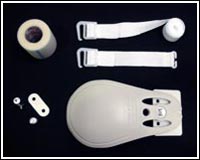
Yes. The Stoma Stifler is engineered to address bag mechanics that are common to both ileostomy and colostomy. The Short and Snug belts in the kit fit either type.
Is one type quieter than the other?
Colostomies are slightly quieter on average because output volume is lower. But individual variation matters more than type. Some ileostomates have very quiet output; some colostomates have loud gas patterns. The noise-management protocol works for both.
Can the type change over time?
No. The type is determined by which part of the intestine was used to create the stoma. That does not change without additional surgery.
What about urostomy?
A urostomy is a separate category — created from the urinary tract rather than the digestive tract. Output is urine, not stool. The noise and odor concerns are different. Most of this article applies to digestive-tract ostomies (ileostomy and colostomy).
The clinical literature and the lived-experience patterns converge on the same takeaway: ileostomy vs colostomy isn’t a “which is better” question — it’s a “which fits your situation” question. Ileostomies show lower overall complication rates in pooled data and offer a path to reversal in many cases, at the cost of higher daily hydration demand and a steeper learning curve in the first 90 days. Colostomies offer a daily routine closer to pre-surgery eating habits, more episodic emptying, and faster integration into normal life — with the trade-off of more visible odor and noise patterns to manage. The right comparison isn’t which stoma is “easier”; it’s which one matches the underlying surgical need and the lifestyle you can support.
Educational content. Not individualized medical advice. Specific questions about your surgical situation or which ostomy type is appropriate for your condition should go to your surgical team and stoma nurse, who know the details of your case.
Helpful complementary supplies
A few complementary items most ostomates keep on hand. These pair with your Stoma Stifler for an easier daily routine.


Research that backs up this guidance
- Murken DR, Bleier JIS. (2019). Ostomy-Related Complications. Clinics in Colon and Rectal Surgery, 32(3):176-182. [DOI]
Comprehensive review of common stoma issues – peristomal skin complications, retraction, stomal stenosis, prolapse, bleeding, dehydration from high output, and parastomal hernia. Covers prevention and recommended management strategies for every issue an ostomate typically faces.