

If you live with an ostomy, stoma noise is the single concern that shows up most often in private support groups. Not pain, not skin, not even leaks. The sound. The sudden release in a meeting. The wet gurgle at a restaurant table. The low rumble you can hear in your own quiet living room. This guide is the complete answer — what causes the sound, what diet changes move the needle, the daily routine that quiets the bag, and the engineered device that finishes the job when nothing else has been enough.
The good news first
Most stoma noise is controllable. Not all of it is preventable, but the embarrassing pattern — loud unpredictable release in social settings — responds to a layered approach. People who solve the noise problem do it with three layers: diet, daily routine, and a sound-suppressing device. None of those layers alone is enough for most ostomates. Together they are.
This article walks through each layer in order. By the end you will have a specific protocol you can start today, and you will know exactly when an engineered device makes the difference between “managing” and “not thinking about it anymore.”
The four types of stoma noise (and what causes each)
Before fixing the sound, identify the pattern. Most ostomates have one primary pattern and one or two minor ones. The fixes are different for each.
1. Wet gurgles and squirts
This is fast-moving liquid output filling the bag unevenly. You hear it most after eating, when output peaks, and most often with ileostomies because the small intestine delivers more liquid than a colostomy. Wet sound is amplified by anything that speeds intestinal motility — coffee on an empty stomach, very high-fiber meals, fruit smoothies, alcohol.
Diet fix: Add soluble fiber to thicken output. Psyllium husk (1 teaspoon in water before meals) and oat fiber are the most-studied. Avoid raw cruciferous vegetables, sugar-free gum, and stone-fruit smoothies for two weeks and notice the difference.
Routine fix: Smaller, more frequent meals. Five or six small meals slow output more than three large ones. Empty the bag every 1–2 hours during peak times rather than letting it fill.
2. High-pitched whistles or squeaks
Whistles come from a small opening in the bag or filter releasing gas under pressure. The pressure comes from gas building up in a half-full pouch. The opening is usually the filter sticker that did not fully separate, or the bag closure clipped too tight.
Routine fix: When you put on a fresh bag, peel the filter sticker fully off and check that the filter is breathing. Do not over-tighten the closure — that creates the pinhole pressure pattern that produces whistles. Empty the bag when it is one-third full to keep internal pressure low.
3. Loud single bubble pops
The most embarrassing pattern. A loud single release in an otherwise quiet room. Pops are gas pockets surfacing all at once, usually triggered by swallowed air or rapid digestion of foods that produce sudden gas — beans, beer, carbonated water, cabbage, broccoli, brussels sprouts.
Diet fix: Slow down while eating. Aerophagia — swallowing air with food — accounts for at least half of pop-style noise. Chew with your mouth closed, put the fork down between bites, do not talk while chewing. Cut carbonated drinks for two weeks as a single isolated test.
Trigger food fix: Trial a low-FODMAP week. Most ostomates discover one or two foods produce most of their gas bursts. For some it is onions, for others it is wheat or apples. The food log is the only way to find your specific list.
4. Constant low rumbles
A steady low rumble or humming is normal intestinal motility amplified through the pouch. It is loudest in quiet rooms because there is no ambient noise to cover it. Most ostomates stop hearing it after several weeks as their brain habituates; some never adapt and the sound stays mentally present even when no one else can hear it.
Routine fix: A daily probiotic (50 billion CFU, multi-strain) for 8 to 12 weeks normalizes gut motility for most people, including ostomates. Stay seated for 10 minutes after meals rather than getting up immediately — sitting calms the rumble cycle. Avoid gum and straws since both add swallowed air.
Stoma Noise Decoder
The diet layer: what moves the needle
Most online ostomy advice tells you to “eat slowly and avoid gas-producing foods.” That is true, but it is not specific enough to work. Here is the actual diet protocol that quiets bag noise for the majority of ostomates over four weeks.
After tracking stoma-noise patterns across the Stoma Stifler community:
- Most stoma noise comes from gas escaping a bag with empty space — the more air in the bag, the louder the release.
- Pre-emptive burping (releasing gas before meetings or social settings) prevents the loudest unexpected releases.
- Carbonated drinks, gum chewing, and rapid eating are the top three trigger habits readers report changing first.
- Stoma noise typically peaks at month 1-2 and decreases as readers learn their body’s rhythm + adjust diet.
Week 1: Identify your worst triggers
Keep a simple food log: time, food, drink, noise level (1–10) over the next 30 to 90 minutes. Most people identify two to four specific trigger foods in the first week. Common triggers in published ostomy support data: beans and lentils, raw cruciferous vegetables, carbonated drinks, beer, sugar substitutes (sorbitol, mannitol, xylitol), and dairy if there is any lactose sensitivity.
Week 2: Remove triggers and add soluble fiber
Pull out the top two or three triggers you identified. Add soluble fiber to one meal a day — the easiest forms are a teaspoon of psyllium husk in water before lunch, or a daily serving of oats. Soluble fiber thickens output and reduces both gurgles and gas bursts at the same time.
Week 3: Add probiotic support
Start a daily probiotic in the 50–100 billion CFU range with multiple strains. Look for a product that includes Saccharomyces boulardii, which has the most ostomy-specific evidence. Probiotic effects compound over 8 to 12 weeks — do not judge results at week 2.
Week 4: Re-test triggers and rebuild
Re-introduce one removed trigger food in a small amount. If noise stays low, that food was a false flag. If it returns, that food stays out permanently. This is how you rebuild a wider diet without losing the noise-control benefit.

The daily routine layer: the small habits that quiet the bag
These are the routine changes that make the biggest difference for the most ostomates. None of them require a product. All of them work better when stacked.
- Empty the bag when it is one-third full, not when it is full. Lower internal pressure means less whistle and less burst noise.
- Use activated charcoal pouches inside the bag (one per change). They reduce both odor and the gas volume that produces pop-style bursts.
- Add a few drops of bag deodorizer (M9 or equivalent) at each change. Many deodorizers also act as mild liquid surface tension reducers, which quietens splash sound.
- Sit down for 10 minutes after eating rather than standing or walking. Standing speeds peristaltic motility; sitting calms it.
- Wear fitted layers over the pouch — a snug undershirt or compression tank dampens sound and stops the pouch from rustling against outer clothing.
- Identify two “go-to” quiet meals for high-stakes social settings. Most ostomates have one or two meals that reliably produce minimal output and noise for 2 to 3 hours after eating. Lean into those before important events.

The device layer: where engineered solutions take over
Diet and routine quiet most stoma noise for most ostomates. They do not quiet all stoma noise for all ostomates. If you have done the work above and noise is still affecting your confidence, the next layer is mechanical sound suppression — a physical device worn over the pouch that absorbs the sound at its source.
Improvised solutions exist. Some ostomates wrap their pouch in soft cloth, double up undershirts, or use generic ostomy belts hoping they will dampen noise as a side effect. They usually do not. Generic belts and binders are designed for hernia prevention and pouch security, not sound. They compress the pouch but do not absorb the sound the pouch produces.
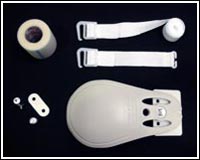
The Stoma Stifler is the only product engineered specifically for this purpose. It combines a sound-absorbing chamber that sits over the pouch with a stoma guard that protects the stoma site during movement. It is what you wear when you are tired of thinking about the sound.
When the Stoma Stifler is the right next step
If any of these describe you, the device layer is the next move:
Stoma noise hasn’t been studied as a primary endpoint in RCTs, but the surrounding literature clarifies what drives it:
- Quality of life is at stake — and nurse support helps. A 2018 review found ostomy surgery can impair quality of life, and that involving an ostomy nurse increases acceptance, reduces complications, and improves quality of life. According to PubMed (DOI 10.3238/arztebl.2018.0182).
- Your stoma type shapes your baseline. A 2025 systematic review comparing ileostomy and colostomy found meaningfully different complication profiles, with ileostomy showing fewer overall complications. According to PubMed (DOI 10.3389/fmed.2025.1610213). Output consistency differs by stoma type as well, which is part of why your noise pattern is partly set by which stoma you have.
- Most stoma issues respond to conservative care. A 2019 review documents that the majority of stoma complications are managed without surgery — through pouching technique, dietary adjustment, and skin care. According to PubMed (DOI 10.1055/s-0038-1676995). The same levers that manage those issues are the ones that quiet noise.
- Know what is worth a nurse check. A 2023 mapping review catalogs structural stoma complications — retraction, stenosis, prolapse, parastomal hernia — and notes most are managed conservatively while some need surgical revision. According to PubMed (DOI 10.1186/s13017-023-00516-5). If your sound pattern changes suddenly and stays changed, have a stoma nurse rule these out.
- You have followed the diet and routine layers for 4 to 6 weeks and noise is still controlling your social calendar
- You are returning to work, dating, or an active social life and you want certainty rather than hope
- You exercise, lift, or play sports and need both stoma protection AND quiet at the same time
- You travel and cannot rely on having quiet bathrooms or empty meeting rooms available
- You are early in your ostomy journey and you would rather skip the trial-and-error stage and start with confidence
Stoma Stifler™ — Sound Suppressor + Stoma Guard
What does not work (and why)
Three popular suggestions get repeated in ostomy forums even though they do not reduce noise reliably. Skip them or set realistic expectations.
- Simethicone (Gas-X, generic anti-gas pills): These break up gas bubbles in the stomach and upper small intestine. By the time output reaches the stoma, the gas pattern has already formed. Simethicone helps with bloating, not with stoma noise specifically.
- Beano: This breaks down the complex sugars in beans and cruciferous vegetables. It helps with one specific trigger category but does not address the rest of the diet or the structural sound from output velocity and pouch mechanics.
- “Just eat less” advice: Reducing total food volume does not reliably reduce noise. The pattern is more about what you eat and how the bag fills than total volume.
Frequently asked questions
Is some stoma noise normal?
Yes. Any healthy gut produces motility sounds. The goal is not silent — it is conversational. Other people should not be able to hear your stoma at normal social conversation distance. If they can, you have not yet completed the diet and routine layers, or you have completed them and need the device layer.
Does stoma noise get better over time on its own?
Slowly, partially, and for some people only. Two things happen in the first year. Your gut adapts and output rhythm stabilizes, which reduces unpredictable bursts. Your brain habituates to the steady low rumble. But the unpredictable embarrassing pop in social settings does not reliably improve without active intervention.
Can I tell from the sound alone whether something is wrong?
Sometimes. A sudden change in the type of sound — especially from quiet to loud over a few days, or a new wet sound when your output was previously formed — can signal partial blockage, infection, or a diet change you did not connect to the sound change. New patterns are worth mentioning to your stoma nurse. Steady patterns generally are not.
Will my stoma noise affect my partner during intimacy?
This is the single most common private concern, and the answer for most ostomates is yes, it can — AND there is a complete answer for it. The diet and routine layers help. The device layer specifically addresses the intimacy use case. The full conversation about intimacy with an ostomy is covered here.
Is the Stoma Stifler comfortable enough for all-day wear?
Yes. Most users wear it for 8 to 14 hours daily including office work, exercise, and sleep. The included Short Belts are designed for comfort under fitted clothing; the Snug Belts are for active use. The kit ships with both so you can test fit on day one.
Stoma noise is one of the most common social concerns ostomates face — and one of the most controllable once you understand the mechanics. Air in the bag + sudden gas release = sound. Reduce both inputs and you reduce the output. The readers who report dramatic noise reduction within 4-8 weeks tend to share a pattern: they identified their personal trigger foods, they pre-emptively burp before social settings, and they use a product like a stoma stifler that mechanically dampens the noise itself. The folks who feel stuck with loud stomas are usually the ones who tried one intervention at a time. Stack the small fixes.
How long until the diet and routine layers start working?
Trigger removal effects appear in 24–72 hours. Soluble fiber effects appear in 5–10 days. Probiotic effects compound over 8 to 12 weeks. Give the full protocol 4 to 6 weeks before judging whether you still need the device layer.
The protocol summary
Here is the complete noise-reduction protocol, ordered by speed-to-effect:
- Today: Start the food log. Add a daily probiotic. Empty the bag at one-third full. Use activated charcoal pouches.
- Week 1: Identify your top trigger foods from the food log.
- Week 2: Remove triggers. Add a teaspoon of psyllium husk to one meal a day.
- Week 3: Refine. Start sitting for 10 minutes after each meal.
- Week 4: Re-test removed foods. Build your two “go-to” quiet meals for social events.
- Week 5–6: If noise is no longer controlling your social calendar, the protocol worked. If it is, the device layer is the next step. The Stoma Stifler is the only product engineered specifically for sound suppression and stoma protection together.
The combination is what wins. Diet alone leaves the burst sounds. Routine alone leaves the wet gurgles. The device alone does not fix the underlying gut output. Together, the three layers move most ostomates from “managing the noise” to “not thinking about it.”
Educational content. Not individualized medical advice. Talk to your stoma nurse or surgeon about any persistent change in stoma output or sound, especially if it appears alongside abdominal pain, fever, or visible stoma changes.
Helpful complementary supplies
A few items most ostomates keep on hand. These pair with your Stoma Stifler for an easier daily routine.


Research that backs up this guidance
- Murken DR, Bleier JIS. (2019). Ostomy-Related Complications. Clinics in Colon and Rectal Surgery, 32(3):176-182. [DOI]Comprehensive review of common stoma issues – peristomal skin complications, retraction, stomal stenosis, prolapse, bleeding, dehydration from high output, and parastomal hernia. Covers prevention and recommended management strategies for every issue an ostomate typically faces.