
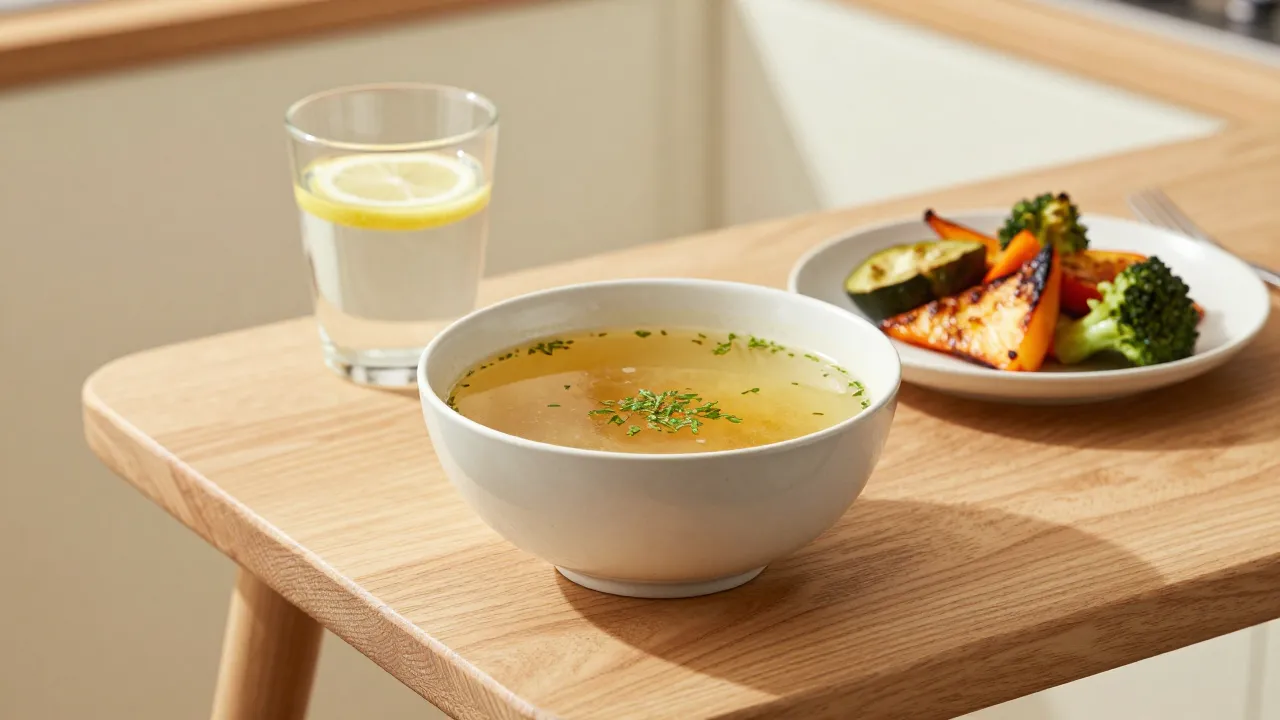
Eating after ostomy surgery does not stay on the bland-and-blended menu forever. There is a method for getting back to ordinary food, coffee in the morning, salad at lunch, dinner with friends, and it follows a 4-week shape that most ostomates can complete without drama.
Last updated: October 2026
One of the most demoralizing parts of early ostomy life is the food. Hospital instructions are usually some version of “low-fiber, low-residue, eat small, eat often”, necessary in the short term, exhausting in the medium term, and silent on the question every ostomate is actually asking: when do I get to eat like a person again?
The honest answer is “about four weeks if you’re methodical about it.” Here is the 4-week reset that gets you from blended-and-bland back to mostly-normal eating, with the named exceptions that stay on the no-fly list for the long haul.
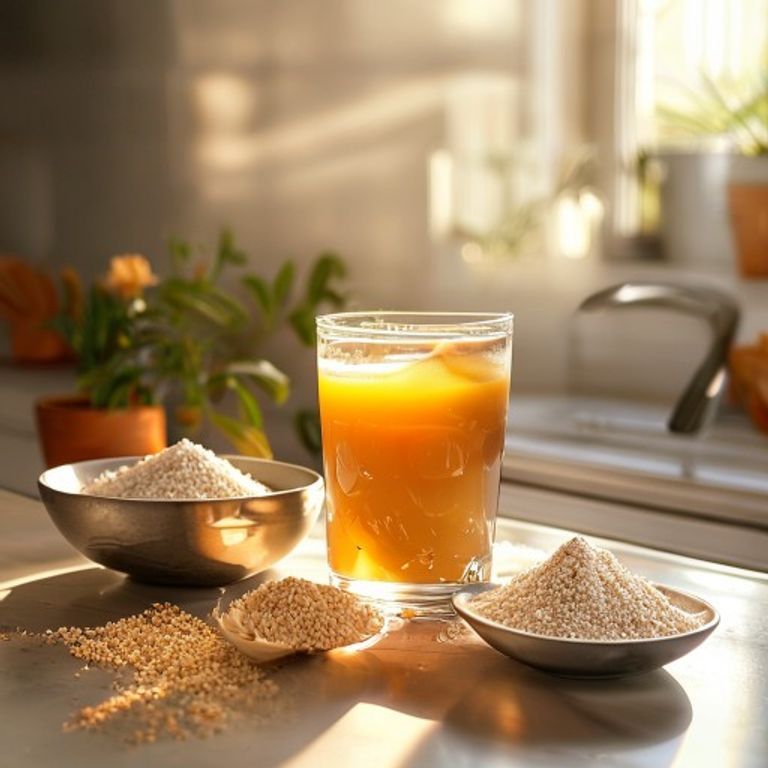
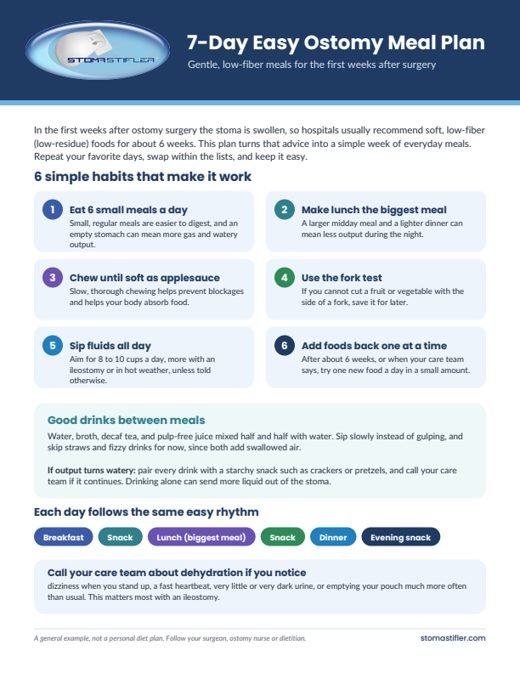
Week 1: Bland and blended, on purpose
The first week is not about variety. It is about giving your gut something it can handle without surprises while the surgical sites finish their structural healing.
The Week 1 menu:
- White rice, white pasta, white bread
- Bananas, applesauce (no skins, no seeds)
- Smooth peanut butter
- Plain Greek yogurt
- Cooked, peeled, soft vegetables, carrots, zucchini, squash
- Lean proteins: poached chicken, white fish, scrambled eggs
- Smooth soups, broths, electrolyte drinks
What you are doing. Low residue, low fiber, easy transit. This is the “default mode” of the post-op gut. Output will be predictable, the appliance will seal cleanly, and you will get the rest you need.

What to avoid completely Week 1: raw vegetables, nuts, seeds, popcorn, mushrooms, corn, dried fruit, anything with skins (apples, grapes, tomatoes), high-fat fried foods, beans/legumes, carbonated drinks, alcohol.
Hydration rule. For ileostomates especially, aim for at least 8-10 cups of fluid a day, with at least 2 of those being an electrolyte drink (low-sugar electrolyte mixes work well, such as Redmond Re-Lyte or LMNT). Pale yellow urine means you’re hitting it.
Week 2: The single-add method
Week 2 is where the variety comes back, but slowly. The method that prevents drama is what I call the single-add: introduce one new food at a time, in a small portion, in the morning so you can see how your body responds over the day.
How to single-add.
- Pick one new food per day, no more
- Eat a small portion (1/4 of a normal serving) at breakfast or morning snack
- Chew it more than usual, twice as much as you think
- Note the output over the next 8 hours: thicker, looser, more gas, more noise, any pain?
- If output stays comfortable, that food earns a spot on your “safe list.” If it causes problems, park it for two weeks and try again later
Good Week 2 single-adds (most ostomates tolerate these well):
- Soft-cooked oatmeal (start with a small bowl)
- Plain crackers
- Tofu
- Soft cheeses (mozzarella, cottage cheese, mild cheddar)
- Peeled, cooked apples (compote)
- Avocado (small amounts)
- Sweet potato (peeled, well-cooked)
- Lean ground beef or turkey, well-cooked
- Coffee with milk (this is the week most ostomates can re-introduce caffeine safely, in moderation)
The pace matters. Adding three new foods in one day means you cannot identify which one caused the symptoms. One a day, every day, for two weeks builds a 14-item safe list.
Week 3: Expanding the safe list
By Week 3, you have a usable foundation. This is the week to start adding the foods that ostomates traditionally treat with caution, they often work fine in moderation, but they need testing.
Test these one at a time in Week 3:
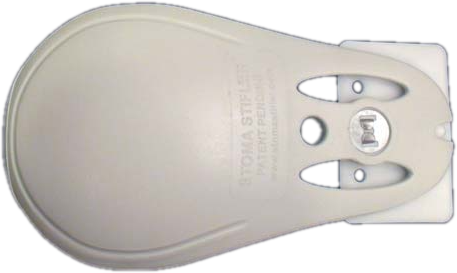
Stoma Stifler™, The Sound Suppressor + Stoma Guard Most Ostomates Wish They’d Found Sooner
- Raw salad greens (start with a small portion of soft greens, butter lettuce, baby spinach, and chew thoroughly)
- Tomatoes without skins
- Cucumber, peeled and seeded
- Berries (one type at a time)
- Whole-grain breads (some ostomates do fine, some don’t, depends on your gut)
- Hummus and bean dips (start with a tablespoon, see how the gas goes)
- A small serving of pasta with a tomato sauce (the cooked-veg version of nightshades is often well-tolerated even when raw is not)
- A glass of wine with a meal (alcohol speeds transit, moderation is the key)
The trigger-food shortlist. Most ostomates discover their personal trouble foods in Week 3. The most common offenders that earn a permanent “rarely” status:
- Raw broccoli, raw cauliflower, raw cabbage (cooked is fine, raw is not)
- Nuts in any quantity (especially almonds, peanuts)
- Popcorn (the hulls are a blockage risk for ileostomates)
- Mushrooms (texture issue, blockage risk)
- Asparagus (odor, gas)
- Fish skins, citrus pith
- Carbonated drinks (especially diet sodas with sugar alcohols)
- Anything with sugar alcohols (sorbitol, xylitol, erythritol), these cause dramatic loose output in many ostomates
The Week 3 mindset shift: it is okay to have foods you only eat at home or on days you can rest. This is not failure, it is the normal pattern of most ostomates with good control over their daily life.
Week 4: Mostly normal, with named exceptions
By Week 4, eating should feel mostly normal again. You have a long safe list, a short trigger-food list, and a method for testing anything new. This is the week to live a little.
The Week 4 stretch goals:
- A meal out at a restaurant (pick something on your safe list, eat half, take the rest home, the home stretch is the test, not the meal itself)
- A social dinner with friends (eat before if you’re nervous, choose your dish carefully, enjoy yourself)
- One indulgence food, the thing you have been missing. Test it in a small portion, at home, on a Saturday. Most ostomates discover their indulgences are tolerable in moderation, just not in pre-surgery volumes
The system that holds it together:
- Soluble fiber daily. A teaspoon of psyllium husk in water, the single most powerful lever for output predictability long-term. Bulks the output, slows transit, reduces noise, helps the appliance seal.
- Eat small, eat often. Five smaller meals beat three large ones. Less digestive backlog, less gas, more comfort.
- Chew thoroughly. Mechanical breakdown matters more in ostomy life than it did before. Twice the chews you used to do.
- Hydrate intentionally. Not just water, water plus electrolytes, especially in summer or after exercise.
- Track for the first two months. A simple notes app entry after each meal. Pattern recognition gets easier with data; without data, every flare feels random.
The diet questions everyone has but nobody asks
Can I drink coffee? Usually yes, by Week 2-3, in moderation. Coffee speeds transit. If you have a watery output day already, skip coffee that morning.
Can I drink alcohol? Yes, with caution. Alcohol speeds transit and is dehydrating. Stick to wine or spirits (avoid beer and most cocktails, carbonation, sugar). Drink water alongside.
What about spicy food? Many ostomates tolerate it fine. Test in Week 3. The “burning twice” myth is mostly that, a myth.
Will I have to eat differently forever? Mostly no. You will have a small list of personal triggers and a habit of chewing more carefully. Beyond that, most ostomates eat substantially the same diet they did before surgery, with maybe 10% modified.
What about food during a flare or blockage scare? Back to Week 1 menu for 24-48 hours until things settle, hydrate aggressively, then rebuild with the single-add method. This is a tool, not a punishment.
The meal-by-meal day that works for most ostomates
If you want a template for a normal day at the end of Week 4:
- Breakfast: Oatmeal with banana, smooth peanut butter, and a teaspoon of psyllium stirred in. Coffee with milk.
- Mid-morning: Hard-boiled egg or string cheese.
- Lunch: Grilled chicken sandwich on soft bread, peeled cucumber slices, side of cottage cheese. Electrolyte drink.
- Afternoon: Yogurt or a small handful of pretzels. Water.
- Dinner: Salmon, well-cooked sweet potato, cooked carrots. Glass of water with a slice of lemon.
- Evening: Small bowl of applesauce or a square of dark chocolate.
That day is roughly 1800-2000 calories, balanced macros, ostomy-friendly, and on most ostomates’ safe lists by end of Week 4. Use it as a starting point and customize from there.
The bottom line
Eating normal again is a methodical, four-week process, not a sudden return. The framework is bland Week 1, single-add Week 2, expand Week 3, mostly-normal Week 4. Following it almost always works. Skipping it almost always leads to setbacks.
The literature on post-ostomy nutrition supports gradual return:
- Ostomy nurse support drives QoL outcomes. A 2018 review confirms that the involvement of an ostomy nurse and proper preoperative preparation significantly improve quality of life, acceptance, and complication rates. According to PubMed (DOI 10.3238/arztebl.2018.0182).
- Complications are mostly conservative. A 2019 review documents that most ostomy-related challenges, from skin issues to bag adherence to lifestyle adaptation, respond to technique and product adjustment before requiring intervention. According to PubMed (DOI 10.1055/s-0038-1676995).
- Type-specific differences matter. A 2025 meta-analysis demonstrated meaningful differences in daily-life patterns between ileostomy and colostomy patients, with implications for lifestyle adaptation strategies. According to PubMed (DOI 10.3389/fmed.2025.1610213).
- Step-up management. A 2023 mapping review confirms a step-up approach from conservative ostomy care through to surgical revision when needed, relevant whenever a lifestyle pattern stops working. According to PubMed (DOI 10.1186/s13017-023-00516-5).
Once you are on the other side, food becomes one of the parts of life that feels most fully yours again, and that, more than almost anything else, is the moment most ostomates say they finally feel normal. See the broader framework in our first-year guide, and for gas and odor specifically, our three-fix gas guide pairs perfectly with this reset.
Affiliate disclosure: Some links in this article are Amazon affiliate links. If you purchase through them, Stoma Stifler may earn a small commission at no extra cost to you. See our full affiliate disclosure.
Helpful complementary supplies
A few complementary items most ostomates keep on hand. These pair with your Stoma Stifler for an easier daily routine.




Research that backs up this guidance
- Murken DR, Bleier JIS. (2019). Ostomy-Related Complications. Clinics in Colon and Rectal Surgery, 32(3):176-182. [DOI]Comprehensive review of common stoma issues, peristomal skin complications, retraction, stomal stenosis, prolapse, bleeding, dehydration from high output, and parastomal hernia. Covers prevention and recommended management strategies for every issue an ostomate typically faces.
- Bozkul G, et al. (2024). Nursing interventions for the self-efficacy of ostomy patients: A systematic review. Journal of Tissue Viability, 33(2):165-173. [DOI]Systematic review of 15 studies found that structured education, telephone follow-up, and peer-support interventions measurably increased self-efficacy, decreased stoma complications, improved adaptation, and raised quality of life. The takeaway: knowledge directly translates to fewer complications.
More from the Ostomy Library
- Back to work with an ostomy: What to say, what to pack and how to plan your workday.
- Dressing with an ostomy: Clothes that fit, flatter and keep your pouch discreet.
- Intimacy after ostomy surgery: Talking with a partner and feeling confident again.
Browse all Daily Life With an Ostomy guides or the full Ostomy Library.
Further reading on The Wellthie One
- Keeping a health journal: What to track (food, symptoms, changes) and what to show your doctor.
Frequently Asked Questions
Is what I'm experiencing normal after ostomy surgery?
Most concerns ostomates have, bag noise, gas, occasional leaks, skin irritation, body-image adjustment, are normal in the first 6-12 months. The frequency and intensity drop significantly as your body adapts and your routine settles. Reach out to your ostomy nurse if anything feels worsening rather than improving.
Eating normally after an ostomy is largely a matter of patience and systematic re-introduction. The readers who return to their pre-surgery eating life by month 6 are the ones who keep retrying foods rather than permanently avoiding them. The readers who stay on a restricted diet at year 2 are usually the ones who stopped retrying at week 8. The body adapts. Your job is to keep giving it the opportunity.
When should I call my ostomy nurse or doctor?
Call promptly for: peristomal skin that's painful, bleeding, or breaking down; stoma color changes (dusky, purple, pale); no output for 4-6 hours with cramping (possible blockage); high output that won't slow despite reducing fiber and adding electrolytes; or a hernia bulge that becomes painful or won't reduce. Most other concerns can wait for your next scheduled appointment.
Does the Stoma Stifler help with this?
The Stoma Stifler is a stoma guard and noise suppressor in one. Its dense foam cup muffles stoma sounds and shields the stoma from bumps and pressure, without restricting output. It works with your existing pouching system and doesn't interfere with skin care or wafer adhesion. Pairing it with the basics, good skin routine, hydration, and any complementary supplies above, covers most daily-comfort challenges.