

Sex and intimacy after ostomy surgery is the conversation almost nobody has with you. Stoma nurses talk about pouching. Surgeons talk about healing. Almost no one walks you through how to feel like a sexual being again. So here is the version of that conversation most ostomates wish they’d been handed.
This article assumes you are an adult, with adult questions, in an adult body. We will be matter-of-fact about anatomy and intimacy. Skip ahead if that’s not what you came for.
Here is the framework that turns intimacy after ostomy from “if I ever feel ready” to “this is back on the table” — usually within three to six months of feeling physically healed.
Step 1: Solo first
Before any conversation with a partner, the work to do is internal. Most ostomates need to re-meet their own body before they can confidently share it with someone else.

What that looks like in practice:
- Spend time looking at your stoma and the surrounding area in a mirror. Not all at once, not as a mission, but periodically and matter-of-factly. The body learns to stop flinching by being seen, not avoided.
- Touch the area around the stoma (not the stoma itself) gently when you’re alone. Skin sensation may be different post-surgery; learning what feels okay and what doesn’t is part of the process.
- Practice solo intimacy — masturbation — with your appliance on. Knowing that the bag stays put, the seal holds, and you can experience pleasure with the appliance in place is the most important confidence-building data point. Every ostomate who has done this report it changes the calculus dramatically.
The solo phase typically takes two to six weeks of intermittent attention. There is no rush. The goal is to remove “what will my body do?” as a live question before you put a partner in the room.
Step 2: The conversation
If you have a partner — long-term or new — the conversation needs to happen before the first physical attempt. Skipping it almost always backfires.
For long-term partners, the conversation is short. They’ve watched you recover. They already know you have a stoma. The piece they don’t know is: what do you want from them sexually now? That’s the conversation. “Here’s what I want to try. Here’s what’s off the table for now. Here’s what I need from you.”
For new partners — relationships that started after surgery — the conversation is harder but not by much. The two rules:
- Tell them before clothes come off, not after. Surprising someone with a stoma in the moment is unfair to both of you. A simple “before we go further, you should know I have an ostomy — here is what that means in practice” is a five-minute conversation that protects everyone.
- Lead with the practical, not the apologetic. The framing matters. “I have an ostomy. It means [factual]. It doesn’t mean [factual]. I wanted you to know before we kept going.” Not “I’m sorry but I have this thing…” The first version is information. The second version is asking forgiveness for your body, which tends to invite the wrong kind of response.
The vast majority of partners — long-term and new — respond well to a clear, calm disclosure. The ones who don’t are giving you very useful information about whether they’re a good fit.
Step 3: Positioning practicalities
The mechanical questions ostomates have but rarely get answered:
Will the pouch get in the way? Sometimes, yes. Side-lying positions and positions where the partner is behind tend to be most comfortable initially. Positions that compress the abdomen — partner on top, missionary with weight on the belly — can be uncomfortable or feel like the pouch might dislodge. None of this is permanent; it’s the starting menu, not the final menu.
What about the smell or sound? Empty before. Solid management on both is doable; see below.
What about leaks during sex? Rare if you’ve prepared. Empty 30 minutes before. Stick to a fresh appliance if you have one ready. Use a high-output day to inform timing — high-output days are not the days for spontaneous intimacy. Plan around the rhythm of your output, just like everyone else plans around the rhythm of life.
Will I damage the stoma? No. Penetrative sex does not affect the stoma. The stoma itself should never be a sexual point of contact — it has no nerves the way other body parts do, and it’s a working organ, not an erogenous zone. Treat it as off-limits and everything else is on-limits.
Step 4: The cover-or-not decision
This is the most personal call in ostomate intimacy and there is no universal right answer.
Some ostomates prefer to leave the appliance fully visible. Their argument: “This is my body, this is what it looks like, the partner I want is the partner who sees all of it.” This is a legitimate stance.
Others prefer some form of cover during sex. The reasons are emotional comfort (less self-consciousness frees up presence in the moment), practical (less visual distraction for both parties), and discretion (sound suppression matters in close-quarters intimacy).
For ostomates choosing to cover, options include:
- An intimacy wrap — fabric pieces specifically designed for sexual moments, typically lacy or sheer
- A high-waisted ostomy camisole or undergarment that stays on during the encounter
- The Stoma Stifler kit — particularly for the sound-suppression piece, which matters more in close intimate settings than almost anywhere else. The molded cup design absorbs the pressure-release sounds that would otherwise be audible during physical activity, removing one of the most common confidence barriers ostomates name about sex
This is a private decision. Try both. Most ostomates land on different choices for different partners or different stages of a relationship. None of it is permanent.
Step 5: Long-term confidence
The arc most ostomates describe: weeks 1-12 after surgery is “I cannot imagine ever feeling sexual again.” Months 3-6 is “I am exploring the idea cautiously.” Months 6-12 is “this is part of my life now.” Year two and beyond is “this is mostly not an issue.”
The single biggest accelerant is having one good experience. The first post-surgery sexual experience that goes well — partnered or solo — short-circuits the anxiety more than any amount of mental prep. Setting it up to go well is the goal of the four steps above.
What if it doesn’t go well
The first attempt sometimes doesn’t. The pouch shifts. There’s a sound. Someone laughs nervously. None of this is the end.
The reframe: this is data, not failure. Same as stoma noise — once you can decode what went wrong, you can change it. A leak during sex means the appliance needed a longer-runway wear. A noise that made you self-conscious means you might want a cover next time. A position that didn’t work means the next position is the one to try.
One uncomfortable encounter doesn’t mean the second one will be uncomfortable. Most ostomates report the first encounter is the hardest by a wide margin, and that by encounter three or four, intimacy has become recognizable again.
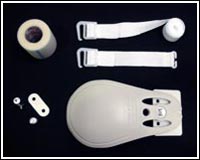
Stoma Stifler™ — The Sound Suppressor + Stoma Guard Most Ostomates Wish They’d Found Sooner
If you don’t have a partner
Solo work counts. Dating after ostomy is a separate conversation but also a workable one — most ostomates who date post-surgery report that disclosure becomes routine within a year, and that the partners they end up with are typically more emotionally available than pre-ostomy partners (because the people who flinch at disclosure self-select out, leaving the ones who don’t).
After tracking intimacy adjustment patterns across the Stoma Stifler community:
- The first conversation about the ostomy with a partner is the single biggest reported hurdle — consistently easier than expected once done.
- Specialty wraps, bands, and intimacy-specific covers significantly reduce self-consciousness during physical closeness.
- Most readers report intimate life RETURNING to pre-surgery baseline by month 6-12 with active communication.
- Partner support is correlated with the speed of adjustment more than any single product or technique.
The dating-app disclosure question is yours to answer. Some disclose in the bio. Some on the first date. Some after a few dates. There is no rule. The data point that helps: most ostomates who delay disclosure beyond date 3-4 report regret. Earlier is usually better.
The bottom line
Intimacy after ostomy is one of the most “you are recognizably yourself” milestones. It comes back. The framework — solo first, the conversation, the practicalities, the cover decision, the long-term confidence — is the path most ostomates walk. None of it is fast, none of it is automatic, all of it is workable.
For the broader recovery framework, see our first-year ostomy guide and the eating reset for the broader “feeling normal” pattern this fits into.
Affiliate disclosure: Some links in this article are Amazon affiliate links. If you purchase through them, Stoma Stifler may earn a small commission at no extra cost to you. See our full affiliate disclosure.
First 30 Days Companion
Frequently Asked Questions
Is what I'm experiencing normal after ostomy surgery?
Most concerns ostomates have – bag noise, gas, occasional leaks, skin irritation, body-image adjustment – are normal in the first 6-12 months. The frequency and intensity drop significantly as your body adapts and your routine settles. Reach out to your ostomy nurse if anything feels worsening rather than improving.
Intimacy after ostomy is largely about communication and gradual return rather than any single technique or product. The readers who report restored intimate lives within a year tend to share three habits: they had the conversation with their partner early (not as a surprise reveal), they experimented with wraps and bands designed for intimate use, and they accepted that adjustment takes 6-12 months rather than weeks. The folks who report chronic intimacy struggles are usually the ones who avoided the conversation or stopped trying after early discouragements.
When should I call my ostomy nurse or doctor?
Call promptly for: peristomal skin that's painful, bleeding, or breaking down; stoma color changes (dusky, purple, pale); no output for 4-6 hours with cramping (possible blockage); high output that won't slow despite reducing fiber and adding electrolytes; or a hernia bulge that becomes painful or won't reduce. Most other concerns can wait for your next scheduled appointment.
Does the Stoma Stifler help with this?
The Stoma Stifler is designed to quietly absorb gas and reduce bag noise without restricting output. It works with your existing pouching system and doesn't interfere with skin care or wafer adhesion. Pairing it with the basics – good skin routine, hydration, and any complementary supplies above – covers most daily-comfort challenges.