
If you have been putting off dating, or sitting across from someone you like while quietly rehearsing how to explain your pouch, you are not alone. Fear of rejection is one of the most common feelings people describe about dating with an ostomy, along with wondering when to tell someone, how to say it and whether you are still desirable.
The short answer: there is no right date to tell someone new. Many people share before things become physical, once there is some trust, and keep it simple and matter-of-fact. Your stoma (the small opening on your belly where stool or urine leaves the body) and your pouch (the bag that collects it) are part of your story, not the whole of it. And how someone responds often says more about them than about you.
What follows comes from what people living with an ostomy have shared: the words that helped, the small preparations that made closeness easier, and how to know when a relationship is right for you.
When and how might you tell someone new about your ostomy?
Choose the answers that feel closest to where you are today. Your result offers a gentle script you can make your own and a few steps for when you feel ready.
Where am I with someone new right now?
How do I feel about my body today?
How would I like to share?
What is my biggest concern?
At a glance
| What you may feel | Fear of rejection, not knowing when or how to tell, feeling less desirable |
|---|---|
| When to tell | No right date; many people share before things become physical, once there is some trust |
| How to tell | Simple and matter-of-fact, in a calm and private moment, with room for questions |
| Preparing for closeness | Empty the pouch, a soft wrap or cover, positions that keep pressure off the stoma |
| What people often find | Partners are often far less concerned about the pouch than expected |
| What comes first | Your own sense of worth, not anyone else’s approval |
Why does dating with an ostomy bring up so much fear?
Dating asks you to be seen, and an ostomy can make being seen feel risky. Many people describe private concerns about whether a date will notice the pouch, what to say about it, and whether a romantic partner will still find them attractive. Some step back from dating for a while because they feel self-conscious.
One man shared online that after emergency surgery, he went home to his apartment alone. The first time he emptied his pouch by himself, it went badly and he cried. What weighed on him most was not the mess. He feared he had lost his attractiveness, his independence and his chance at another relationship. Other ostomates answered with their own rough beginnings, and he later came back to thank them for helping him feel less alone.
If that fear sounds familiar, nothing is wrong with you. It is a natural response to a big change in your body, on top of the ordinary nerves of meeting anyone new. In one survey of 214 adults with a stoma, nearly half said they were dissatisfied with their body image. You are far from the only one.
When should you tell someone new about your ostomy?
There is no right date. Some people mention their ostomy early, in a profile or a first conversation, so anyone who stays already knows. Others wait until they feel ready. Many share somewhere in the middle: once there is some trust between you, and before things become physical.
One woman who has lived with an ostomy since her mid-twenties explained that she prefers to bring it up casually rather than present it as a big confession. For her, treating the ostomy as an ordinary part of life helped other people respond naturally.
Signs you may be ready to share
- You have enjoyed some time together and feel a sense of trust.
- Things are moving toward physical closeness.
- Keeping it to yourself has started to feel heavier than saying it.
- You have your few sentences ready, even if your voice shakes a little.
Sharing before closeness gives you both room to talk calmly and spares you the strain of hiding. An ostomy advocate who speaks openly about dating described how keeping her pouch hidden at first made intimacy more stressful, and how being open with partners helped her relax and feel present.
Waiting a long time can quietly shrink your world. In one study of people with a permanent ostomy, some chose to stay home rather than face telling others. If you are saying no to dates to avoid the conversation, it may be worth having sooner.
How do you tell someone you have an ostomy?
Keep it simple and matter-of-fact. The tone you use often sets the tone they use, and most people take their cue from you.
A simple three-part script
- Say what it is, plainly. You had surgery, and now you have a stoma with a small pouch that collects output (the stool or urine that leaves through the stoma).
- Say what it means for your life. It is part of how your body works now, and it does not stop you from doing what you enjoy.
- Open the door. Let them know they can ask you anything, then pause and give them a moment.
Put together, in your own words: you had surgery a while back, you now have an ostomy, which means you wear a small pouch on your belly, it is simply part of your life now, and they are welcome to ask questions. That is enough. How much you share about why you had surgery is always your choice.
Practice the words before the moment
The first time you say something out loud is usually the most awkward. Practice in the car, in front of a mirror, with a trusted friend or in a support group until the words sound ordinary. One person shared that their first pouch change took more than an hour, and with practice it took about eight minutes. Saying these words tends to follow the same path.
In person, before a date or by message first
- In person: choose a calm, private moment, like a walk or a quiet coffee, not a loud restaurant or the minute before closeness.
- Before a date: a short phone call can take the weight off the evening itself.
- By message first: keep it short and warm, and offer to answer questions in person. It gives the other person time to respond thoughtfully.
From 14 years of conversations with ostomates
The people who describe the easiest conversations are rarely the ones with perfect words. They said it plainly, as an ordinary part of life, and let the other person ask questions. The calmer and more matter-of-fact you are, the more naturally others tend to respond.
What if they do not respond the way you hoped?
Many people find that partners respond with care, often with far less concern than they expected.
One person wore a wrap during intimacy with a new partner at first. Over time the partner reassured them the pouch was not an issue, and eventually they felt comfortable without covering it. Someone else described a boyfriend who continued to find them attractive after their ostomy surgery.
Research points the same way. In interviews with women who had an ostomy after colorectal cancer and had a husband or partner, most described their partner’s support as central to how they adjusted.
Not every story goes that way, and some partners struggle with the adjustment. If someone reacts poorly, it often says more about them than about you: their own fears, their comfort with bodies, their readiness for something real. It is not a verdict on your worth.
If the first reaction is quiet
Sometimes the first response is simply surprise, and a pause is not the same as a no. Give them a moment, answer their questions plainly, and let them come back to it later. A thoughtful second conversation can say more than a startled first one.
How do you feel desirable again with an ostomy?
Self-worth comes first, before any conversation with anyone else. Your ostomy does not take away your attractiveness, your personality or your ability to form meaningful relationships. You can still flirt, fall in love, enjoy closeness, get married and build a family, if that is what you want.
Confidence often comes back gradually, through ordinary things like dressing up for dinner, going out with friends or returning to a favorite hobby. Some people feel more confident with ostomy-friendly underwear, a wrap or a pouch cover, while others find their usual wardrobe works well. If clothes are where your confidence wobbles, the outfit audit for dressing with an ostomy goes piece by piece.

Several ostomy advocates have described how wearing swimsuits, going to events and sharing photos of themselves helped them accept their own bodies. One started an online community because she felt isolated at first, and connecting with others helped her build confidence.
You do not have to love your stoma every day to be ready for love. Some days you may barely think about it, and other days you may feel unhappy about the changes to your body. Both are part of living with an ostomy. For more on rebuilding everyday life, see adapting to life after a colostomy, ileostomy or urostomy.
How do you prepare for closeness with a new partner?
When you and a new partner are ready for intimacy, a little preparation helps many people relax and stay present. First, wait until your surgical team confirms that sexual activity is safe for you, especially after abdominal or pelvic surgery.
Small preparations that help
- Empty your pouch beforehand so it feels lighter and less noticeable.
- Wear a soft pouch cover, a wrap or underwear you feel good in that holds the pouch close.
- Ask your ostomy nurse whether a smaller pouch or a stoma cap (a small, closed cap worn over the stoma) suits your ostomy and output for intimate times.
- Choose positions that keep pressure off your stoma, and tell your partner what feels comfortable.
Surgery can sometimes bring physical changes that affect comfort, sensation or sexual function. These are worth raising with your doctor, because support may help. A stoma is delicate, and nothing should ever be put into it. For more, see intimacy after ostomy surgery, and the UOAA (United Ostomy Associations of America) guide to intimacy after ostomy surgery.
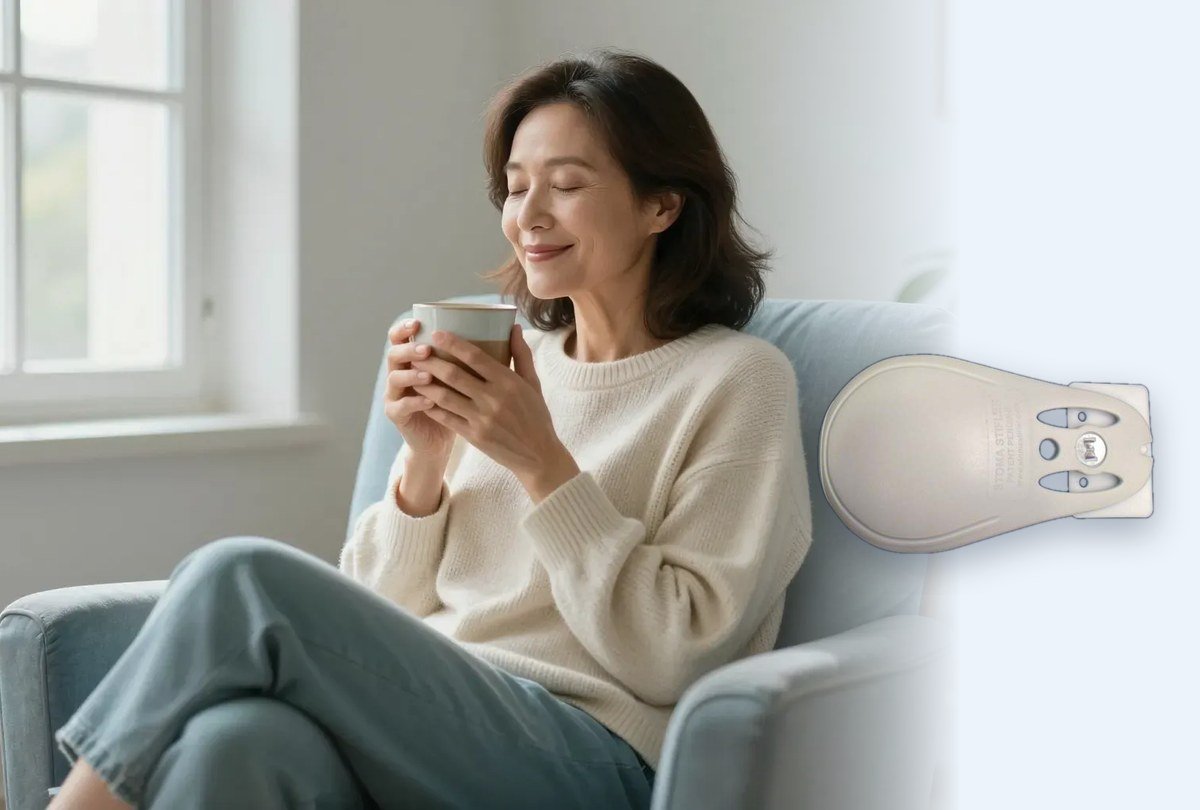
A soft layer and a little protection can help you focus on the person in front of you instead of the pouch. The FSUHHIAD wrap holds the pouch close in an inner pocket and is sold for sport, swimming and closeness. Some people also try the Stoma Stifler during intimacy: the firm, quiet guard is sized to your pouch and worn under an elasticized undergarment, so it keeps the stoma from being squashed in a close embrace, protects it from accidental bumps and softens stoma sounds.
FSUHHIAD Ostomy Wrap and Pouch Cover
 View on Amazon
A soft wrap with an inner pocket that holds the pouch close, sold for sport, swimming and closeness.
Stoma Stifler
 See the Stoma Stifler
A firm, quiet stoma guard that fits all one-piece and two-piece pouch systems, so there is nothing to measure. Protects the stoma from bumps, seat belts and hugs, and softens stoma sounds. Wear it under an elasticized undergarment, or attach it to your own undergarments, ostomy belt or hernia belt with the optional kit pieces.
Already wear an ostomy belt? The Stoma Stifler connects to it with the optional belt-clip kit included with every Stoma Stifler.
As an Amazon Associate, Stoma Stifler earns from qualifying purchases. Disclosure
Can a little humor make it easier?
For some people, humor takes the weight out of the moment. In ostomy communities, people give their stomas names like Stella the Stoma or Bilbo Baggins, talk to them when they gurgle, and laugh about it with friends and family. A light line after you share can help a new partner relax too. Others prefer to keep things plain, and that works just as well.
Stoma sounds are a common concern on dates, because gas can pass through a stoma without warning. Some people find that small, regular meals, skipping fizzy drinks before a date and resting a hand gently over the pouch help. Most people assume a sound is an ordinary stomach rumble, and you never owe anyone an explanation. The guide to quieting stoma noise has more ideas.
How do you know when a relationship is not right?
Not every relationship responds the same way, and no one should feel they have to hide their ostomy to earn affection. The right person makes room for all of you.
Signs a relationship may not be right for you
- They make jokes at your expense about your body or your pouch.
- They ask you to keep your ostomy hidden from them or from others.
- They push for closeness before you feel ready, or before your care team says it is safe.
- You feel smaller, more ashamed or more anxious after time together, not less.
Walking away from someone who cannot accept your ostomy is not a failure. It is self-respect, and it leaves room for someone who can. If sadness or shame stays heavy after a rejection, a counselor or a support group can help you remember what you bring to a relationship.

Feel ready for closeness, with a plan written from your story
The My Ostomy Blueprint includes a full Intimacy and closeness section and a Feeling like yourself again section, written from your own answers, with words and next steps matched to where you are right now.
Start My BlueprintYou are still someone worth knowing
Dating with an ostomy does not mean dating as someone less. It means bringing one more part of your story, and choosing who earns the right to hear it. Your humor, your kindness and the things that light you up are all still there.
Your next step might be practicing your three sentences out loud, saying yes to a coffee, or simply letting yourself imagine being wanted again. Every step counts. For the bigger picture, see life after ostomy surgery.
Share how you told someone new
How did you tell someone new about your ostomy, and what do you wish you had known before? Maybe it was the words you used, a message you sent first, or the way they responded. Email your story to info@stomastifler.com. It will be shared only without your name, so the next person rehearsing those words knows they are not alone.
Research that backs up this guidance
Research matches what people living with an ostomy describe. Body image concerns and changes in sexual interest are common after stoma surgery, and telling a new partner can bring self-consciousness and unease.
It also points to what helps. Supportive partners are often central to how people adjust, and education that makes room to talk about intimacy has been linked to better closeness over time.
| What the research found | Source |
|---|---|
| In interviews with people who had a stoma, telling a new partner brought self-consciousness and social unease, and people worked to rebuild a sense of privacy and dignity within the relationship. | Manderson, Social Science and Medicine, 2005PubMed ID 15893055 |
| In focus groups with 15 people with a permanent ostomy, participants described stigma and concerns about disclosure, and some stayed away from others to avoid telling people about the stoma. | Danielsen et al., Journal of Wound, Ostomy and Continence Nursing, 2013PubMed ID 23820473 |
| In 21 interviews, people with an ostomy managed uncertainty about their lives partly by managing the information they received and what they chose to disclose to others. | Hughes and Romo, Health Communication, 2019PubMed ID 30632813 |
| Of 22 women with an ostomy after colorectal cancer who had a husband or partner, 17 described their partner’s support as central to their adjustment. | Altschuler et al., Journal of Wound, Ostomy and Continence Nursing, 2009PubMed ID 19448512 |
| In a survey of 214 adults with a stoma, nearly half reported body image dissatisfaction and more than a third reported reduced sexual interest. | Fischer et al., International Journal of Colorectal Disease, 2026PubMed ID 41559477 |
| In a trial with partnered cancer survivors living with an ostomy, a telehealth self-management program that included discussion of intimacy improved intimacy scores over time compared with usual care. | Nehemiah et al., Journal of Sexual Medicine, 2023PubMed ID 37769350 |
What this means for you: What this means for you: many people living with an ostomy share the fear of telling someone new, and it often eases with practice, plain words and the right person. Keep it simple, and let your own worth come first.
Frequently asked questions
Should you mention your ostomy on a dating profile?
That is up to you. Some people mention it on a profile or in early messages so anyone who stays is already comfortable with it. Others prefer to let someone get to know them first and share once there is some trust, often before things become physical. Neither choice is wrong. Choose the one that lets you feel most like yourself.
Will a new partner be put off by your pouch?
Many people living with an ostomy find that partners respond with care and are far less concerned about the pouch than expected. Not every response is kind, and when someone reacts poorly, it often says more about them than about you. A calm, matter-of-fact explanation, an emptied pouch and a soft cover or wrap help many people feel more relaxed.
Can you be intimate with an ostomy?
Yes. Many people with an ostomy have satisfying relationships and intimate lives after recovering from surgery. Wait until your surgical team says sexual activity is safe for you. Emptying the pouch beforehand, a soft wrap or cover, and positions that keep pressure off the stoma help many people relax. If you notice changes in comfort or sensation, talk with your doctor.
What if your stoma makes noise on a date?
Stoma sounds happen, because gas can pass through a stoma without warning. Some people find that small, regular meals, skipping fizzy drinks beforehand and resting a hand gently over the pouch help. Most people nearby assume a sound is an ordinary stomach rumble. A little humor works for some, and you never owe anyone an explanation unless you choose to give one.
Last updated October 2026. Written from 14 years of conversations with people living with an ostomy and the people who care for them. General education only; it does not replace your surgeon, ostomy nurse or dietitian.