If you have been avoiding the mirror since surgery, or looking down at your belly and feeling like it belongs to someone else, you are not alone. Body image after ostomy surgery is one of the most common struggles people describe. Shock, grief, feeling less attractive, feeling less like yourself: these are natural responses to a big change.
The short answer is that confidence usually comes before acceptance. Most people learn to care for their stoma (the small opening on your belly where stool or urine leaves the body) and their pouch (the bag that collects it) long before they feel at peace with how their body looks. Physical recovery and emotional acceptance move at different speeds, and there is no set timeline for either.
What follows comes from what people living with an ostomy have shared, and the small steps that helped them feel at home in their own skin again.
Where are you in feeling at home in your body?
Choose the answer that feels closest to today, not the one you think you should give. Your result describes where you are with kindness and offers a few gentle next steps.
How comfortable do I feel caring for my ostomy?
How do I feel when I see my body?
Am I doing the things I enjoyed before surgery?
How long ago was my surgery?
At a glance
| What you may feel | Shock, grief, avoiding the mirror, feeling less attractive or less like yourself |
|---|---|
| How common it is | One of the most common struggles people describe after ostomy surgery |
| What usually comes first | Confidence in daily care, often long before acceptance |
| Timeline | No set timeline; physical and emotional recovery move at their own pace |
| What helps most | Confident daily care, ordinary outings, people who accept you, the right support |
| When to ask for help | Sadness that stays heavy most days or keeps you from what you enjoy |
Why does your body feel so unfamiliar after ostomy surgery?
An ostomy changes how your body works, looks and feels, all at once. There is a stoma where there was smooth skin, a pouch held on by a wafer (the sticky skin barrier that seals the pouch to your skin), and output (the stool or urine that leaves through the stoma) arriving in a new way. Many people describe losing the sense of being whole. In plain words: feeling like a stranger in your own body.
Many people have described going into the hospital with stomach pain, or what they thought was constipation, and waking up after emergency surgery with a stoma while nurses explained their new routine. They had not chosen it and had no time to get ready. Shock came first, and grief followed close behind.
Others feel relief almost right away, because years of painful bowel symptoms are finally behind them. Neither path is wrong. You can be thankful that surgery helped you and still grieve the body you had before. Both feelings can sit side by side.
Is it normal to feel less attractive after ostomy surgery?
Yes. A review of research on people with a stoma found that poor body image and lower self-respect were among the problems reported most often. Many people carry private concerns about how clothes will fit, whether someone will notice the pouch, and whether a partner will still find them attractive.
One man shared online that the first time he emptied his pouch alone at home after emergency surgery, it went badly and he cried. What hurt most was not the mess. He feared he had lost his attractiveness, his independence and his chance at another relationship. Other ostomates answered with their own rough beginnings, and he later came back to thank them for helping him feel less alone.
You also do not have to feel good about your ostomy every day. One person who had lived with a stoma for decades described years of emphasizing gratitude while rarely admitting they disliked having it. Your feelings are allowed to be mixed, and a difficult first week does not predict a difficult life.
Confidence usually comes before acceptance
This may be the most helpful thing to understand. Most people learn to manage their ostomy long before they feel at peace with their new body. The first meaningful change is usually confidence, not acceptance.
Confidence is practical: the pouch change that goes smoothly, the outing where nothing went wrong. Acceptance is quieter and slower: the day you catch your reflection and simply see yourself. The two rarely arrive together, and that is not a failure on your part.
One person shared that they could manage their own pouch within days of surgery but did not feel confident traveling for years. Others have found that their physical recovery went well while the emotional adjustment took considerably longer.
Research points the same way. People who felt more able to care for their stoma soon after surgery had fewer emotional and social difficulties over the following year, and in a study of people with a colostomy, confidence in stoma care was the strongest factor linked to how well they adjusted.
If leaks or sore skin keep knocking your confidence back, the problem may be the fit, not you. A stoma often shrinks in the weeks after surgery, and a WOC nurse (a nurse trained in wound, ostomy and continence care) can recheck your fit. Steady days without leaks are often where confidence begins.
From 14 years of conversations with ostomates
The first real shift people describe is rarely loving how their body looks. It is the morning a pouch change goes smoothly, or the afternoon out when they realize they barely thought about their stoma. Acceptance tends to come later and more quietly. If it has not arrived yet, nothing has gone wrong.
How do you face the mirror after ostomy surgery?
Avoiding the mirror for a while is natural, and so is feeling overwhelmed the first time you look. Among the good moments people share later is the first time they looked in the mirror and felt comfortable with their body again. Some reached it within weeks, others after months or years.
A gentle way to take the first look
- Pick a calm moment when you are rested, not rushed or sore.
- Start with clothes on, and notice the parts of you that have not changed.
- Then look during a pouch change, when your attention is on the task.
- Keep it short, name one thing you see that is still completely you, and try again another day.
Knowing what healthy looks like helps. A healthy stoma is usually pink to red and moist, a little like the inside of your cheek, and it has no nerve endings that sense pain. If your stoma turns dark red, purple, black or unusually pale, call your care team right away.
Naming your stoma
Some people give their stoma a name, like Stella the Stoma or Bilbo Baggins, and find it feels less intimidating and easier to talk about, even with a laugh. Others find naming a body part uncomfortable, and that is fine too. Choose whatever words feel respectful to you.
Can you still wear clothes that feel like you?
Clothes are often where body image shows up first, because getting dressed happens every day. Many people eventually find their usual wardrobe works well. Others feel more confident with ostomy-friendly underwear, a soft wrap or a pouch cover. For many, dressing up for dinner again is one of the first steps back to feeling like themselves.

Small changes that help clothes feel like yours again
- Empty the pouch when it is about a third full, so it lies flatter under clothes.
- Try waistbands that sit above or below the stoma rather than right across it.
- Add a soft layer, like a camisole or wrap, that holds the pouch close to your body.
The outfit audit for dressing with an ostomy goes piece by piece. In your first weeks home, give it time, since your belly is still settling as swelling goes down. The guide to your first 30 days with an ostomy walks through that early stretch.
How do you let a partner see your body again?
For many people, the mirror that matters most is a partner’s face. Yet people living with an ostomy report again and again that partners are often much less concerned about the pouch than they expected.
One person wore a wrap during intimacy with a new partner at first. Over time the partner reassured them the pouch was not an issue, and eventually they felt comfortable without covering it at all. An ostomy advocate who speaks openly about dating described how keeping her pouch hidden made intimacy more stressful, and how being open with partners helped her relax and feel present.
Not every story goes that way, and some partners struggle with the adjustment. No one should feel they have to hide their ostomy to earn affection.
Ways to make the first time feel safer
- Talk first, with clothes on, about how you feel and what you need.
- Empty your pouch beforehand so it feels lighter and less noticeable.
- Wear a soft pouch cover, a wrap or underwear you feel good in.
- Wait until your surgical team says sexual activity is safe for you.
If you do not have a partner right now, acceptance from a close friend, a sibling, an adult child or a support group carries the same steady message: you are still you. For more on rebuilding closeness, see intimacy after ostomy surgery.
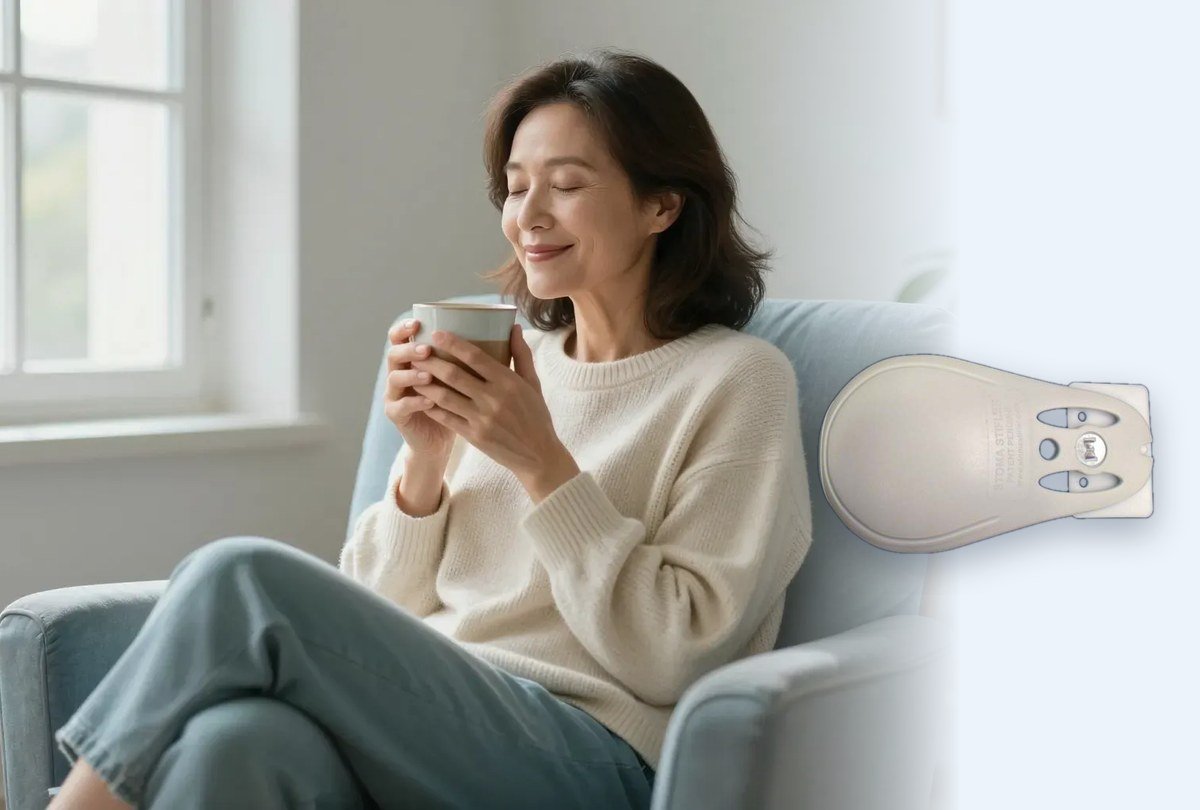
A soft layer between the pouch and the world can make closeness feel easier, from a long hug to a slow dance in the kitchen. The FSUHHIAD wrap holds the pouch close in an inner pocket and is made for closeness, sport and swimming, so many people use it to feel more confident in their clothes and in a partner’s arms. The Stoma Stifler, a firm, quiet guard sized to your pouch, protects the stoma during hugs and softens stoma sounds in quiet moments.
FSUHHIAD Ostomy Wrap and Pouch Cover
 View on Amazon
A soft wrap with an inner pocket that holds the pouch close, sold for sport, swimming and closeness.
Stoma Stifler
 See the Stoma Stifler
A firm, quiet stoma guard that fits all one-piece and two-piece pouch systems, so there is nothing to measure. Protects the stoma from bumps, seat belts and hugs, and softens stoma sounds. Wear it under an elasticized undergarment, or attach it to your own undergarments, ostomy belt or hernia belt with the optional kit pieces.
Already wear an ostomy belt? The Stoma Stifler connects to it with the optional belt-clip kit included with every Stoma Stifler.
As an Amazon Associate, Stoma Stifler earns from qualifying purchases. Disclosure
What helps you feel at home in your body again?
There is no single turning point, but the same few things come up again and again when people describe what helped.
Seeing others living ordinary lives
Many people say it helped to see others with an ostomy simply living: working, traveling, swimming, dating. Several ostomy advocates have described how wearing swimsuits and sharing photos of themselves helped them accept their own bodies. In one study of people one to three years after surgery, researchers concluded that sharing experiences with others in similar situations could help people cope. UOAA (the United Ostomy Associations of America) can connect you with ostomy support groups, in person and online.
Getting back to what matters to you
Lunch with friends, gardening, the movies, time with grandchildren: those things still matter. Once your surgeon has cleared you, return to them at your own pace. Each one reminds you that your life is bigger than your ostomy. For more on rebuilding everyday life, see adapting to life after a colostomy, ileostomy or urostomy.
Acceptance from someone who loves you
When someone who loves you sees your body and stays warm and unbothered, it can carry you while your own acceptance catches up. Small expressions of affection, patience and acceptance help couples stay connected through big changes.
A counselor who understands body changes after surgery
A counselor experienced with body image after surgery or illness is one more kind of support, a little like a WOC nurse for your feelings. Some couples find it helpful to go together.

Feel like yourself again, with a plan written from your story
The My Ostomy Blueprint includes a full Feeling like yourself again section built from your own answers, with next steps for where you are right now, in one plan customized to you.
Start My BlueprintWhen should you ask for help with sadness after ostomy surgery?
Sadness and grief after ostomy surgery often ease as confidence grows. In one study, people who felt low soon after surgery struggled more with body image, which is one more reason early support matters. Reach out to your doctor or care team if, most days for two weeks or more, you notice:
- Sadness or emptiness that does not lift
- Losing interest in things you used to enjoy
- Staying home or avoiding people even when your ostomy is working well
- Feeling hopeless about the future
Your doctor can connect you with a counselor. If you ever have thoughts of harming yourself, reach out right away: in the United States you can call or text 988 at any hour, or call emergency services. And if frequent leaks or sore skin are behind the sadness, a WOC nurse may be able to change the picture.
You do not have to love your stoma to enjoy your life
Feeling like yourself again does not mean forgetting you have an ostomy. It means your ostomy becomes one part of your life instead of the thing that defines it. Some days the old feelings may come back, and that is part of the process, not a step backward.
One woman received her ostomy in her mid-forties and lived more than four decades with it, traveling, working part time as a nurse into her sixties, hosting many parties and becoming a grandmother to nine. Those closest to her said her ostomy added to her joy for life rather than taking from it.
Your next good moment might be a walk to the mailbox, a dinner out or one outfit that feels right. Every one of them counts. And most of all, remember this: you do not have to completely accept your ostomy before you start enjoying your life again.
Share what helped you feel like yourself again
What helped you feel at home in your body after surgery? Maybe it was a first outfit, a name for your stoma, or something a partner or friend said. Email your story to info@stomastifler.com. It will be shared only without your name, so the next person standing in front of the mirror knows they are not alone.
Research that backs up this guidance
Research matches what people living with an ostomy describe. Body image changes after stoma surgery are common, and people describe a loss of feeling whole and shaken confidence in their body, sometimes for years.
It also shows where the first change usually comes from. People who feel able to care for their stoma tend to adjust better, and body image distress is not simply tied to time since surgery.
| What the research found | Source |
|---|---|
| A review of qualitative studies found that people describe a loss of feeling whole, a new awareness of the changed body, and disrupted bodily confidence after stoma surgery. | Thorpe et al., Journal of Advanced Nursing, 2009PubMed ID 19694841 |
| A review of 27 studies found poor body image and self-respect, depression and sexual problems among the most common difficulties after colostomy or ileostomy surgery. | Ayaz-Alkaya, International Wound Journal, 2019PubMed ID 30392194 |
| In 59 people followed after stoma surgery, stronger confidence in managing the stoma soon after the operation predicted fewer psychosocial problems during the first year. | Bekkers et al., Psychosomatic Medicine, 1996PubMed ID 8849636 |
| Among 51 people with a colostomy, confidence in stoma care, acceptance of the stoma and relationships with others were linked to adjustment, with stoma care confidence explaining the most. | Simmons et al., Journal of Advanced Nursing, 2007PubMed ID 18039249 |
| In 41 people with a stoma, stronger belief in their own abilities went with less body image distress, and body image distress was not related to time since surgery. | Jayarajah and Samarasekera, Indian Journal of Psychological Medicine, 2017PubMed ID 28250561 |
| In focus groups with 21 people one to three years after stoma surgery, many still felt uncomfortable with their new body yet had rebuilt social and working life. | Petersén and Carlsson, Journal of Clinical Nursing, 2021PubMed ID 33829581 |
What this means for you: What this means for you: if you manage your care but still do not feel at home in your body, you are where many people are. Build confidence first, stay close to people who understand, and let acceptance come in its own time.
Frequently asked questions
How long does it take to accept your body after ostomy surgery?
There is no set timeline. Some people feel comfortable within weeks, while others take months or years, and research has found body image distress is not simply tied to time since surgery. What usually comes first is confidence in daily care, often long before people feel at peace with how their body looks.
Can you still feel attractive with an ostomy?
Yes. Many people living with an ostomy go on to date, fall in love, enjoy intimacy and build lasting relationships, and partners are often far less concerned about the pouch than people expect. Feeling attractive again often starts small, with an outfit you love or a hug that feels easy.
Is it normal to avoid looking at your stoma?
Yes, it is a common first response, especially after emergency surgery. Many people start with short glances during a pouch change, when their attention is on the task, and build from there. If avoiding your stoma makes daily care difficult, or the feeling stays heavy for weeks, mention it to your ostomy nurse or doctor.
Should you give your stoma a name?
Only if it feels right to you. Some people find that naming their stoma, with names like Stella the Stoma, makes it feel less intimidating and easier to talk about, even with a little humor. Others find naming a body part uncomfortable and prefer plain words. The best language is whatever feels respectful to you.
Last updated October 2026. Written from 14 years of conversations with people living with an ostomy and the people who care for them. General education only; it does not replace your surgeon, ostomy nurse or dietitian.