

The first 30 days with an ostomy are not the rest of your life. They are a transition, one that follows a predictable shape if you know what to look for. This is what most ostomates wish someone had drawn out for them in the hospital.
If you are sitting in a hospital bed right now, or three days home and quietly terrified, here is the most important thing to know: the version of life you have today is not the version you will have on day 31. The first month has a pattern. Once you can see the pattern, the panic eases.
This is a day-by-day comfort plan for the first 30 days after colostomy, ileostomy, or urostomy surgery, broken into four weeks, with the small wins flagged at each stage. No sugarcoating, no clinical jargon, just a real-talk roadmap that aligns with the body-mind-routine framework we use across every Stoma Stifler guide.

Week 1: Survive, don’t perform
The job of Week 1 is not to feel normal. It is to let your body heal and let yourself sleep. If you can do those two things, you are winning Week 1.
Body. Output will be unpredictable. It might be liquid, gas-heavy, or unexpectedly quiet for a day. None of that means anything is wrong, your gut is rebooting. You will probably feel exhausted in a way that surprises you. Naps are a medical necessity right now, not a luxury.
Mind. The emotional whiplash of the first week catches most people off-guard. You might feel grateful one hour and devastated the next. That is not weakness. That is the standard arc, and it gets easier. If you can, set up one short check-in call with someone who has had an ostomy for at least a year, the United Ostomy Associations of America (UOAA) support line can connect you to a trained peer visitor. One conversation can change the trajectory of your month.
Routine. Establish exactly one habit this week: empty the pouch when it is one-third full. Not half. Not “I’ll get to it.” One-third. This single rule prevents most leaks, most bag-bulge worry, and most middle-of-the-night accidents. Set a phone reminder every 90 minutes if you have to.

The Week 1 small win: changing the appliance yourself once, even if a nurse or partner helps with the prep. The first independent change is the moment your body starts feeling like yours again.
Week 2: Things start to click
Week 2 is where the fog begins to lift. Output starts to thicken into something more predictable. Skin around the stoma begins to settle. You probably won’t notice the shift in real time, it’s the kind of thing you only see looking backward.
Body. Drink more water than you think you need. This is especially true for ileostomates, your large intestine is bypassed, so the small intestine has to do the water reabsorption work, and it is not as efficient. Aim for pale yellow urine. Dark amber means drink more, now.
Start a tiny core-aware walking routine: 5 minutes, twice a day, slow. No crunches, no sit-ups, no lifting. Your fascia is healing for the next 6-8 weeks and the lifting decisions you make right now will determine whether you become one of the 50% of ostomates who develop a parastomal hernia.
Mind. Around days 10-14, a low mood often lands. The adrenaline of surgery and discharge has worn off. The “I have to figure this out” weight settles in. This is the textbook moment to call a stoma nurse if anything practical is bothering you, and to be honest with your GP if the mood is not lifting. Post-surgical depression is common and treatable.
Routine. Build your 10-second-grab kit. One small pouch with: 2 pre-cut appliances, a roll of adhesive remover wipes, a small ziplock for the used pouch, and one disposable wet wipe. Keep one in your bag, one in the car, one at the office or in your nightstand. The relief of knowing you can change anywhere is more powerful than you’d think, it’s the moment you start leaving the house without dread.
The Week 2 small win: sleeping through the night without checking the pouch. Most ostomates hit this between days 9 and 14.
Week 3: Confidence starts to build
Week 3 is where things get interesting. You will start to forget about the bag for short stretches, 20 minutes here, an hour there. That forgetting is not denial. It is your nervous system relaxing.
Body. Output should be more predictable now, especially if you are eating in a structured way (we cover this in our gas and odor guide). Skin should be intact, no redness. If there is any irritation, address it today rather than waiting, small skin problems become big problems fast. Stoma powder on damp skin before applying the wafer is the single best fix most ostomates wish they’d known about week one.
This is also the week to start managing stoma noise and discretion if it has been embarrassing you. Soluble fiber is the lever for output thickness, a small daily dose of psyllium husk powder bulks the output enough to make passing gas through the stoma noticeably quieter. For the residual sound and pressure-release moments diet alone can’t solve, the Stoma Stifler kit is the ostomate-built tool designed for exactly that, most users add it once they’re past the initial healing window in Week 3 or 4.
After tracking first-30-days experiences across the Stoma Stifler community:
- Week 1 is mostly about survival. Week 2 is when learning begins. Week 3 is when patterns emerge. Week 4 is when readers feel they have a system.
- Sleep is the most common Week-1 frustration. Most readers adapt to sleeping with a stoma within 14 days using a wedge pillow + nighttime drainable.
- The biggest emotional dip happens between days 10–21. Readers who connect with the ostomy community in this window recover confidence faster.
- Most readers wish they had requested MORE supplies from the hospital and ordered backup before the starter kit ran out.
Mind. A specific kind of grief sometimes lands in Week 3, grief for the body you used to have. This is normal and it passes. Naming it (“I am grieving”) rather than fighting it makes it move through faster.
Routine. Schedule the things you’ve been avoiding: a coffee with a friend, a walk in a park, a quick errand. Not because you’re ready to perform normalcy, but because doing one out-of-the-house thing this week proves to your nervous system that the world is still navigable. Start small and short.
The Week 3 small win: the first time you do something not related to your ostomy and forget about it for the duration. The first ten minutes of forgetting is the first ten minutes of getting your life back.
Week 4: You, again
By the end of the first 30 days, most ostomates are doing things they could not have imagined doing on day 3. Not all the way back, but recognizably themselves.
Body. Pouch changes feel routine, not pleasant, not dreadful, just routine. Skin care fits into a 5-minute morning. Output has its own personality but you have learned to read it. If you have not started doing a structured 5-10 minute walk twice a day, this is the week to lock that habit in. Walking is the safest exercise for the healing fascia and it accelerates everything else.
Mind. The “Am I going to be okay?” question quietly answers itself. Yes. You are. Most ostomates report by day 28-30 that the volume on the worry has dropped from a shout to a hum.
Routine. Two systems should be locked in by end of Week 4:
- Empty at one-third. Every time.
- The 10-second-grab kit in three locations. Bag, car, nightstand or desk.
With those two habits, you are running 80% of the system that ostomates with years of experience use. Everything else from here, diet expansion, exercise progression, travel, intimacy, builds on top of those two foundations.
The Week 4 small win: a meal out, a swim, an evening with friends, whichever was most off-limits to you on day 1. Doing one previously-impossible thing within 30 days is the threshold most ostomates cross, and it changes everything about what you believe is possible by month three.
What to do if a week doesn’t match the timeline
This is a typical arc, not a contract. Some people heal faster, some slower. If you are at end of Week 2 and Week 1 still describes you, that is not a failure, it is information. Call your stoma nurse. Tell them where you are. Ask what they would adjust.
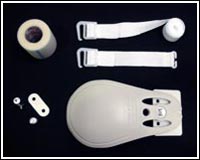
Stoma Stifler™ — The Sound Suppressor + Stoma Guard Most Ostomates Wish They’d Found Sooner
Red flags worth a same-day call regardless of week:
- Output that goes to pure water for more than 8 hours, or stops entirely for 12+ hours (ileostomy blockage risk)
- Persistent bleeding from the stoma itself (more than spotting from the skin around it)
- Stoma color changing, dusky purple or black instead of healthy pink/red
- Fever above 101°F
- Pain that is escalating rather than easing
Anything else, leaks, skin irritation, noise, gas, mood, is workable. Most of it is covered in our other guides, and the rest a phone call to your stoma nurse will resolve in 10 minutes.
The supply checklist for Month One
If you want a single stocked-up shopping run for the first 30 days, here is what to have on hand. The Amazon links below use Stoma Stifler’s affiliate tag, anything you buy through them helps support this blog at no extra cost to you. The Stoma Stifler kit itself is the ostomate-built tool we make for noise and discretion.
- The Stoma Stifler kit, molded cup, anchor plate, snug bands, hypoallergenic tape. The original noise-and-discretion product, designed by an ostomate. Most ostomates add it in Week 3 or 4 once initial healing is complete
- Spare appliances, 2 weeks’ worth, pre-cut if possible
- Adhesive remover wipes, for clean pouch changes, gentler than peeling
- Stoma powder, for any skin moisture or weeping
- Barrier rings or paste, fills the gap between stoma and wafer for leak-free seal
- Soluble fiber (psyllium), for output thickening, quieter stoma, smoother changes
- Small zip pouches, for the 10-second-grab kit, one each for bag, car, and bedside
The bottom line
The first 30 days are the steepest part of the curve. By day 31, the worry quiets, the routines feel like routines, and the version of you who was scared on day 3 starts to feel further away. Save this guide, share it with a stoma support friend, and come back to the full first-year framework in week five.
You are going to be okay. The timeline is on your side.
Affiliate disclosure: Some links in this article are Amazon affiliate links. If you purchase through them, Stoma Stifler may earn a small commission at no extra cost to you. See our full affiliate disclosure.
First 30 Days Companion
Frequently Asked Questions
Is what I'm experiencing normal after ostomy surgery?
Most concerns ostomates have – bag noise, gas, occasional leaks, skin irritation, body-image adjustment – are normal in the first 6-12 months. The frequency and intensity drop significantly as your body adapts and your routine settles. Reach out to your ostomy nurse if anything feels worsening rather than improving.
When should I call my ostomy nurse or doctor?
Call promptly for: peristomal skin that's painful, bleeding, or breaking down; stoma color changes (dusky, purple, pale); no output for 4-6 hours with cramping (possible blockage); high output that won't slow despite reducing fiber and adding electrolytes; or a hernia bulge that becomes painful or won't reduce. Most other concerns can wait for your next scheduled appointment.
Does the Stoma Stifler help with this?
The Stoma Stifler is designed to quietly absorb gas and reduce bag noise without restricting output. It works with your existing pouching system and doesn't interfere with skin care or wafer adhesion. Pairing it with the basics – good skin routine, hydration, and any complementary supplies above – covers most daily-comfort challenges.