
A stoma guard protects the stoma from bumps and seat belts and softens the sound of gas, in one thin shell under your clothes. The tool below matches the way to wear it to your day.
Stoma guards, in short
- The two jobs a guard does
- Who benefits most
- Guard, ostomy belt or hernia belt: what each does
- Wearing and caring for your guard
A guard that stays thin and light is the one you wear every day.
How should you wear your stoma guard?
At a glance
| Job 1 | Protects the stoma from impact |
|---|---|
| Job 2 | Softens the sound of gas |
| Weight | Under 4 ounces |
| Drainage | The pouch fills and drains normally |
| Hernia | A separate support belt does that job |
| Care | Mild soap, warm water, air-dry |
Pull up a chair
There’s a seat saved for you in a private Facebook group where ostomates and caregivers trade what works.
Members share how they protect their stoma from seat belts, hugs, pets and sports, and what helps keep the noise down.
Pull Up My ChairPrivate group. Ask the questions you’d rather not ask out loud, even anonymously. Only members see what you share.
A stoma guard does two jobs at once: protects the stoma from impact (seatbelt pressure, a child’s elbow, a stray basketball) and mutes the sound of gas leaving the stoma. A good stoma guard does both without bulk, fit discreetly under clothes, and slide into a fabric carrier like a quality pocket ostomy belt.
This guide walks through what a stoma guard does, which features matter for your situation, and how to combine a guard with the right carrier for active living. For a quick overview of how the Stoma Stifler works as a stoma guard, and how it quiets stoma sounds, see our stoma noise suppression page.
What does a stoma guard do?
- Impact protectionThe rigid shell creates a small air gap between the stoma and outside force. A sudden hug, a sudden stop, a yoga move where your knee comes up, the guard absorbs the impact before it reaches the stoma.
- Sound suppressionThe rigid shell mutes higher-frequency stoma sounds, the part that travels and grabs attention. Lower-frequency rumble gets dampened by surrounding fabric. Sounds that used to broadcast across a dinner table become inaudible 3 feet away.
Where the guard sits

What makes the Stoma Stifler different?
The Stoma Stifler handles impact and noise in one thin piece, built for active people whose days bring both. It weighs under 4 ounces, sits close to the body and stays discreet under a T-shirt or button-down.
It weighs under 4 ounces and sits close to the body, so it stays discreet under a T-shirt or button-down.
How do the types of stoma guard compare?
Stoma guards come in a few broad types, and each one suits a different day. Knowing the types makes it easier to choose the one you will wear.
Stoma guard types at a glance
| Type | Protection from bumps | Sound | Weight and feel | Cost |
|---|---|---|---|---|
| Soft fabric cover or wrap | Light | Softens a little | Light and flexible | Low |
| Rigid plastic dome | Good | Little effect on sound | Light, rigid edge | Low to moderate |
| Metal or reinforced shell on a belt system | Strong | Little effect on sound | Heavier, more to wear | Usually the highest |
| Firm foam guard (Stoma Stifler) | Good, firm spine | Softens stoma sounds | Under 4 ounces, soft edge | $178, one kit |
For everyday life, the sweet spot is a guard light enough to forget, firm enough to take a bump, and able to soften sounds in a quiet room. That is the space the Stoma Stifler was made for.
How does a guard work with a belt?
The smartest setup pairs The Stoma Stifler with a quality pocket ostomy belt fabric carrier. A quality pocket ostomy belt compresses the pouch profile (eliminating the swing-and-pull on your adhesive); The Stoma Stifler sits inside a pocket ostomy belt’s front pocket (takes impact + mutes noise). One system, two functions, no doubled-up hardware.
Who benefits most from a stoma guard?
- Active people: running, cycling, weights, yoga, team sports
- Parents and grandparents of young kids
- Anyone who drives often
- Anyone for whom sounds in public matter
Not every ostomate needs a rigid guard, but for a large group it changes daily life. You are a strong candidate if you are physically active, running, cycling, weight training, yoga, and team sports all put the stoma in the path of impact and pressure. Parents of young children benefit too, since a stray elbow or an enthusiastic hug tends to land exactly where the stoma sits.
Anyone who drives regularly should consider one, because the seatbelt crosses the abdomen and a sudden stop concentrates force on the stoma. And if noise in public is what erodes your confidence, at work, at dinner, during intimacy, a guard that doubles as a sound dampener addresses the physical and the social risk in a single piece of gear.
What should you look for in a stoma guard?
A few features make a guard easy to wear every day.
- A thin profile that disappears under a T-shirt
- An open structure, for normal filling and draining
- Light weight, with no tug on the adhesive
- A clip or pocket that keeps it in place on a belt
- Impact protection and sound control in one piece
The Stoma Stifler kit includes a belt clip that attaches it to an ostomy belt, with or without a pocket.

Guard, ostomy belt or hernia belt: which do you need?
- Ostomy beltSoft and flexible. Holds the pouch close and steady.
- Stoma guardA light, firm shell. Adds impact protection and softens sounds.
- Hernia support beltA firmer band with a cut opening. Supports the muscle wall.
These three are easy to confuse, and each one does a different job. An ostomy belt is soft and flexible; its job is to hold the pouch close so it does not swing and pull on the wafer. A stoma guard is a rigid shell that adds impact protection and sound suppression on top of that.
A hernia support belt is different again, a firmer abdominal band with a precisely cut opening, used specifically to support the muscle wall and reduce parastomal hernia risk. Many active ostomates end up using two of the three together: a guard slid into the pocket of an ostomy belt covers impact, noise, and pouch security at once, while a hernia belt is added only if a clinician recommends it.
How does a guard fit into your day?
The guard earns its place across different moments. At work, it mutes the after-lunch sounds that used to make meetings stressful. During exercise it takes the hits, the barbell that brushes your midsection, the knee that comes up in yoga, the contact in a pickup game. In the car it sits between the seatbelt and the stoma, turning a sudden stop into a non-event.
A day with a guard
At night, many ostomates wear a lighter setup so a partner is not woken by gas, and during intimacy the same discretion removes a major source of anxiety. For travel, a guard plus a pocket belt keeps everything compact and protected through airport seats, long flights, and unfamiliar beds. If quieting the sound at its source is your main goal, our full guide on how to stop stoma noise covers the diet and habit changes that pair naturally with a guard.
Gear covers part of the day, and the rest depends on your own patterns: your Blueprint's Quiet Plan includes a trigger finder for when your sounds happen, and Back to What You Love lines up your activities from gentle to active. See your top 3 priorities
How do you care for a stoma guard?
A guard lasts longest with a simple routine. Wipe the rigid shell with mild soap and warm water as part of your regular pouch change, then let it air-dry fully before the next use, trapped moisture is the enemy of both hygiene and adhesion. Avoid harsh solvents and the dishwasher, which can warp or cloud the material over time.

Inspect it every few weeks for cracks or rough edges that could press on the skin, and keep a spare in your travel kit so a lost or damaged guard never sidelines your plans. Treated well, a quality guard is a buy-it-once piece of equipment that quietly does its job for years.
The active ostomates who adapt fastest stop treating impact and noise as separate problems to solve with separate gear. The pattern is consistent: a single thin guard that protects the stoma and dampens sound, carried in a pocket belt, removes far more daily friction than a drawer full of single-purpose products. Match the guard to your real activities, pair it with a carrier, and the equipment fades into the background, which is exactly the point.
One guard and one belt cover most days: the Stoma Stifler for impact and sound, a belt with a pouch cover to hold it all close, and a moldable ring for a secure seal.
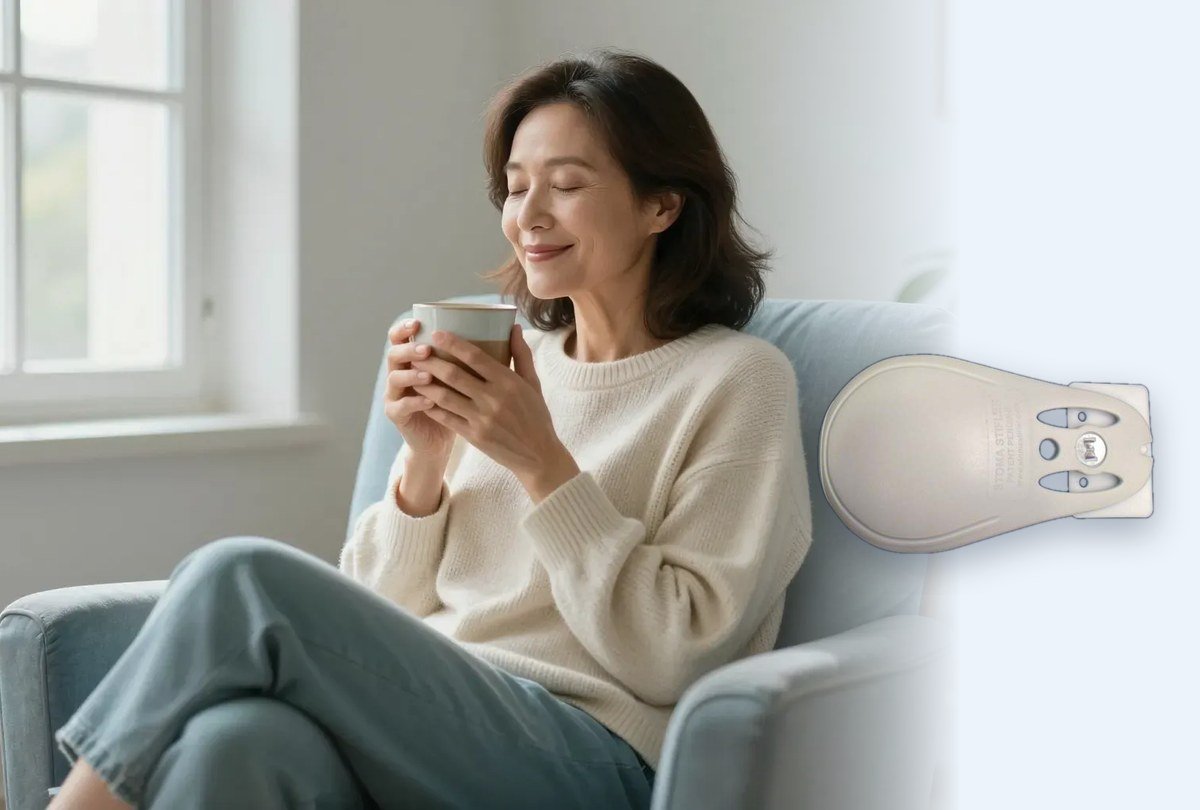
Stoma Stifler, sound suppressor and stoma guard
 See the Stoma Stifler
A thin, light guard that protects the stoma from bumps and seat belts and softens stoma sounds.
YConnect Ostomy Belt and Pouch Cover
 View on Amazon
A soft belt with a built-in pouch cover that holds the pouch flat and gives the guard a steady anchor.
Safe n’ Simple Moldable Barrier Rings
 View on Amazon
Extra protection around the stoma base on active days.
As an Amazon Associate, Stoma Stifler earns from qualifying purchases. Disclosure
Bottom line
A stoma guard that handles both impact protection and sound suppression, while staying thin enough to disappear under clothes, is what most active ostomates eventually need. The Stoma Stifler does that job. Pair it with a quality pocket ostomy belt as a carrier and you have one elegant setup for everything from desk work to a soccer game with the kids. Use the Match Tool above to confirm your situation.
Where does your guard make the biggest difference?
If a guard helped you drive, play, hug or sit through a quiet meeting with more ease, share it by email at info@stomastifler.com. Stories are shared only without your name, to help the next person deciding how to protect their stoma.
Research behind stoma guards & quality of life
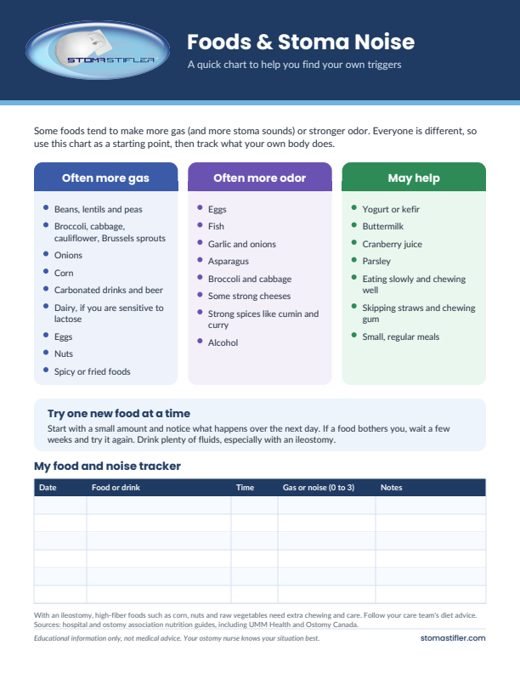
A stoma guard does two jobs at once, shielding the stoma from impact and muting the sound of gas, and the research links that kind of discreet confidence to better body image and social adaptation after ostomy.
If you are active, drive, parent young kids, or care about noise in public, a thin guard paired with a pocket belt covers impact, noise, and pouch security in one setup. Add a hernia belt only if a clinician advises it.
| What the research found | Source |
|---|---|
| 27-study review confirms body image, depression, and social adaptation as the top QoL hits after ostomy. Discreet impact + noise control directly tackles social adaptation. | Ayaz-Alkaya S. (2018). Overview of psychosocial problems in individuals with stoma. International Wound Journal. doi.org/10.1111/iwj.13018 |
| Body image scores rose when ostomates felt confident in shared activities. Equipment that mutes noise during meals + intimacy restores that confidence. | Aktas D, Gocman Baykara Z. (2015). Body Image Perceptions of Persons With a Stoma. Ostomy/Wound Management. PubMed 25965090 |
| Family members carry an emotional load when an ostomate self-limits. Restoring autonomy with the right gear reduces the ripple effect. | Cadogan J. (2015). Psychosocial impact of intestinal failure. British Journal of Nursing. doi.org/10.12968/bjon.2015.24.Sup17.S24 |
What this means for you: gear that lets you move and socialize with confidence supports body image and quality of life.
This article covers what most people share. My Ostomy Blueprint is one plan written from your answers, and it goes further:
- A trigger finder with quick fixes
- Your activities, with support wear
- Everyday Life, from sleep to travel
Plus everything else you ask for help with, from food and hydration to sleep and travel, in one place.
Build My BlueprintFrequently Asked Questions
What’s the difference between a stoma guard and an ostomy belt?
An ostomy belt holds your pouch close to your body so it doesn’t swing. It’s soft and flexible. A stoma guard is a rigid shell that adds impact protection plus sound suppression. They do different jobs and many active ostomates use both, with the guard slid into the belt’s pocket.
Can a stoma guard prevent parastomal hernia?
No. Hernia prevention requires a specific abdominal support belt with a precisely cut stoma opening. A stoma guard handles impact and noise, not hernia.
Will a stoma guard interfere with pouch drainage?
No. Well-designed guards including The Stoma Stifler have an open structure that lets the pouch fill and drain normally. The rigid shell sits a small distance from the stoma, not pressed against it.
Can I wear a stoma guard during exercise?
Yes, that’s one of its main use cases. Running, cycling, weight training, yoga, team sports, the guard makes all of these meaningfully safer.
How do I clean The Stoma Stifler?
Wipe down with mild soap and warm water as part of your regular pouch-change routine. Air-dry. No machine washing required.
Browse all Supplies and Stoma Protection guides or all of My Ostomy Compass.
Last updated November 2026. Written from 14 years of conversations with people living with an ostomy and the people who care for them.